
Table of Contents
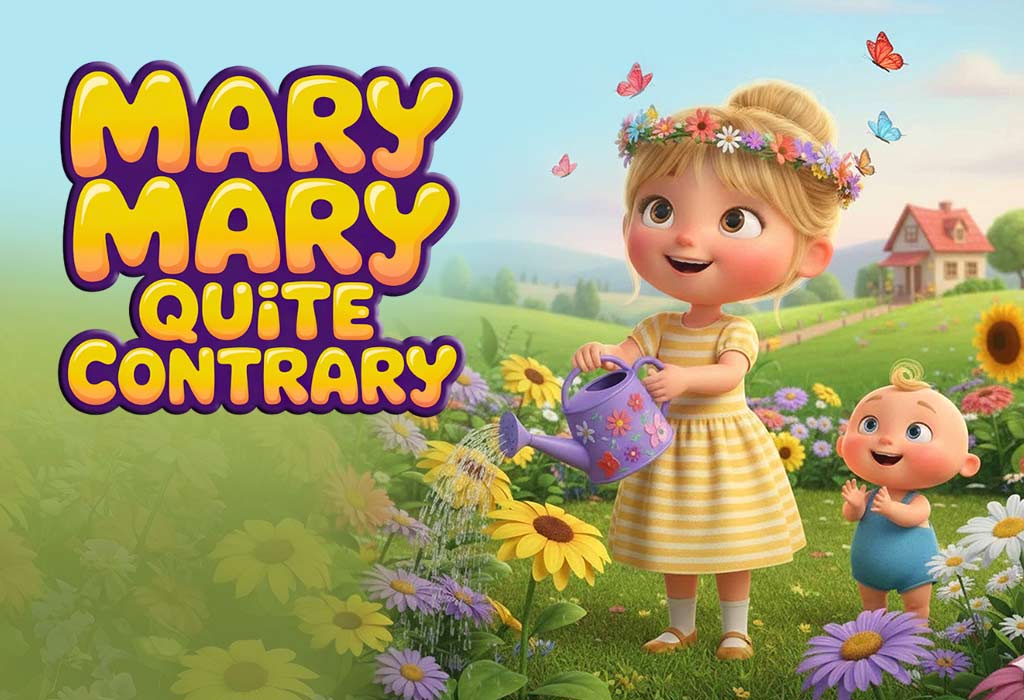
“Mary, Mary, Quite Contrary” is a classic nursery rhyme that paints a gentle picture of a little girl and her beautiful garden filled with flowers and musical imagery. Children enjoy this rhyme because of its catchy rhythm, repeated words, and imaginative visuals like silver bells and cockle shells. The simple structure makes it easy for young learners to listen, repeat, and remember. For parents and teachers, this rhyme is a wonderful early learning tool as it helps children develop language skills, listening ability, and memory through repetition. The garden theme also introduces kids to nature-related words in a fun and playful way. Singing or reciting the rhyme together encourages bonding time while supporting early speech development. With its short length and musical flow, “Mary, Mary, Quite Contrary” is perfect for preschoolers who are just beginning to explore rhymes, sounds, and storytelling through simple verses.
Mary, Mary, Quite Contrary Song Lyrics
A timeless garden-themed rhyme loved by generations, the Mary, Mary, Quite Contrary words are easy for children to follow and fun to recite aloud.
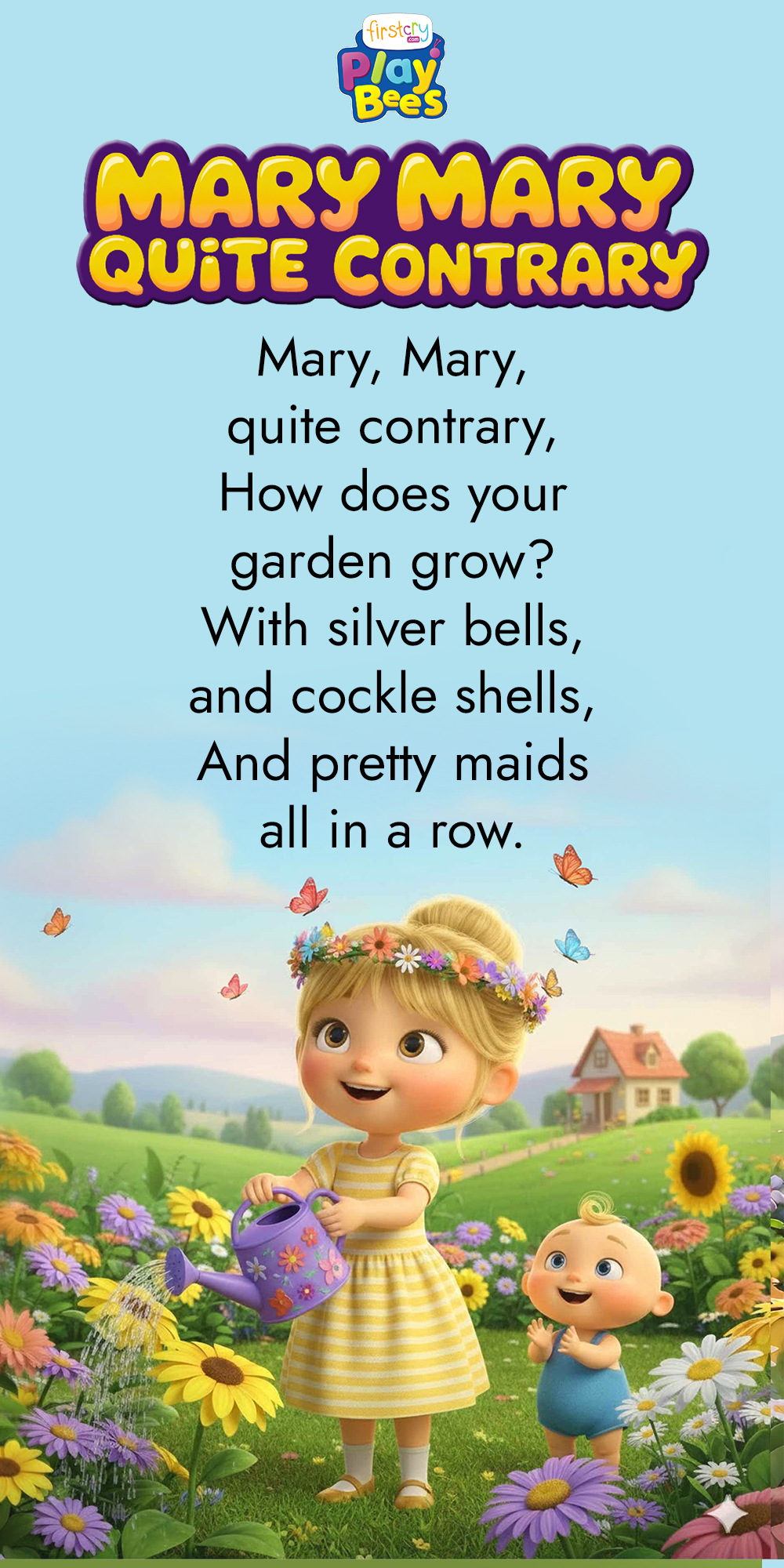
Mary, Mary, quite contrary,
How does your garden grow?
With silver bells, and cockle shells,
And pretty maids all in a row.
Other Versions of the Mary, Mary, Quite Contrary Song
Over the years, this traditional rhyme has been shared in a few playful variations while keeping its original charm intact.
1. Classic Version
Mary, Mary, quite contrary,
How does your garden grow?
With silver bells and cockle shells,
And pretty maids all in a row.
2. Repeated Ending Version
Mary, Mary, quite contrary,
How does your garden grow?
With silver bells and cockle shells,
And pretty maids all in a row,
All in a row, all in a row,
Pretty maids all in a row.
3. Sing-Along Version
Mary, Mary, quite contrary,
Tell us how your garden grows,
Silver bells and cockle shells,
Flowers blooming, rows and rows.
4. Child-Friendly Extended Version
Mary, Mary, quite contrary,
How does your garden grow?
With silver bells and cockle shells,
And flowers lined up in a row,
Bright and happy, big and small,
Mary loves her garden all.
Gestures – How to Teach Mary, Mary, Quite Contrary to Kids
Using actions along with words helps children understand and remember the rhyme better while keeping them actively engaged. Follow these simple, movement-based steps as you recite together.
- Pretend to call out by placing hands near the mouth when saying “Mary, Mary.”
- Shake the head gently side to side to show “quite contrary.”
- Move hands outward like showing a big space while saying “How does your garden grow?”
- Wiggle fingers downward like sprinkling seeds to represent growing plants.
- Mime ringing bells softly with fingers for “silver bells.”
- Walk fingers in a straight line to show “pretty maids all in a row.”
History & Quick Facts
“Mary, Mary, Quite Contrary” is a traditional English nursery rhyme that dates back to the 18th century. It was first published in 1744 in Tommy Thumb’s Pretty Song Book, one of the earliest collections of English nursery rhymes. The rhyme has no confirmed single author, as it was passed down orally before being written. Over time, it became popular in homes and schools because of its simple rhythm and memorable imagery. While scholars have suggested historical meanings, today it is mainly enjoyed as a light, child-friendly rhyme about gardens and imagination.
Interesting Facts
- The rhyme originated in England and is over 250 years old.
- It was first printed in Tommy Thumb’s Pretty Song Book.
- The garden imagery makes it popular in preschool learning themes.
- It is commonly translated into many languages for global audiences.
- The tune varies, as it is often spoken or sung in different melodies.
- The rhyme remains popular in children’s books, songs, and classroom activities.
Suitable Age & Learnings
This rhyme is ideal for children aged 2 to 5 years, as it is short, rhythmic, and easy to remember. It supports early learning through repetition, imagination, and simple vocabulary.
- Children learn rhythm and rhyme through repeated sounds and steady pacing.
- Listening skills improve as kids focus on short lines and clear words.
- New vocabulary such as garden-related terms is introduced naturally.
- Memory skills develop as children recall lines in the correct order.
- Imagination grows through visual elements like flowers and bells.
- Social learning is encouraged when recited together in groups.
FAQs
1. What is the rhyming scheme of Mary, Mary, Quite Contrary?
The rhyme follows an AABB rhyming scheme, where the first two lines rhyme and the last two lines rhyme.
2. Is “Mary, Mary, Quite Contrary” suitable for bedtime reading?
Yes, its short length and calm rhythm make it a gentle and soothing choice before bedtime.
“Mary, Mary, Quite Contrary” continues to be a favorite nursery rhyme because of its simplicity and timeless appeal. Its gentle rhythm and vivid garden imagery capture children’s attention while supporting early language development. Whether spoken, sung, or acted out with gestures, the rhyme offers a fun way for kids to learn through play. Sharing this classic rhyme helps create joyful learning moments that children can carry with them as they grow.
Explore Other Rhymes for Kids:
Jack and Jill Nursery Rhyme With Lyrics
Little Miss Muffet Nursery Rhyme With Lyrics
Mary Had a Little Lamb Nursery Rhyme With Lyrics