
Table of Contents
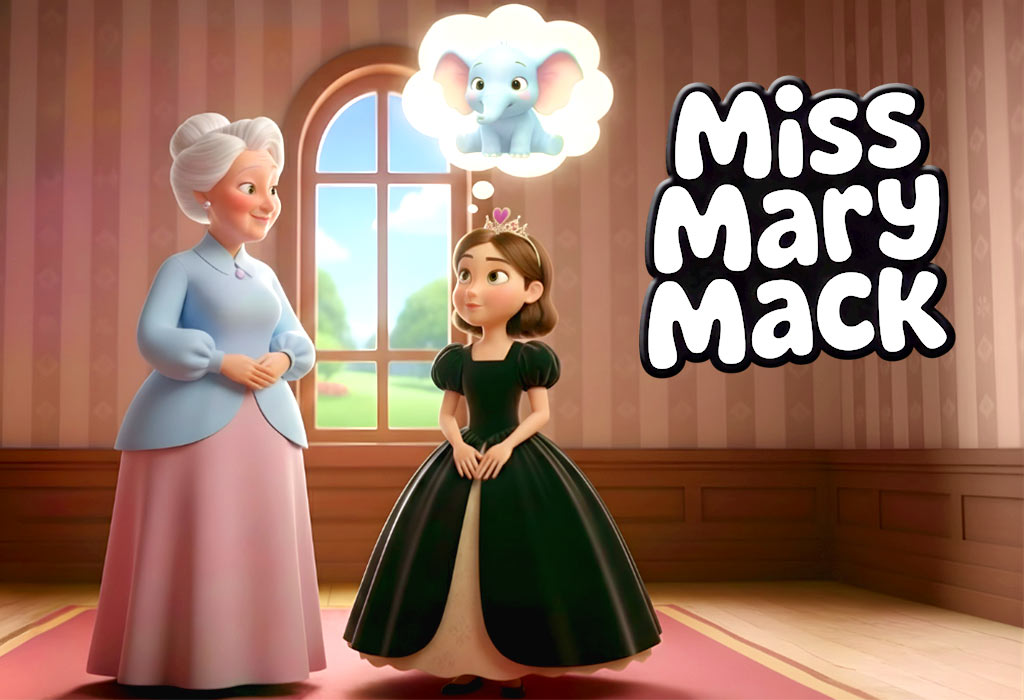
Miss Mary Mack is a lively and playful nursery rhyme that children have enjoyed for generations. It tells a simple story about a girl dressed in black and white who asks her mother for money to see elephants jump a fence. Kids love this rhyme because it is usually sung along with clapping actions, making it fun, energetic, and interactive. The steady rhythm and repeating words make it easy for young children to remember and join in. For early learners, Miss Mary Mack supports language development by introducing rhyming words, patterns, and clear pronunciation. The clapping game also helps improve coordination, timing, and social interaction when played with friends or parents. With its catchy beat and imaginative storyline, this rhyme keeps children engaged while gently supporting early learning skills in a joyful and playful way.
Miss Mary Mack Song Lyrics
These Miss Mary Mack words are commonly sung with a fun clapping rhythm that children love to follow along with.
Miss Mary Mack, Mack, Mack
All dressed in black, black, black
With silver buttons, buttons, buttons
All down her back, back, back. (or “Up and down her back back back”)
She asked her mother, mother, mother
for fifty (or 15) cents, cents, cents
To see the elephants, elephants, elephants (or hippos or cows)
Jump the fence, fence, fence.
They jumped so high, high, high
they reached the sky, sky, sky
And didn’t (or never) come back, back, back
Till the 4th of July ly ly.
She asked her mother, mother, mother
For 5 cents more, more, more
To see the elephants, elephants, elephants
Jump the door, door, door.
They jumped to the flow flow flow
they stubbed their toe toe toe
and that was the end end end
of the elephant show show show.
Other Versions of the Miss Mary Mack Song
This rhyme has been passed down through generations, and many playful versions have developed over time.
Version 1 – Fifteen Cents
Miss Mary Mack, Mack, Mack,
All dressed in black, black, black,
With silver buttons, buttons, buttons,
All down her back, back, back.
She asked her mother, mother, mother,
For fifteen cents, cents, cents,
To see the elephants, elephants, elephants,
Jump over the fence, fence, fence.
Version 2 – One Dollar
Miss Mary Mack, Mack, Mack,
All dressed in black, black, black,
With silver buttons, buttons, buttons,
All down her back, back, back.
She asked her mother, mother, mother,
For one whole dollar, dollar, dollar,
To see the elephants, elephants, elephants,
Dance and holler, holler, holler.
Version 3 – Monkeys Instead of Elephants
Miss Mary Mack, Mack, Mack,
All dressed in black, black, black,
With silver buttons, buttons, buttons,
All down her back, back, back.
She asked her mother, mother, mother,
For fifty cents, cents, cents,
To see the monkeys, monkeys, monkeys,
Jump over the fence, fence, fence.
Gestures – How to Teach Miss Mary Mack to Kids
Adding actions makes this rhyme more engaging and helps children remember the words more easily. Start slowly and repeat the rhyme a few times so kids feel confident.
- Clap your hands together with a partner on each repeated word like “Mack, Mack, Mack.”
- Pat your own knees on the lines that describe Miss Mary’s clothing.
- Point to imaginary buttons going down your back during the “silver buttons” line.
- Stretch your hands forward as if asking for money during the “she asked her mother” verse.
- Make jumping motions with your fingers to show the elephants jumping the fence.
- Raise your arms high for “they jumped so high” and wave for the Fourth of July ending.
History & Quick Facts
Miss Mary Mack is a traditional American clapping rhyme that has been shared orally for many decades. Its exact author and first publication date are unknown, as it originated through playground culture rather than books. The rhyme became popular in the late 19th and early 20th centuries as hand-clapping games spread among children in schools and neighborhoods. Over time, it evolved with small lyrical changes while keeping its rhythm and structure intact. Its simplicity and interactive style helped it remain a favorite across generations.
Interesting Facts
- Miss Mary Mack is most often performed as a hand-clapping game between two children.
- The rhyme is popular in English-speaking countries around the world.
- It is known for its strong rhythm, which helps children keep a steady beat.
- Many children learn the rhyme on playgrounds rather than from books.
- The tune is often adapted to fit different clapping patterns.
- It remains a common choice in preschool and early learning classrooms.
Suitable Age & Learnings
Miss Mary Mack is suitable for children aged 3 to 7 years and works well for both group play and one-on-one learning. The rhyme supports early development through music, movement, and repetition.
- Children learn rhyming patterns that support early reading readiness.
- The clapping actions help improve hand-eye coordination and motor skills.
- Repetition builds memory and listening skills in young learners.
- Singing together encourages social interaction and cooperative play.
- The rhyme introduces simple vocabulary like buttons, fence, and elephants.
- Rhythm and timing skills develop as children match actions to words.
FAQs
1. What is the rhyming scheme of Miss Mary Mack?
The rhyme follows a simple repeating end-rhyme pattern that makes it easy for children to remember.
2. Why is Miss Mary Mack good for kids?
It combines music, movement, and language to support coordination, memory, and early literacy skills.
Miss Mary Mack continues to be a beloved nursery rhyme because it blends storytelling, rhythm, and movement so naturally. Its interactive clapping style keeps children engaged while supporting important early learning skills. Parents and teachers appreciate how easily it brings kids together through shared play. With its catchy beat and timeless charm, Miss Mary Mack remains a joyful part of childhood learning experiences.
Explore Other Rhymes for Kids:
Little Miss Muffet Nursery Rhyme With Lyrics
Mary Had a Little Lamb Nursery Rhyme With Lyrics
Mary, Mary, Quite Contrary Nursery Rhyme With Lyrics