
Table of Contents
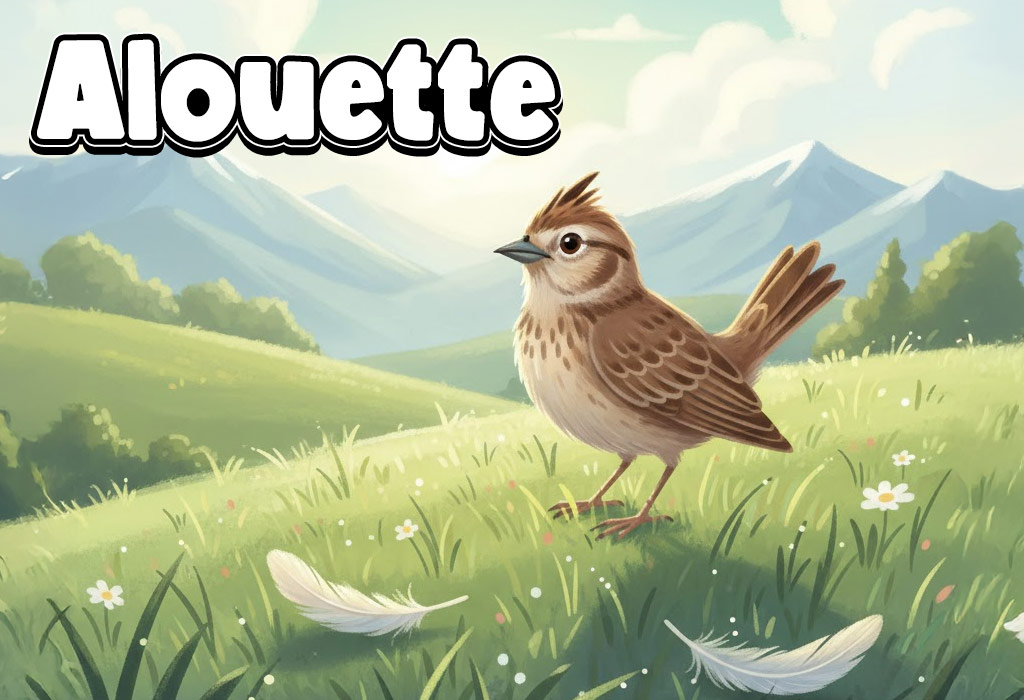
“Alouette” is a cheerful traditional rhyme that introduces children to rhythm, repetition, and simple French words through a playful song about a little bird. Kids love the catchy tune and the funny way the song lists different body parts, which makes it easy to sing along and remember. The repetitive structure keeps children engaged while encouraging them to join in with actions and sounds. For parents and teachers, “Alouette” is a gentle way to expose young learners to another language and culture at an early age. Singing the rhyme helps improve listening skills, memory, and pronunciation. Its lively melody and predictable pattern make it a favorite in classrooms, playgroups, and at home, turning learning into a joyful musical experience.
Alouette Song Lyrics
Sung in a call-and-response style, the Alouette words make this rhyme fun and interactive for young singers.
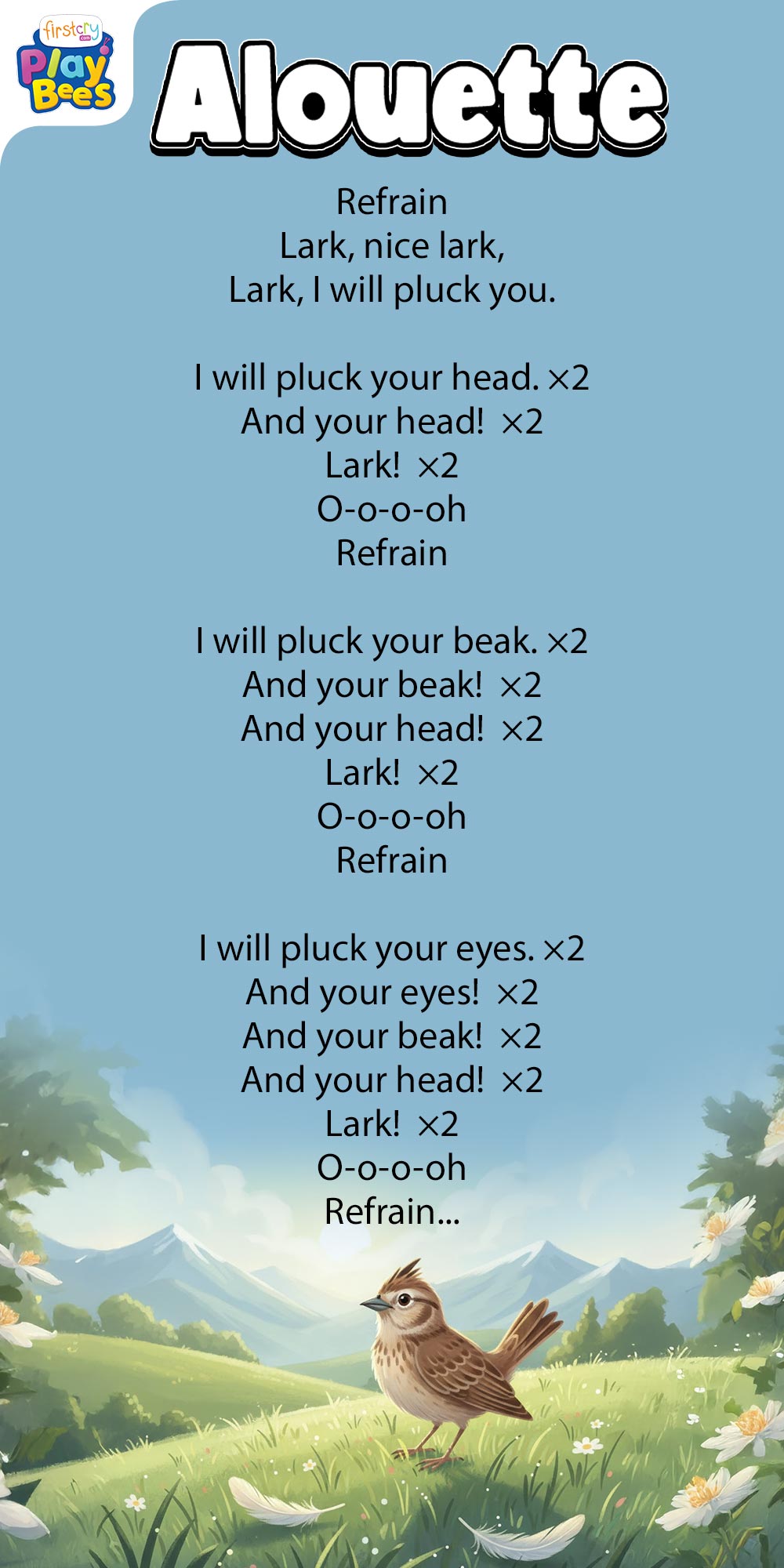
Refrain
Lark, nice lark,
Lark, I will pluck you.
I will pluck your head. ×2
And your head! ×2
Lark! ×2
O-o-o-oh
Refrain
I will pluck your beak. ×2
And your beak! ×2
And your head! ×2
Lark! ×2
O-o-o-oh
Refrain
I will pluck your eyes. ×2
And your eyes! ×2
And your beak! ×2
And your head! ×2
Lark! ×2
O-o-o-oh
Refrain
I will pluck your neck. ×2
And your neck! ×2
And your eyes! ×2
And your beak! ×2
And your head! ×2
Lark! ×2
O-o-o-oh
Refrain
I will pluck your wings. ×2
And your wings! ×2
And your neck! ×2
And your eyes! ×2
And your beak! ×2
And your head! ×2
Lark! ×2
O-o-o-oh
Refrain
I will pluck your legs. ×2
And your legs! ×2
And your wings! ×2
And your neck! ×2
And your eyes! ×2
And your beak! ×2
And your head! ×2
Lark! ×2
O-o-o-oh
Refrain
I will pluck your tail. ×2
And your tail! ×2
And your legs! ×2
And your wings! ×2
And your neck! ×2
And your eyes! ×2
And your beak! ×2
And your head! ×2
Lark! ×2
O-o-o-oh
Refrain
I will pluck your back. ×2
And your back! ×2
And your tail! ×2
And your legs! ×2
And your wings! ×2
And your neck! ×2
And your eyes! ×2
And your beak! ×2
And your head! ×2
Lark! ×2
O-o-o-oh
Refrain
Other Versions of the Alouette Song
Many child-friendly adaptations of this rhyme are sung around the world with small changes in lyrics or tempo to suit young learners.
1. Shortened version (few body parts):
Alouette, gentille alouette,
Alouette, je te plumerai,
La tête et le bec,
La tête et le bec,
Alouette, je te plumerai.
2. English-translated version (same tune):
Alouette, little lark so sweet,
Little lark, I’ll pluck your feathers neat,
I’ll pluck your head and beak,
Your head and beak,
Little lark, so sweet.
3. Classroom slow-rhythm version:
A-lou-ette, gen-tille a-lou-ette,
A-lou-ette, je te plu-me-rai,
La tête… le bec…
La tête… le bec…
A-lou-ette, je te plu-me-rai.
4. Action-based version (gesture-focused):
Alouette, gentille alouette,
Touch your head and touch your beak,
Point to eyes and tap your neck,
Alouette, sing and move with me.
5. Musical version (with claps or drums):
Alouette, clap-clap alouette,
Alouette, drum the beat today,
Clap for the head, tap for the beak,
Alouette, let’s sing and play.
Gestures – How to Teach Alouette to Kids
Using actions makes “Alouette” easier to understand and more enjoyable for children. Simple movements help link words to meaning and keep little learners active.
- When singing la tête, point to the head so children can clearly connect the word with its meaning.
- While mentioning le bec, gently touch the nose or mouth to help children understand the action.
- For les yeux, point to the eyes using two fingers to visually reinforce the word.
- As you sing le cou, place a hand around the neck area to show what it refers to.
- When le dos is sung, pat the back lightly so children can follow the gesture easily.
- While repeating “Alouette,” flap your arms like wings to keep children engaged and energetic.
History & Quick Facts
“Alouette” is a traditional French folk song that dates back to at least the 19th century and is believed to have originated in France or French-speaking Canada. The song does not have a known single author, as it was passed down orally through generations. It became popular among children because of its repetitive structure and simple vocabulary. Over time, it was introduced into schools as a fun way to teach basic French words. The catchy melody helped the rhyme travel beyond French-speaking regions, making it well known worldwide.
Interesting Facts
- “Alouette” means “lark” in French and refers to a small bird featured in the song.
- The rhyme teaches children the names of different body parts using simple French words.
- It follows a repetitive call-and-response pattern that makes the song easy to remember and sing along to.
- The tune is often used in language classrooms because it helps children learn through music.
- The song is popular in France, Canada, and many other parts of the world.
- It is commonly sung with actions, which helps children understand the words and enjoy learning.
Suitable Age & Learnings
This rhyme is ideal for children aged 2 to 6 years, as it combines music, movement, and simple language learning. It supports early development through repetition and playful interaction.
- Children learn basic French vocabulary in a fun and memorable way through repeated words and musical patterns.
- The rhyme builds strong listening and recall skills by using predictable repetition that children can easily follow.
- Singing the song helps improve pronunciation and sound awareness as children hear and repeat new words.
- Simple hand and body actions support coordination and develop early motor skills.
- The repeated verses help strengthen memory and teach children how to follow sequences.
- Group singing encourages confidence and active participation as children sing along together.
FAQs
1. What is the rhyming scheme of Alouette?
The rhyming scheme of “Alouette” is a repetitive refrain-based pattern rather than a fixed scheme like AABB or ABAB.
2. Does Alouette help with language learning?
Yes, it gently introduces French words while improving listening and memory skills.
“Alouette” is more than just a song—it’s a joyful learning experience for young children. Its lively tune and repetitive words make it easy for kids to join in and stay engaged. Parents and teachers appreciate how naturally it introduces another language through music and movement. The rhyme also supports memory, coordination, and listening skills in a playful way. With simple gestures and a cheerful rhythm, “Alouette” fits perfectly into early learning routines. Singing it together creates happy moments while helping children learn through fun and connection.
Explore Other Rhymes for Kids:
Itsy Bitsy Spider Nursery Rhyme With Lyrics
How Much Wood Would a Woodchuck Chuck Nursery Rhyme With Lyrics
There Was an Old Lady Who Swallowed a Fly Nursery Rhyme With Lyrics