
Table of Contents
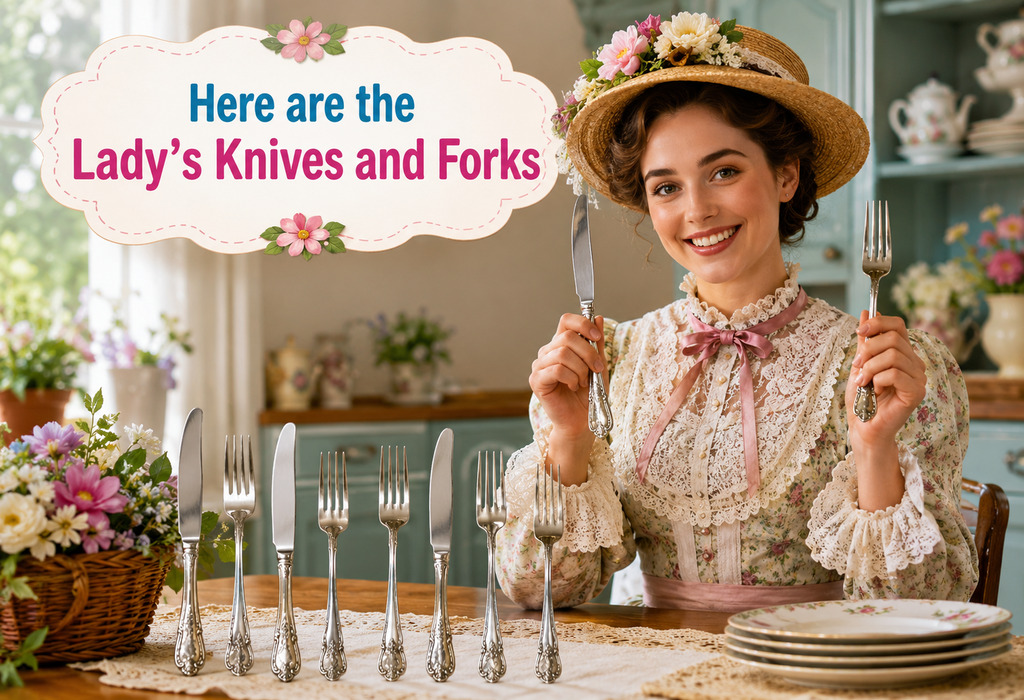
“Here are the Lady’s Knives and Forks” is a short and playful nursery rhyme that combines simple words with fun hand movements. Children enjoy this rhyme because it turns everyday objects like knives, forks, tables, and cradles into an interactive fingerplay activity. The gentle rhythm and easy-to-remember lines make it enjoyable for toddlers and preschoolers to sing along with parents and teachers. As children follow the actions, they improve their listening skills, hand-eye coordination, and memory. The rhyme also introduces basic household vocabulary in a fun and engaging way. Because of its simple structure and movement-based learning, it is often used in early childhood classrooms and homes to encourage participation, creativity, and language development while keeping young learners entertained.
Here are the Lady’s Knives and Forks Song Lyrics
Children love reciting these Here are the Lady’s Knives and Forks words while acting out the fingerplay with their hands.
Here are the lady’s knives and forks,
Here is the lady’s table,
Here is the lady’s looking-glass,
And here is the baby’s cradle.
Other Versions of Here are the Lady’s Knives and Forks Song
Over the years, this nursery rhyme has appeared in slightly different forms while keeping the same playful finger actions.
One popular variation is known as “Here are Mother’s Knives and Forks.” In this version, some of the family references change while the overall meaning remains the same.
Here are mother’s knives and forks,
Here is mother’s table,
Here is mother’s looking-glass,
And here is baby’s cradle.
Another variation includes:
Here are mother’s knives and forks,
And here’s my grandma’s table,
Here’s my sister’s looking-glass,
And here’s the baby’s cradle.
Gestures – How to Teach Here are the Lady’s Knives and Forks to Kids
This rhyme becomes even more exciting when children perform actions along with the words. The simple fingerplay helps kids stay focused while making learning more interactive and enjoyable.
- Interlace your fingers and hold them upright to represent the lady’s knives and forks.
- Turn your joined hands over with palms facing down to create the shape of a table.
- Keep your fingers interlocked and gently turn your hands toward your face as if looking into a mirror or looking-glass.
- Lift your joined hands slightly and show the shape clearly so children can copy the movement.
- Rock your interlocked hands slowly from side to side to represent the baby’s cradle.
- Repeat the rhyme several times while encouraging children to perform the actions on their own.
History & Quick Facts
“Here are the Lady’s Knives and Forks” is a traditional English nursery rhyme and fingerplay that has been passed down through generations. The original author is unknown, which is common for many old folk rhymes. It is believed to have originated in England and became popular through oral storytelling, family traditions, and early childhood activities. The rhyme is often recited rather than sung, although some versions use a tune similar to “Pop Goes the Weasel.” Its simple hand movements and short verses helped it remain popular in nurseries, preschools, and homes, where it continues to be used as a fun learning activity for young children.
Interesting Facts
- This rhyme is known as a fingerplay because children perform hand gestures while saying the words.
- The song is sometimes called “Here are Mother’s Knives and Forks” in different regions.
- Many teachers use the rhyme to help children develop fine motor skills through finger movements.
- The tune is often compared to the melody of “Pop Goes the Weasel,” making it easy for children to learn.
- The rhyme has remained popular for generations because of its short length and simple vocabulary.
- It is commonly included in preschool activities, storytelling sessions, and early learning programs around the English-speaking world.
Suitable Age & Learnings
This nursery rhyme is best suited for children between 2 and 6 years old. Its simple words and easy hand actions make it ideal for toddlers and preschoolers who are developing language and coordination skills.
- Vocabulary Building: Children learn words such as knives, forks, table, looking-glass, and cradle through repetition.
- Fine Motor Skills: The finger movements help strengthen hand muscles and improve coordination.
- Listening Skills: Kids learn to pay attention to words and actions while following the rhyme.
- Memory Development: Repeating the short verses helps children remember sequences and patterns.
- Imagination and Creativity: Children use pretend play to visualize household objects and actions.
- Confidence and Participation: Singing and performing gestures encourage children to engage actively in group activities.
FAQs
1. What is the rhyming scheme of Here are the Lady’s Knives and Forks?
The rhyme follows a very simple pattern and focuses more on rhythm and actions than strong end rhymes. Its repetition and flow make it easy for young children to remember.
2. Why is Here are the Lady’s Knives and Forks popular with preschoolers?
The rhyme combines simple words with easy hand movements, making it fun, interactive, and suitable for young learners.
3. What skills can children develop from this nursery rhyme?
Children can improve vocabulary, listening abilities, memory, hand coordination, and confidence through regular practice of the rhyme and its gestures.
“Here are the Lady’s Knives and Forks” is a charming nursery rhyme that brings together music, movement, and learning in a simple way. Its short verses make it easy for young children to remember and enjoy. The accompanying fingerplay encourages active participation and helps develop important motor skills. Parents and teachers appreciate the rhyme because it supports language learning while keeping children engaged. Even after many generations, it continues to be a favorite activity in homes and classrooms. With its playful actions and gentle rhythm, this classic rhyme remains a delightful part of early childhood learning.
Explore Other Rhymes for Kids:
Open Shut Them Nursery Rhyme With Lyrics
Two Little Hands Nursery Rhyme With Lyrics
Round and Round the Garden Nursery Rhyme With Lyrics