
Table of Contents
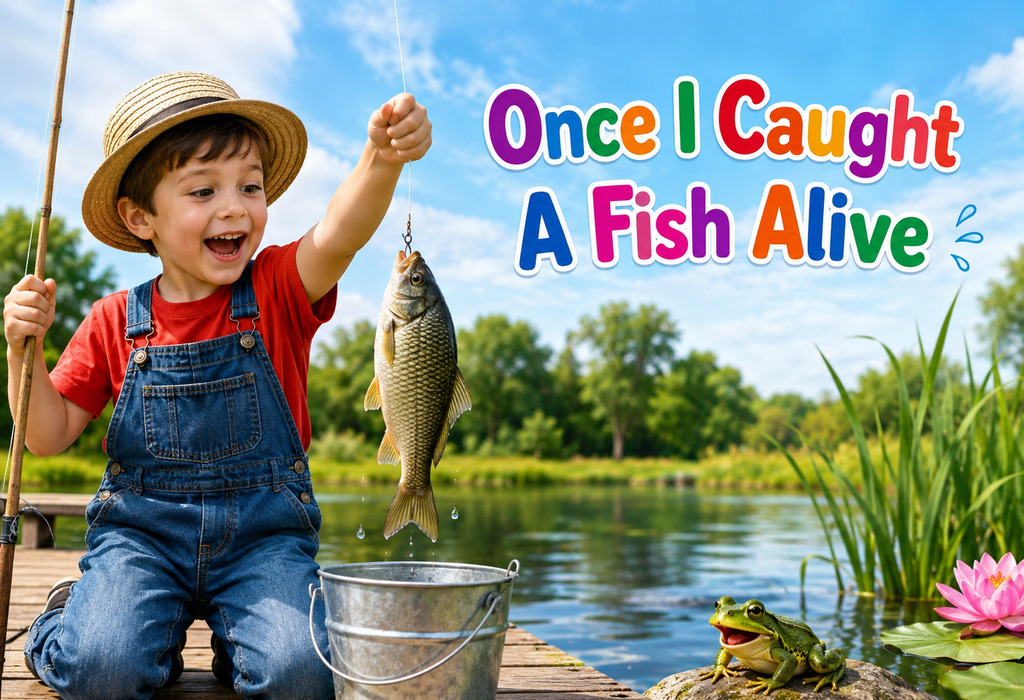
“Once I Caught A Fish Alive” is a classic nursery rhyme that has entertained children for generations with its playful story and catchy rhythm. The rhyme tells the tale of catching a fish, counting numbers, and discovering a funny reason why one finger was bitten. Children enjoy singing it because the words are easy to remember and the counting sequence makes it fun to follow along. Parents and teachers often use this rhyme to introduce early number recognition, counting skills, and listening practice. The simple storyline also encourages imagination and helps children build confidence in speaking and singing. With its repetitive pattern and cheerful tone, this beloved rhyme remains a favorite activity for preschoolers and young learners during playtime, circle time, and classroom learning sessions.
Once I Caught A Fish Alive Song Lyrics
Children love singing these Once I Caught A Fish Alive words because they combine counting, storytelling, and fun actions in a memorable rhyme.
One, two, three, four, five.
Once I caught a fish alive.
Six, seven, eight, nine, ten.
Then I let it go again.
Why did you let it go?
Because it bit my finger so.
Which finger did it bite?
This little finger on the right.
One, two, three, four, five.
One, two, three, four, five.
Once I caught a fish alive.
Six, seven, eight, nine, ten.
Then I let it go again.
Why did you let it go?
Because it bit my finger so.
Which finger did it bite?
This little finger on the right.
One, two, three, four, five.
Other Versions of Once I Caught A Fish Alive Song
Many families and teachers enjoy using slightly different versions of this popular rhyme to add variety and extra fun.
Version 1
One, two, three, four, five,
Once I caught a fish alive,
Six, seven, eight, nine, ten,
Then I threw it back again.
Why did you throw it back?
Because it gave my hand a whack!
Version 2
One, two, three, four, five,
Once I caught a fish alive,
Six, seven, eight, nine, ten,
Then I set it free again.
Why did you set it free?
Because it wanted in the sea!
Gestures – How to Teach Once I Caught A Fish Alive to Kids
This rhyme becomes even more enjoyable when children act out the words while singing. Simple hand movements help kids stay engaged and remember the lyrics more easily.
- Hold up one finger at a time while singing “One, two, three, four, five” to practice counting.
- Pretend to catch a fish with both hands when singing “Once I caught a fish alive.”
- Stretch out both hands and count fingers while singing “Six, seven, eight, nine, ten.”
- Open your hands wide as if releasing a fish during “Then I let it go again.”
- Point to one finger and make a surprised face when singing “Because it bit my finger so.”
- Wiggle your little finger on the right hand while singing “This little finger on the right.”
History & Quick Facts
“Once I Caught A Fish Alive” is a traditional English nursery rhyme that has been passed down through generations. Its exact author is unknown, which is common for many traditional nursery rhymes. The rhyme is believed to have originated in England during the nineteenth century and appeared in various collections of children’s songs and rhymes over time. Its simple counting pattern, humorous story, and easy-to-remember lyrics helped it become popular in homes, schools, and nurseries around the world. Today, it remains one of the most widely taught counting rhymes for young children.
Interesting Facts
- The rhyme is often used to help children learn counting from one to ten in a fun and memorable way.
- Many teachers include hand actions and finger movements to make the song more interactive for young learners.
- The rhyme has been translated and adapted into different languages around the world.
- Because the tune is simple and repetitive, children can quickly learn and sing it independently.
- It is commonly featured in preschool classes, children’s music collections, and educational programs.
- The playful story about a fish biting a finger makes the rhyme easy for children to remember and retell.
Suitable Age & Learnings
“Once I Caught A Fish Alive” is best suited for children aged 2 to 6 years. The rhyme combines counting practice with storytelling, making it valuable for early childhood development.
- Counting Skills: Children learn to count from one to ten while following the sequence in the song.
- Number Recognition: Repeated exposure helps young learners become familiar with number order.
- Listening Skills: Kids improve their ability to listen carefully and follow a simple narrative.
- Memory Development: Repetition encourages children to remember words, numbers, and actions.
- Language Growth: The rhyme introduces vocabulary such as fish, finger, bite, and right.
- Motor Coordination: Finger-counting and gesture activities help strengthen hand-eye coordination and movement skills.
FAQs
1. What is the rhyming scheme of Once I Caught A Fish Alive?
The rhyme mainly follows an AABB pattern, with words like five/alive and ten/again creating simple rhymes that are easy for children to recognize.
2. Why is Once I Caught A Fish Alive good for preschoolers?
The rhyme teaches counting, improves memory, builds vocabulary, and encourages participation through singing and actions.
3. How can parents make the rhyme more interactive?
Parents can use finger counting, fish-catching gestures, and playful facial expressions to help children stay engaged while learning.
“Once I Caught A Fish Alive” continues to be a favorite nursery rhyme because of its simple story, catchy rhythm, and educational value. Children enjoy the playful counting sequence and the funny ending about the bitten finger. The rhyme supports early learning by strengthening number recognition, language development, and listening skills. Adding gestures and actions makes the experience even more enjoyable and memorable. Whether sung at home, in preschool, or during playtime, it offers a wonderful opportunity for interactive learning. Its timeless charm ensures that new generations of children will continue to enjoy this classic rhyme for years to come.
Explore Other Rhymes for Kids:
One Two Three Four Five Nursery Rhyme With Lyrics
Five Little Speckled Frogs Nursery Rhyme With Lyrics
A Sailor Went To Sea Sea Sea Nursery Rhyme With Lyrics