
Table of Contents
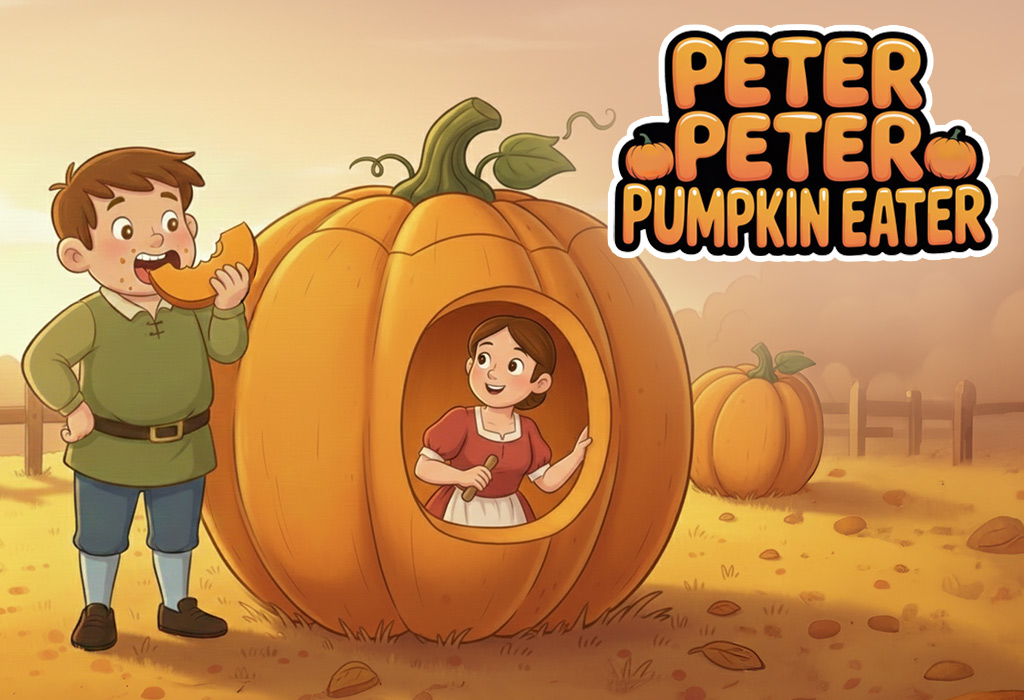
“Peter Peter Pumpkin Eater” is a classic nursery rhyme that tells a short, rhythmic story in a fun and memorable way. Children enjoy this rhyme because of its playful wording, strong rhythm, and simple storyline that is easy to follow and repeat. The idea of a pumpkin being used as a house sparks imagination and often brings smiles and giggles. For parents and teachers, this rhyme is a gentle learning tool that supports early language development, listening skills, and memory through repetition. The clear rhyming pattern helps children recognize sounds, while the short lines make it perfect for group singing or one-on-one reading. Overall, it is a warm, traditional rhyme that blends fun, storytelling, and early learning beautifully.
Peter Peter Pumpkin Eater Song Lyrics
A familiar nursery verse enjoyed for generations, the Peter Peter Pumpkin Eater words are short, catchy, and easy for children to learn.
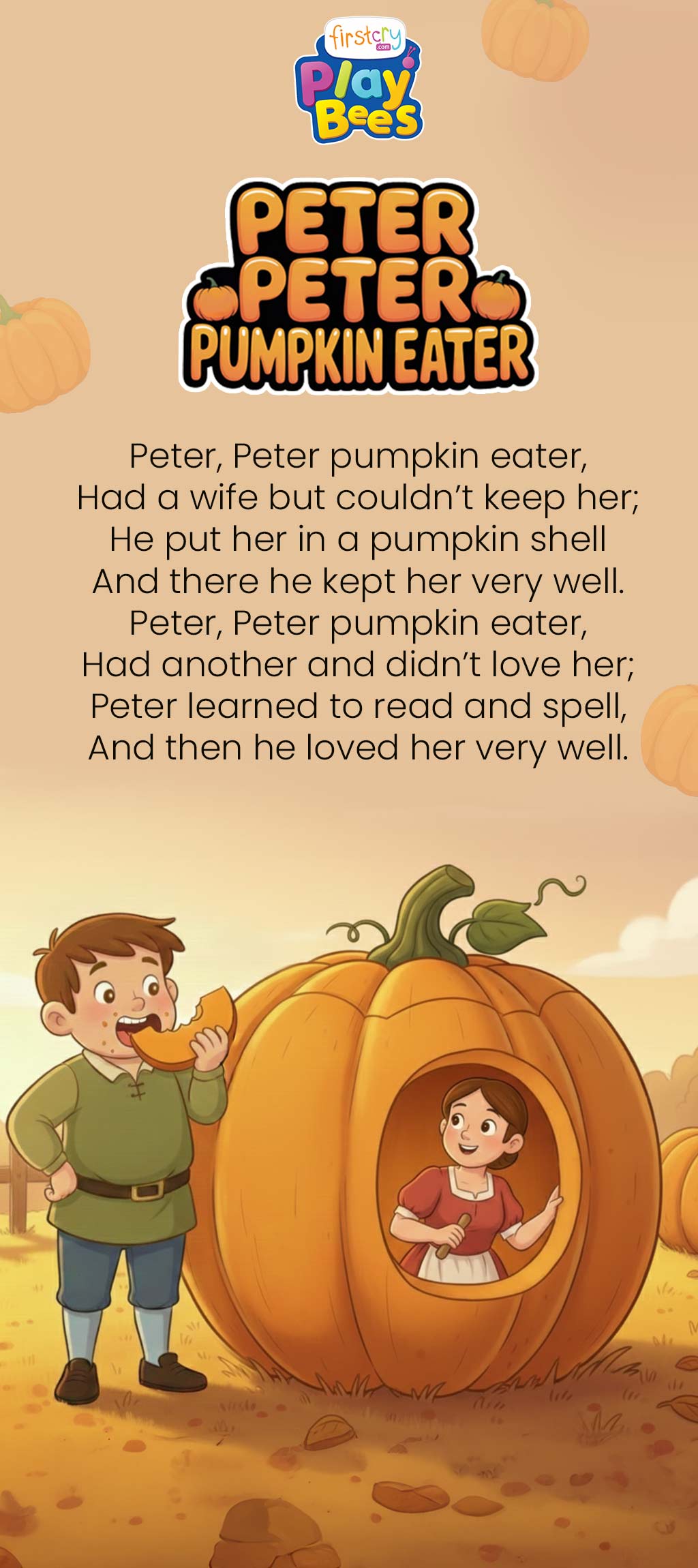
Peter, Peter pumpkin eater,
Had a wife but couldn’t keep her;
He put her in a pumpkin shell
And there he kept her very well.
Peter, Peter pumpkin eater,
Had another and didn’t love her;
Peter learned to read and spell,
And then he loved her very well.
Other Versions of the Peter Peter Pumpkin Eater Song
Over the years, this rhyme has appeared in a few gentle variations that slightly change wording while keeping the original meaning and rhythm intact.
1. Modern Wording Version
Peter, Peter, pumpkin eater,
Had a wife and couldn’t keep her;
He put her in a pumpkin cell,
And there he kept her safe and well.
2. Storytelling Version
Peter, Peter, pumpkin eater,
Had a wife and loved her dearly;
He found a home both warm and bright,
A pumpkin house that fit just right.
3. Gentle Family Version
Peter, Peter, pumpkin eater,
Had a wife and couldn’t keep her;
So they shared a pumpkin shell,
And lived together, calm and well.
Gestures – How to Teach Peter Peter Pumpkin Eater to kids
Using actions makes this rhyme more engaging and helps children remember the words more easily. Simple movements also support coordination and listening skills.
- Point to yourself or a child when saying “Peter, Peter” to help kids connect the words to a person.
- Pretend to eat with your hand for “pumpkin eater” so children can act out the meaning in a fun way.
- Shake your head gently for “couldn’t keep her” to express the idea of not being able to manage something.
- Make a round shape with your arms to show a “pumpkin shell,” helping children visualize the pumpkin.
- Pretend to place something inside the circle to act out putting someone into the pumpkin shell.
- Fold your arms with a smile for “kept her very well” to show that everything is safe and happy at the end.
History & Quick Facts
“Peter Peter Pumpkin Eater” is an English nursery rhyme that dates back to at least the 18th century. It was first published in Mother Goose’s Melody around 1765, a collection that helped preserve many traditional rhymes. The author is unknown, which is common for folk rhymes passed down orally over time. Its simple structure and catchy rhythm helped it spread easily among families and schools, making it a long-lasting favorite in early childhood learning.
Interesting Facts
- It is one of the shortest traditional nursery rhymes, making it easy for young children to learn and recite.
- The rhyme follows a simple storytelling format that helps children understand a beginning, middle, and end.
- It is commonly included in Mother Goose collections, which has helped preserve and popularize it over time.
- The tune is often adapted rather than fixed to one melody, allowing flexibility in singing and teaching.
- It appears in many illustrated children’s books that make the rhyme more engaging and visually appealing.
- The rhyme is known worldwide in English-speaking countries and is widely taught in homes and schools.
Suitable Age & Learnings
This rhyme is ideal for children aged 2 to 5 years due to its short length and simple language. It works well for toddlers as well as preschool learning activities.
- Rhyming skills are strengthened as children learn to hear and recognize matching sounds at the ends of words.
- Memory building improves because repeating the rhyme helps children remember words and sentence patterns.
- Listening skills develop as kids pay attention to short, clear lines and follow the flow of the rhyme.
- Vocabulary grows when children are introduced to simple new words like pumpkin, shell, and keep in context.
- Imagination is encouraged as the rhyme paints a playful picture that children can visualize in their minds.
- Speech development is supported when children recite the rhyme aloud, helping with clear pronunciation and confidence.
FAQs
1. What is the rhyming scheme of Peter Peter Pumpkin Eater?
The rhyming scheme of Peter Peter Pumpkin Eater is AABB, as the first two lines rhyme with each other and the last two lines rhyme together.
2. What learning benefit does this rhyme offer to young kids?
The rhyme helps children develop early language skills by improving listening, memory, and understanding of rhyming words.
“Peter Peter Pumpkin Eater” remains a beloved nursery rhyme because of its simplicity and charm. Its short verses make it easy for young children to learn and enjoy without feeling overwhelmed. Parents and teachers appreciate how naturally it supports early language development through rhyme and repetition. When paired with actions, it becomes even more engaging and fun for kids. The rhyme also connects children to traditional storytelling passed down through generations. Overall, it is a gentle, playful rhyme that continues to bring learning and laughter together.
Explore Other Rhymes for Kids:
The Muffin Man Nursery Rhyme With Lyrics
Down by the Bay Nursery Rhyme With Lyrics
Apples and Bananas Nursery Rhyme With Lyrics