
Table of Contents
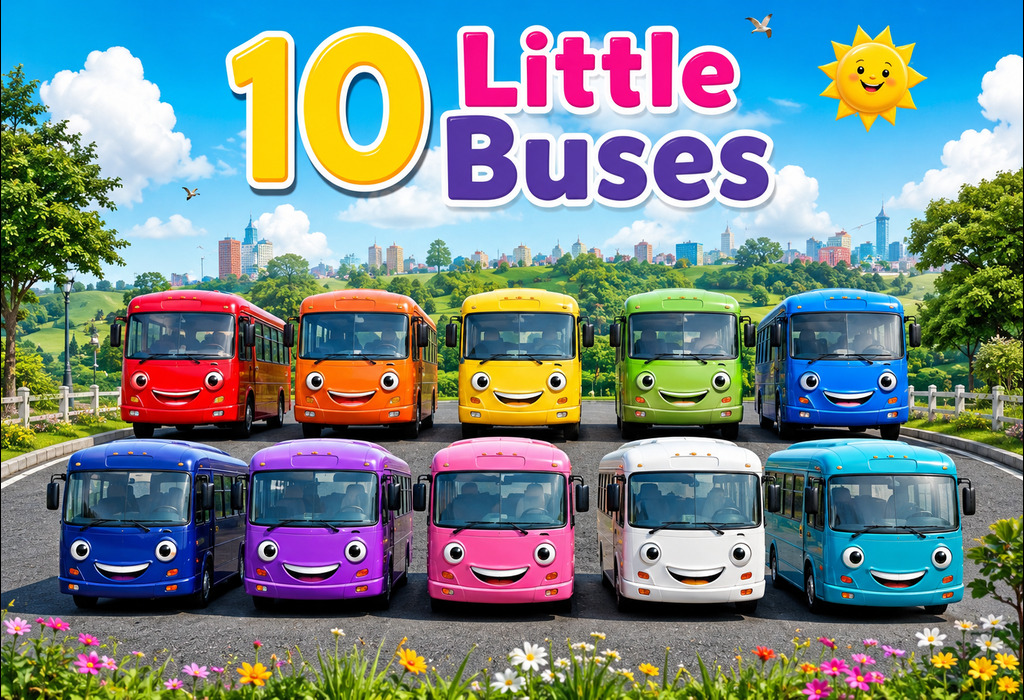
10 Little Buses is a cheerful counting rhyme that takes children on a fun journey with a line of colorful buses. As kids count from one to ten and then back again, they build early math skills while enjoying a simple, catchy tune. The playful bus theme is especially exciting for young children who love vehicles and transportation. Parents and teachers enjoy this rhyme because it combines music, movement, and learning in an easy way. Singing along encourages children to recognize numbers, practice counting sequences, and improve listening skills. The repeated words help build confidence in speaking and memory. It can also be paired with finger counting or toy buses for interactive play. Whether at home, in preschool, or during circle time, 10 Little Buses is a delightful rhyme that makes learning numbers fun and engaging.
10 Little Buses Song Lyrics
The 10 Little Buses words help children practice counting while singing along to a lively and easy-to-remember tune.
Let’s count some buses!
1 little, 2 little, 3 little buses,
4 little, 5 little, 6 little buses,
7 little, 8 little, 9 little buses,
10 little buses.
Great job, guys. Now let’s count them backwards.
10 little, 9 little, 8 little buses,
7 little, 6 little, 5 little buses,
4 little, 3 little, 2 little buses,
1 little bus.
1 bus. 2 buses. 3 buses.
4 buses. 5 buses. 6 buses.
7 buses. 8 buses. 9 buses.
10 buses.
1 little, 2 little, 3 little buses,
4 little, 5 little, 6 little buses,
7 little, 8 little, 9 little buses,
10 little buses.
Backwards!
10 little, 9 little, 8 little buses,
7 little, 6 little, 5 little buses,
4 little, 3 little, 2 little buses,
1 little bus.
That was fun. Thanks for counting with me.
Other Versions of 10 Little Buses Song
Many counting songs follow a similar pattern and can be enjoyed alongside this rhyme.
1. 10 Little Trains
Ten little trains chugging down the track,
One went forward and never looked back.
Count them rolling, one by one,
Train ride time is lots of fun!
2. 10 Little Trucks
Ten little trucks rumbling down the road,
Carrying toys with a heavy load.
One drove off with a happy honk,
Nine little trucks go clunk, clunk, clunk!
3. 10 Little Tractors
Ten little tractors working all day,
Driving through fields of fresh-cut hay.
One went home when work was done,
Nine little tractors in the sun.
4. 10 Little Cars
Ten little cars zooming so fast,
Racing together, first to last.
One turned off with a cheerful beep,
Nine little cars still on the street.
5. 10 Little Fire Engines
Ten little fire engines, red and bright,
Rushing to help both day and night.
One sped off with a loud siren call,
Nine little fire engines standing tall.
6. 10 Little Airplanes
Ten little airplanes up in the sky,
Flying so high as they pass by.
One flew home beyond the blue,
Nine little airplanes in our view.
Gestures – How to Teach 10 Little Buses to Kids
Simple actions make the rhyme more exciting and help children remember the numbers. Pair each verse with easy movements for an engaging learning activity.
- Hold up the correct number of fingers as you count each little bus.
- Move your hands forward like a bus driving down the road.
- Pretend to honk the horn by saying “Beep beep!” and pressing an imaginary horn.
- Count backwards by lowering one finger at a time.
- Point to the floor while counting individual buses from one to ten.
- End with waving goodbye to the buses and clapping for a fun finish.
History & Quick Facts
10 Little Buses is a modern children’s counting song designed to teach numbers through music and repetition. It was created as an educational rhyme for young learners and gained popularity through children’s educational media and classroom activities. While there is no widely credited individual songwriter or historical publication date, the song follows the traditional “ten little” counting-song style that has been used for generations to help children learn numbers. Its simple lyrics and transportation theme have made it a favorite for parents, teachers, and preschool programs.
Interesting Facts
- The rhyme helps children count from one to ten and back again.
- It uses a transportation theme, making it especially fun for vehicle-loving kids.
- The repeated pattern helps improve memory and language skills.
- Children can act out the song with toy buses or finger movements.
- The tune belongs to the family of classic “ten little” counting songs adapted for modern learning.
- It is enjoyed in homes, classrooms, and educational programs around the world.
Suitable Age & Learnings
This rhyme is best suited for children aged 2 to 6 years. It supports early childhood development through music, counting, and movement.
- Number recognition: Children learn to identify and say numbers from one to ten.
- Counting skills: The forward and backward counting pattern strengthens basic math concepts.
- Memory development: Repeating the verses helps improve recall and concentration.
- Language growth: Kids practice new words such as bus, little, and backwards.
- Listening skills: Following the song’s sequence encourages careful attention.
- Motor coordination: Finger counting and gestures improve fine and gross motor skills.
FAQs
1. What is the rhyming scheme of 10 Little Buses?
The rhyme uses a repetitive counting pattern rather than a strict rhyming scheme, making it easy for young children to remember.
2. What age is 10 Little Buses suitable for?
It is ideal for children between 2 and 6 years old who are learning basic counting and vocabulary.
3. How can parents make the rhyme more interactive?
Parents can use toy buses, finger counting, hand movements, and bus sound effects to make singing more engaging.
10 Little Buses is a delightful nursery rhyme that turns counting into an enjoyable adventure. Its simple words and repetitive pattern help young children build confidence with numbers. The fun bus theme keeps kids interested while encouraging active participation. Parents and teachers can make the rhyme even more exciting by adding gestures and playful activities. Beyond entertainment, it supports important early learning skills such as counting, memory, and language development. Sharing this cheerful rhyme together creates happy learning moments that children will remember for years to come.