
Table of Contents
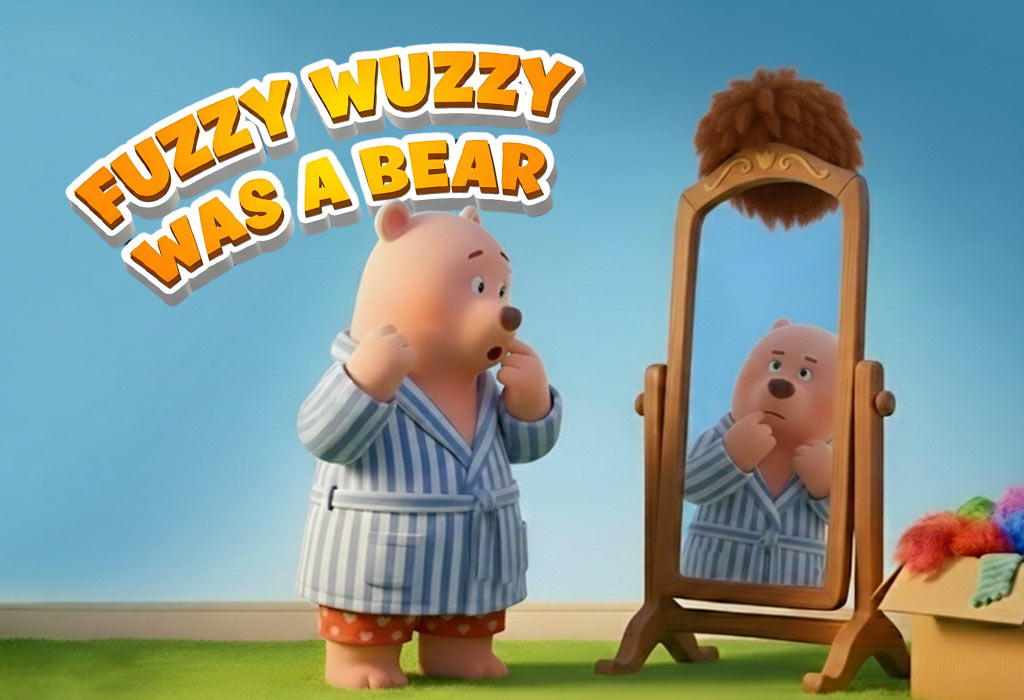
Fuzzy Wuzzy Was a Bear is a playful rhyme that makes children smile with its funny sound patterns and simple story. Kids enjoy repeating the words because the rhythm feels bouncy and the idea of a bear with no hair is silly and memorable. For early learners, this rhyme gently supports listening skills, phonics awareness, and confidence with language through repetition and rhyme in a calm and enjoyable way.
Fuzzy Wuzzy Was a Bear Song Lyrics
These classic Fuzzy Wuzzy Was a Bear words are often shared aloud to help children enjoy rhyme, rhythm, and word play together.
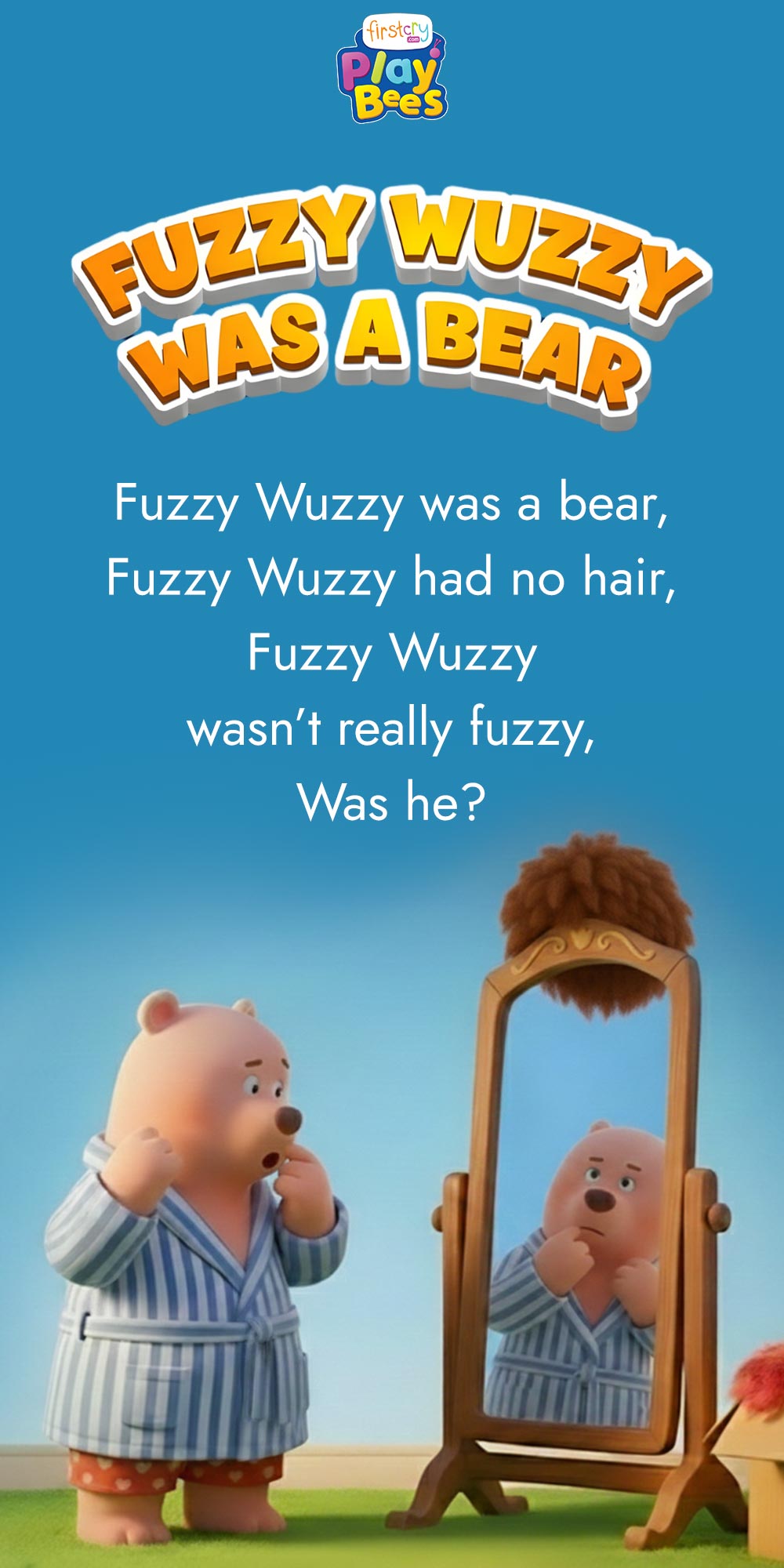
Fuzzy Wuzzy was a bear,
Fuzzy Wuzzy had no hair,
Fuzzy Wuzzy wasn’t really fuzzy,
Was he?
Other Versions of the Fuzzy Wuzzy Was a Bear Song
Different versions of the rhyme exist, with some adding extra lines or playful actions while keeping the original rhythm and rhyme pattern the same.
Version 1
Fuzzy Wuzzy was a bear,
Fuzzy Wuzzy had no hair,
So Fuzzy Wuzzy wasn’t fuzzy,
No he wasn’t, was he?
Version 2
Fuzzy Wuzzy was a bear,
He was brown and had no hair,
Everyone said with a laugh and a cheer,
Fuzzy Wuzzy wasn’t fuzzy, was he dear?
Version 3
Fuzzy Wuzzy was a bear,
Smooth and shiny everywhere,
We all laughed and said with glee,
Fuzzy Wuzzy wasn’t fuzzy, was he?
Gestures – How to Teach Fuzzy Wuzzy Was a Bear to Kids
Teaching this rhyme with actions helps children stay engaged and remember the words more easily. Simple gestures also turn the rhyme into a fun movement activity.
- Pretend to be a big bear by raising arms and making slow growling motions while saying bear.
- Rub your head gently when saying had no hair to show the idea clearly.
- Wiggle fingers near the head when saying fuzzy to act out soft fur.
- Shake your head side to side on wasn’t fuzzy to match the meaning.
- Point to the group or ask with hands open on was he to show a question.
- Repeat the rhyme together while doing all actions to build confidence and memory.
History & Quick Facts
Fuzzy Wuzzy Was a Bear is a traditional English nursery rhyme that has been passed down orally for many generations. The original author is unknown, which is common with classic rhymes shared through families and schools. It appeared in printed collections of nursery rhymes in the nineteenth century. Over time, its playful rhyme scheme helped it remain popular with children learning early language skills.
Interesting Facts
- The rhyme is often used to teach phonics because of its strong repetition of sounds.
- It is popular in English speaking classrooms around the world.
- Some versions add actions to make the rhyme more interactive.
- The rhyme does not follow a song tune and is usually spoken or chanted.
- It has been translated into simple versions in other languages for learning fun.
- Children enjoy it because the idea of a not fuzzy bear feels silly and surprising.
Suitable Age & Learnings
This rhyme is best suited for children aged 2 to 5 years who are beginning to enjoy word play. It works well at home, in preschool, or during group circle time.
- Rhyming skills develop as children hear repeated ending sounds clearly.
- Listening skills improve when kids focus on short rhythmic lines.
- Vocabulary grows with simple words like bear, hair, and fuzzy.
- Memory skills strengthen through repetition of the same lines.
- Speech clarity improves as children practice saying similar sounding words.
- Confidence builds when children can recite the rhyme independently.
FAQs
1. What is the rhyming scheme of Fuzzy Wuzzy Was a Bear?
The rhyme follows an A A B A pattern with repeated ending sounds.
2. Why is this rhyme good for early learning?
It supports phonics, listening, and memory through repetition and rhythm.
Fuzzy Wuzzy Was a Bear remains a favorite because it is short, playful, and easy to remember. The rhyme invites laughter while quietly supporting early language development. Its simple words make it accessible for toddlers and preschoolers alike. Parents and teachers can use it as a fun break or a learning activity. Adding actions makes the experience even more engaging for young children. This timeless rhyme continues to bring joy through its gentle humor and sound play.
Explore Other Rhymes for Kids:
Betty Botter Nursery Rhyme With Lyrics
Miss Mary Mack Nursery Rhyme With Lyrics
How Much Wood Would a Woodchuck Chuck Nursery Rhyme With Lyrics