
Table of Contents
- What Is a Simile?
- Simile vs. Metaphor: What’s the Difference?
- Why Teaching Similes Matters for Young Readers
- Similes for Kindergarten
- Similes for First Graders
- Similes for Second Graders
- Similes for 3rd Graders
- List of Similes for Kids by Category
- Fun Ways to Practice Similes at Home
- Common Mistakes Kids Make with Similes
Ever heard your child say something is “as slow as a snail” or “hungry like a bear”? That’s a simile in action, and kids pick up on this playful comparison faster than most parents realize. Similes for kids are one of the simplest ways to introduce figurative language, helping them describe feelings, sizes, sounds, and experiences more vividly. Ahead, you’ll find clear explanations, age-appropriate examples for kindergarten through third grade, and simple ways to practice similes at home without turning it into a chore.
What Is a Simile?
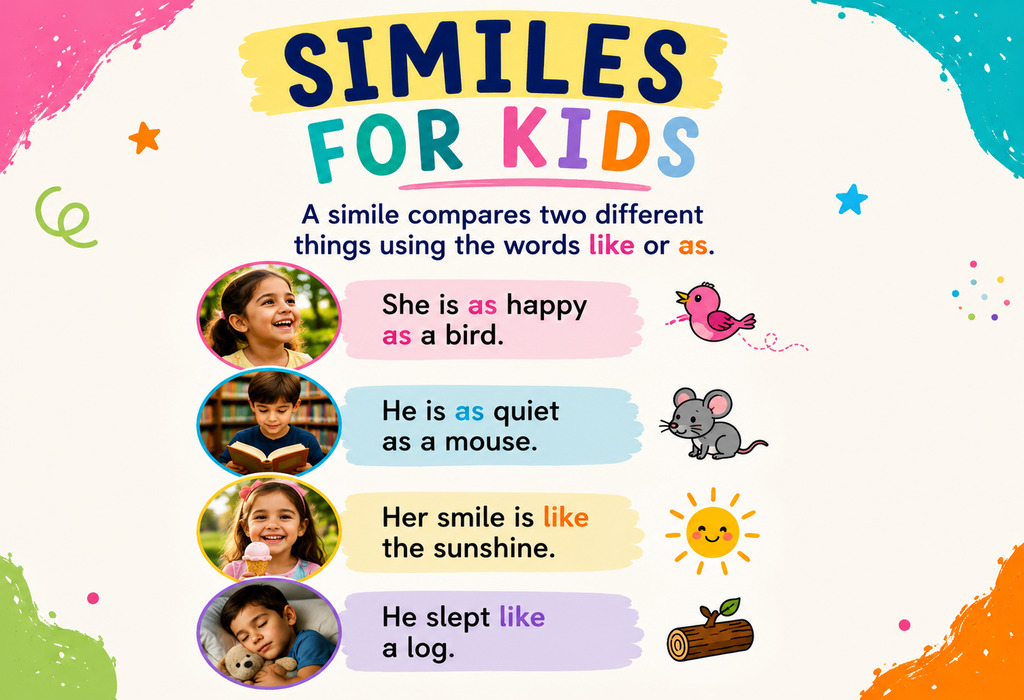
A simile is a figure of speech that compares two unlike things using the words “like” or “as,” highlighting a shared quality between them even though they aren’t actually the same. When a child says “her smile is as bright as the sun,” they aren’t claiming a smile is literally sunshine, but pointing out that both things share a quality, in this case, brightness. Similes work because they connect something unfamiliar or hard to describe to something the listener already knows well; a stomach ache is hard to explain, but “my stomach feels like a washing machine” instantly paints a picture. That’s the real value of teaching similes early: kids learn to communicate ideas and feelings through comparison, not just through plain description.
Simile vs. Metaphor: What’s the Difference?
Parents and teachers often mix up similes and metaphors, and it’s an easy mistake to make since both compare two things. The difference comes down to one small detail.
- A simile uses “like” or “as” to make the comparison (“brave as a lion”).
- A metaphor states that one thing is another, without “like” or “as” (“he is a lion on the field”).
For young learners, similes are the easier starting point because the words “like” and “as” act as a signal, almost like a clue word, that tells the reader a comparison is coming. Once kids get comfortable spotting and building similes, metaphors become much easier to understand later on.
Why Teaching Similes Matters for Young Readers
- Boosts reading comprehension: Similes show up constantly in picture books, early readers, and chapter books, so a child who understands that “the leaves fell like confetti” pictures the scene far more clearly than one who reads past the phrase without connecting it to anything familiar.
- Builds confidence in writing: Comparing a barking dog to a broken alarm, or a messy room to a tornado, lets a child practice descriptive language without needing a large vocabulary, which makes creative writing feel more approachable.
- Strengthens vocabulary naturally: Learning similes exposes kids to new words and ideas through comparison, which tends to stick better than memorizing word lists.
- Builds on a skill kids already have: Teachers often introduce similes around kindergarten and first grade because the concept relies on something kids already do naturally, comparing things to what they already know.
- Fits easily into everyday moments: A parent doesn’t need a lesson plan to reinforce similes. Describing the weather, a meal, or a funny moment at home offers plenty of chances to practice.
Similes for Kindergarten
At this age, keep comparisons short, familiar, and tied to the five senses. Kindergarteners respond best to similes about animals, weather, food, and everyday objects they can picture immediately.
- As cold as ice
- As hot as fire
- As quiet as a mouse
- As slow as a turtle
- As big as an elephant
- Sleeping like a baby
- Jumping like a kangaroo
A simple way to practice these at home is through a “finish the simile” game. Say “as cold as…” and let your child fill in the blank. There’s no wrong answer as long as the comparison makes sense to them, and the silliness of some responses usually keeps kids engaged longer than a worksheet would.
Similes for First Graders
By first grade, kids can handle slightly longer comparisons and start connecting similes to feelings, not just physical traits. This is a good time to introduce examples that describe emotions and actions.
- As brave as a lion
- As busy as a bee
- Crying like a baby
- As light as a feather
- As happy as a clam
- Running like the wind
- As sweet as sugar
First graders also enjoy spotting similes in the books they’re reading. Pausing during story time to ask, “What two things is the author comparing here?” turns a passive reading moment into an active learning one, without adding extra time to the routine.
Similes for Second Graders
Second grade is when kids start writing their own short stories and journal entries, so similes for second graders should stretch a little further, encouraging more original comparisons rather than only recalling common ones.
- As stubborn as a mule
- As proud as a peacock
- Shining like a diamond
- As tall as a giraffe
- Fighting like cats and dogs
- As fresh as a daisy
- Working like a bee
At this stage, it helps to ask kids to explain why a comparison works. If a child writes “the ice cream melted like a snowman in summer,” ask what the two things have in common. This builds the reasoning skill behind similes, not just memorization of a phrase.
Similes for 3rd Graders
Similes for 3rd graders can move beyond stock phrases and start reflecting a child’s own observations. Third graders are usually ready to invent similes rather than just recognize familiar ones, which is where writing and creativity really start to connect.
- As clever as a fox
- As gentle as a lamb
- Roaring like thunder
- As deep as the ocean
- As fierce as a tiger
- Twinkling like stars
- As stubborn as a rock
A useful classroom and home technique at this level is asking kids to describe something ordinary, like a school bus or a rainy day, using a simile they come up with themselves. Original comparisons, even imperfect ones, show that a child truly understands the concept rather than just repeating examples they’ve heard before.
List of Similes for Kids by Category
Organizing similes by theme makes them easier to remember and reuse. This list of similes for kids covers common categories that show up across grade levels.
| Category | Simile Examples |
|---|---|
| Animals | Sly as a fox, strong as an ox, graceful as a swan |
| Weather | Cold as ice, hot as an oven, light as a snowflake |
| Emotions | Happy as a clam, mad as a hornet, calm as still water |
| Size | Small as an ant, tall as a tree, huge as a mountain |
| Sound | Loud as thunder, quiet as a whisper, sharp as a whistle |
| Food and Taste | Sweet as honey, sour as a lemon, cool as a cucumber |
Keeping a running list like this at home, even taped to the fridge, gives kids a reference point when they’re writing stories or working on homework. Children tend to reuse comparisons they’ve seen written down, so visible examples do more work than verbal reminders alone.
Fun Ways to Practice Similes at Home
Learning similes sticks best when it feels like play instead of instruction. A few approaches that work well across ages:
- Simile scavenger hunt: Walk around the house or yard and challenge your child to describe five objects using a simile.
- Story swap: Read a page from a favorite book together and rewrite one sentence using a new simile.
- Silly comparisons game: Take turns finishing prompts like “as weird as…” to keep things lighthearted and low-pressure.
- Drawing similes: Have younger kids draw a picture of a simile, such as “raining like cats and dogs,” which reinforces the visual nature of the comparison.
These activities work because they treat similes as a creative tool rather than a rule to memorize, which tends to hold a child’s attention far longer.
Common Mistakes Kids Make with Similes
A few patterns show up repeatedly as kids learn this skill, and knowing them ahead of time makes correction easier.
- Confusing similes with metaphors: Kids often drop the “like” or “as” by accident. Gently pointing out the missing word, rather than correcting the whole sentence, helps the lesson stick.
- Overusing the same comparison: Many children lean on one or two favorite similes (“cool as ice” appears often). Encourage variety by suggesting a category they haven’t tried yet, like sounds or emotions.
- Choosing comparisons that don’t fit: Sometimes a child compares two things with no real shared quality, such as “as fast as a rock.” Asking “what do these two things have in common?” helps them self-correct without feeling discouraged.
- Relying only on memorized examples: Reciting familiar similes is a fine starting point, but growth comes from inventing new ones, so gently push older kids toward original comparisons once the basics feel comfortable.
Similes give kids an easy, low-pressure way to describe the world more vividly, and that skill only grows stronger with practice. Starting with short, sensory comparisons in kindergarten and building toward original, creative similes by third grade helps children develop vocabulary and confidence as writers and readers. The examples and activities in this guide are a starting point, so adapt them to your child’s interests. The more naturally similes show up in daily conversation, the more comfortable kids become using them on their own.
Also Read: