

Table of Contents
“Rub-a-dub-dub” is a classic nursery rhyme that paints a playful picture of three familiar characters sharing a funny adventure in a tub. Its silly idea and catchy rhythm instantly grab a child’s attention, making it easy to listen to and remember. Kids enjoy the rhyme because of its repetition, musical sound, and the amusing imagery that sparks their imagination. For parents and teachers, this rhyme is more than just fun—it gently supports early learning. As children listen and sing along, they begin to recognize rhyming words, improve memory, and build early language skills. The simple storyline also helps kids understand sequencing and introduces them to everyday roles like a butcher, baker, and candlestick-maker. Whether sung during playtime or read aloud before bed, “Rub-a-dub-dub” offers a warm, engaging way to combine enjoyment with early childhood learning.
Rub-a-dub-dub Song Lyrics
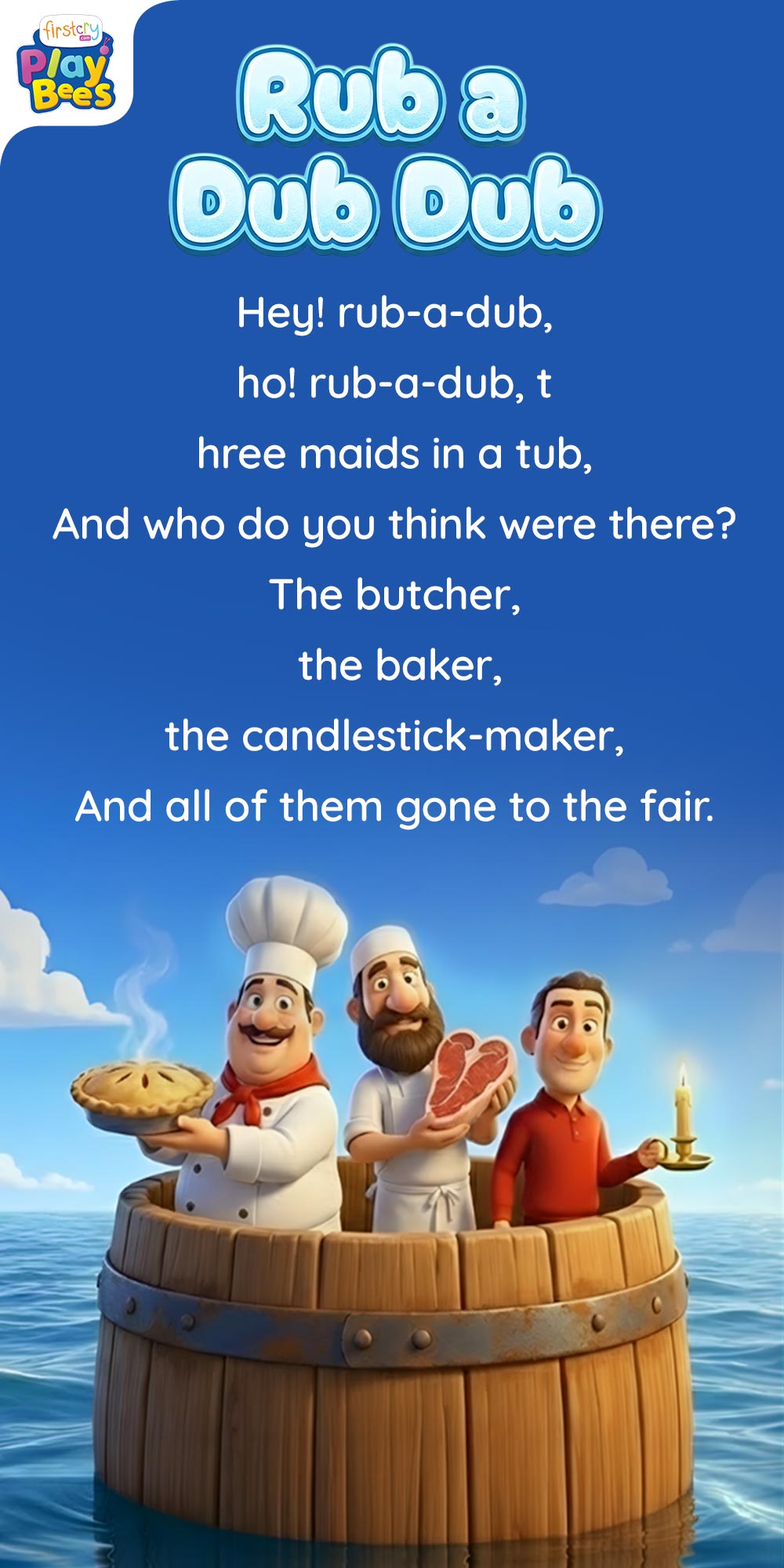
Here are the well-known Rub-a-dub-dub words that children love to hear and sing along to:
Hey! rub-a-dub, ho! rub-a-dub, three maids in a tub,
And who do you think were there?
The butcher, the baker, the candlestick-maker,
And all of them gone to the fair.
Other Versions of the Rub-a-dub-dub Song
This rhyme has evolved over time, and you may hear slightly different versions depending on books or recordings. Some older versions include extra lines that describe what the three men are doing in the tub, while modern children’s books often keep the rhyme short and playful for easy memorization. A few adaptations also change the ending to make it more humorous or child-friendly.
Rub-a-dub-dub,
Three men in a tub,
And who do you think they be?
The butcher, the baker,
The candlestick-maker,
Turned knaves all three.
The butcher was shaved,
The baker was bobbed,
The candlestick-maker had his ears cropped,
All put out to sea.
Gestures – How to Teach Rub-a-dub-dub to Kids
Using actions makes the rhyme more engaging and easier for children to remember. Simple gestures also help kids connect words with movement and meaning.
- Pretend to scrub hands together while saying “Rub-a-dub-dub” to show washing.
- Hold up three fingers to represent the “three men.”
- Make a round shape with your arms to act like a tub.
- Mime cutting with one hand for the butcher.
- Pretend to knead dough for the baker.
- Act like holding a candle for the candlestick-maker.
History & Quick Facts
“Rub-a-dub-dub” is an old English nursery rhyme that dates back to the 18th century. It was first published in Tommy Thumb’s Pretty Song Book around 1744. The rhyme was not written by a single known author, as many nursery rhymes were passed down orally before being printed. Over time, its meaning shifted from a satirical verse for adults to a playful rhyme enjoyed by children. Its simple rhythm and memorable characters helped it remain popular across generations.
Interesting Facts
- The rhyme originated in England and is over 250 years old.
- It features three common professions familiar to children.
- The tune is simple, making it easy for young kids to sing.
- “Rub-a-dub-dub” appears in many nursery rhyme collections worldwide.
- The rhyme has been translated into several languages for global audiences.
- It is often used in preschools to teach rhythm and rhyme.
Suitable Age & Learnings
“Rub-a-dub-dub” is ideal for toddlers and preschoolers aged 2 to 5 years. Its short length and repetition make it perfect for early listeners and singers.
- Children learn rhyming patterns, which support early reading skills.
- The rhyme improves memory through repetition and simple structure.
- Kids build vocabulary by learning words like butcher and baker.
- Listening to the rhyme supports better focus and attention.
- Singing along boosts confidence and speaking skills.
- Gestures help develop coordination and motor skills.
FAQs
1. What is the rhyming scheme of Rub-a-dub-dub?
The rhyme follows a simple AABCCB-style pattern, making it easy for children to recognize and remember sounds.
2. Why is Rub-a-dub-dub popular with young children?
Its catchy rhythm, repetition, and funny imagery make it enjoyable and easy to learn.
3. How can parents use this rhyme for learning at home?
Parents can sing it with actions, discuss the characters, and encourage kids to repeat lines to build language skills.
“Rub-a-dub-dub” is a timeless nursery rhyme that blends fun, rhythm, and early learning in a way young children naturally enjoy. Its playful characters and catchy flow make it easy for kids to listen, remember, and sing along with confidence. Through simple words and repetition, the rhyme supports language development, listening skills, and early understanding of rhyme and rhythm. When paired with actions and gestures, it also encourages movement and active participation. For parents and teachers, this rhyme offers a gentle and enjoyable way to introduce storytelling, vocabulary, and musical awareness. Whether shared during playtime, circle time, or bedtime, “Rub-a-dub-dub” continues to be a warm and engaging favorite in early childhood learning.
Explore Other Rhymes for Kids:
The Muffin Man Nursery Rhyme With Lyrics
Patty Cake Song Nursery Rhyme With Lyrics
Jimmy Crack Corn Nursery Rhyme With Lyrics