
Table of Contents
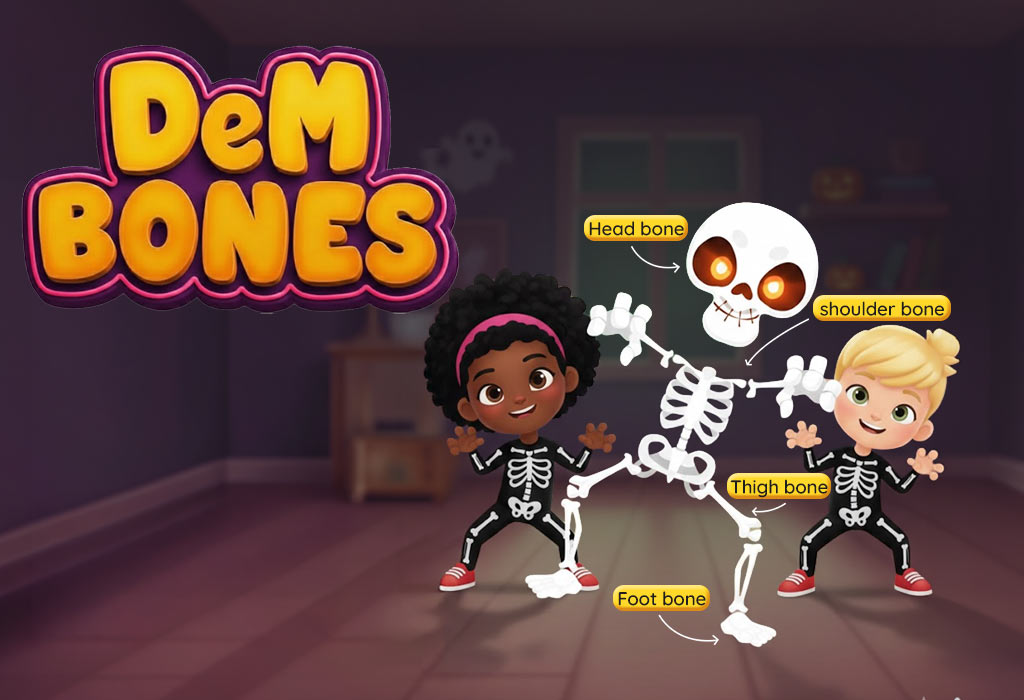
Dem Bones is a lively and playful nursery rhyme that introduces children to the human body in a fun, musical way. The song talks about how different bones are connected, starting from the toes and moving all the way up to the head. Kids enjoy this rhyme because of its catchy tune, repeating pattern, and the chance to move along while singing. Parents and teachers love it because it gently builds early knowledge without feeling like a lesson. As children point, touch, and move to each body part, they improve memory, listening skills, and coordination. The rhyme also supports language development by repeating simple words and rhythms. With its cheerful pace and easy-to-follow structure, Dem Bones makes learning feel joyful, active, and engaging for young children.
Dem Bones Song Lyrics
This classic rhyme, often sung during playtime and learning sessions, uses Dem Bones words to show how body parts are connected in a rhythmic and memorable way.
Intro 1
Ezekiel connected dem dry bones,
Ezekiel connected dem dry bones,
Ezekiel in the Valley of Dry Bones,
Now hear the word of the Lord.
Verse 1
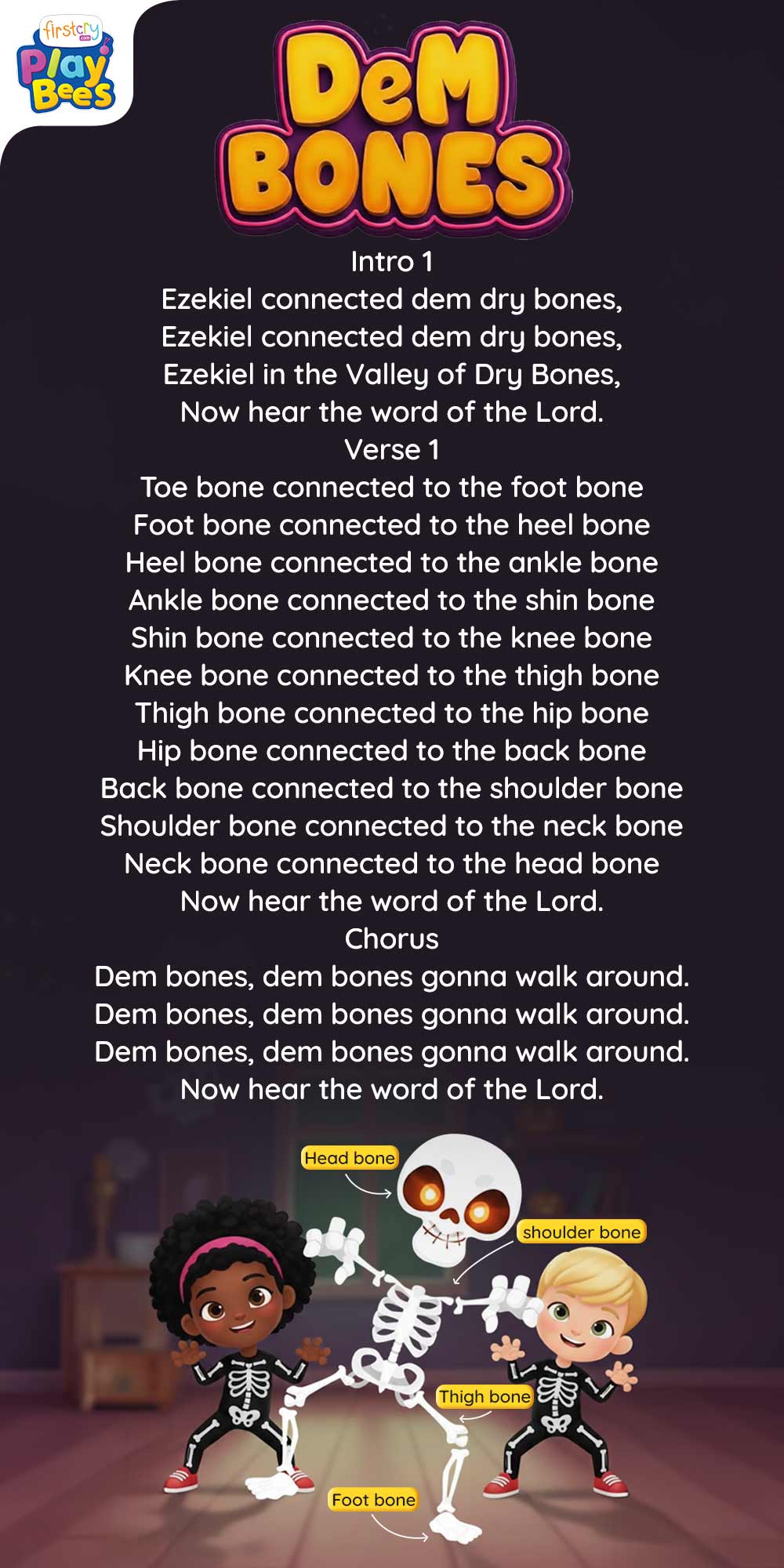
Toe bone connected to the foot bone
Foot bone connected to the heel bone
Heel bone connected to the ankle bone
Ankle bone connected to the shin bone
Shin bone connected to the knee bone
Knee bone connected to the thigh bone
Thigh bone connected to the hip bone
Hip bone connected to the back bone
Back bone connected to the shoulder bone
Shoulder bone connected to the neck bone
Neck bone connected to the head bone
Now hear the word of the Lord.
Chorus
Dem bones, dem bones gonna walk around.
Dem bones, dem bones gonna walk around.
Dem bones, dem bones gonna walk around.
Now hear the word of the Lord.
Intro 2
Ezekiel disconnected dem dry bones,
Ezekiel disconnected dem dry bones,
Ezekiel in the Valley of Dry Bones,
Now hear the word of the Lord.
Verse 2
Head bone (dis)connected from the neck bone
Neck bone connected from the shoulder bone
Shoulder bone connected from the back bone
Back bone connected from the hip bone
Hip bone connected from the thigh bone
Thigh bone connected from the knee bone
Knee bone connected from the shin bone
Shin bone connected from the ankle bone
Ankle bone connected from the heel bone
Heel bone connected from the foot bone
Foot bone connected from the toe bone
Now hear the word of the Lord.
Chorus
Dem bones, dem bones gonna rise again.
Dem bones, dem bones gonna rise again.
Dem bones, dem bones gonna rise again.
Now hear the word of the Lord.
Finale
Dem bones, dem bones, dem dry bones.
Dem bones, dem bones, dem dry bones.
Dem bones, dem bones, dem dry bones.
Now hear the word of the Lord.
Other Versions of the Dem Bones Song
Over time, this rhyme has been adapted in simple and playful ways to suit different age groups and learning styles.Some versions slow down the tune so younger children can follow the actions easily, while others add extra verses naming more body parts. Action-based classroom versions focus more on movement than singing to support physical learning. Animated and video versions often include visuals of skeletons or children pointing to body parts, making the rhyme more engaging for modern learners.
1. Slow Tune Version (for younger kids)
Dem bones, dem bones, nice and slow,
Point to your toes, now up we go,
Move your feet and bend your knee,
Learning bones so happily.
2. Action-Based Classroom Version
Clap your hands and stomp your feet,
Wiggle your legs to the steady beat,
Touch your hips and stretch up high,
Move your body, reach the sky.
3. Animated / Visual Version
See the bones on screen so bright,
Dancing left and dancing right,
Point and sing and laugh all day,
Learning bones the fun-filled way.
Gestures – How to Teach Dem Bones to Kids
Teaching Dem Bones with gestures makes the rhyme active and easy for children to remember. Simple movements help connect words with actions and body awareness.
- Point to the toes when singing about the toe bone so children can visually connect the word to the body part.
- Touch the feet and heels together gently as the rhyme moves upward to reinforce coordination.
- Bend the knees slightly when naming the knee and leg bones to add fun movement.
- Place hands on hips when the hip bone is mentioned to support body recognition.
- Run hands up the back and neck carefully to show how bones connect upward.
- Tap the head lightly at the end to help children remember the final connection.
History & Quick Facts
Dem Bones comes from a traditional African American spiritual also known as “Dry Bones,” inspired by a biblical passage from the Book of Ezekiel. The song became widely known in the early 20th century and was popularized by composer and lyricist James Weldon Johnson, who helped preserve many spirituals. Over time, the song moved from religious settings into classrooms and children’s music because of its simple structure and educational value. Its call-and-response style and repeating lines made it easy to teach and remember. Today, it is commonly used as a nursery rhyme to introduce children to basic anatomy through music.
Interesting Facts
- The rhyme is based on a spiritual song that symbolized hope and renewal in its original form.
- It follows a cumulative pattern, which helps children predict and remember the next line.
- The tune is often sung faster or slower depending on the age of the children.
- Dem Bones has been translated and adapted into many languages for global classrooms.
- It is frequently used in preschool and kindergarten lessons about the human body.
- The song is popular in action songs collections because it naturally encourages movement.
Suitable Age & Learnings
Dem Bones is best suited for children aged 2 to 6 years, as it combines music, movement, and simple vocabulary. It works well for toddlers, preschoolers, and early learners.
- Children learn basic body part names by hearing and repeating them in order.
- The rhyme builds memory skills through repetition and predictable patterns.
- Movement-based singing supports motor skills and body coordination.
- Listening to the sequence helps develop early logical and ordering skills.
- Singing along improves language rhythm and pronunciation.
- Group singing encourages social interaction and confidence.
FAQs
1. What is the rhyming scheme of Dem Bones?
The rhyme mainly uses repetition rather than a strict rhyming scheme, making it easy for young children to follow.
2. How does Dem Bones help in learning?
It teaches body awareness, listening skills, and coordination through music and movement.
Dem Bones is more than just a fun song; it is a valuable early learning tool for young children. Through music and movement, kids naturally absorb information about their bodies. The rhyme’s repetitive structure makes it easy to remember and enjoyable to sing again and again. Parents and teachers appreciate how it combines play with learning in a simple way. Whether used at home or in the classroom, it encourages active participation and curiosity. With its cheerful tune and educational value, Dem Bones remains a timeless favorite in early childhood learning.
Explore Other Rhymes for Kids:
Itsy Bitsy Spider Nursery Rhyme With Lyrics
The Ants Go Marching Nursery Rhyme With Lyrics
Head, Shoulders, Knees and Toes Nursery Rhyme With Lyrics