
Table of Contents
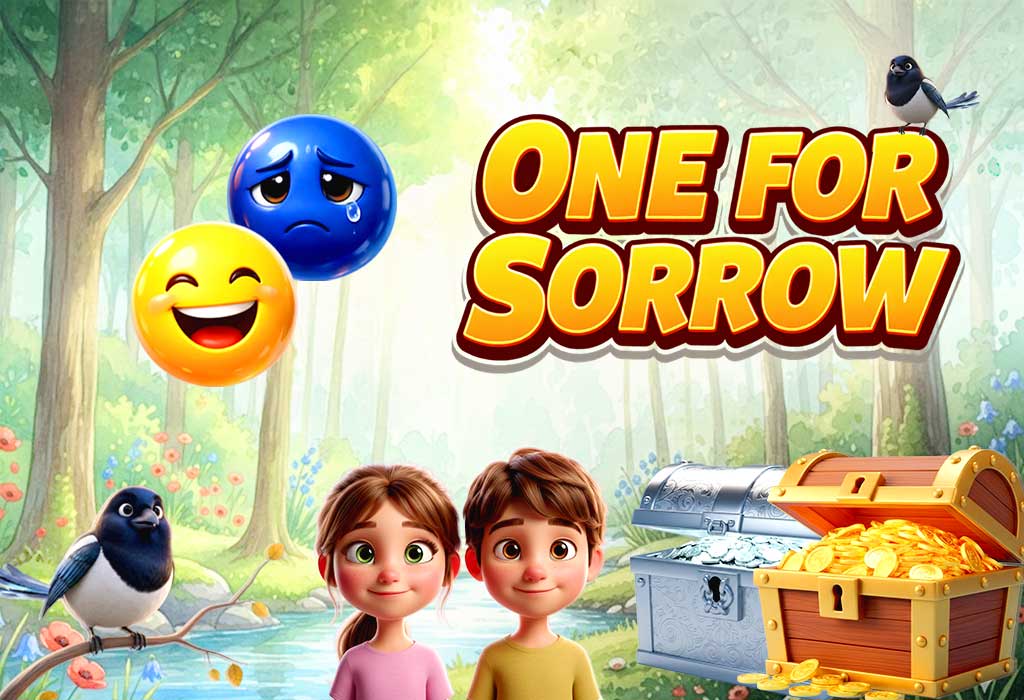
“One For Sorrow” is a traditional nursery rhyme based on counting magpies and linking numbers with simple meanings. Children enjoy this rhyme because it follows a predictable pattern that makes it easy to remember and fun to chant. The idea of counting birds sparks curiosity about nature while keeping young listeners engaged. The gentle rhythm and repeating structure help children feel confident as they join in, even after hearing it just a few times. For early learners, the rhyme supports number recognition, listening skills, and memory development. Parents and teachers also appreciate how it opens conversations about counting, observation, and traditional folklore in a calm, story-like way that feels more like play than learning.
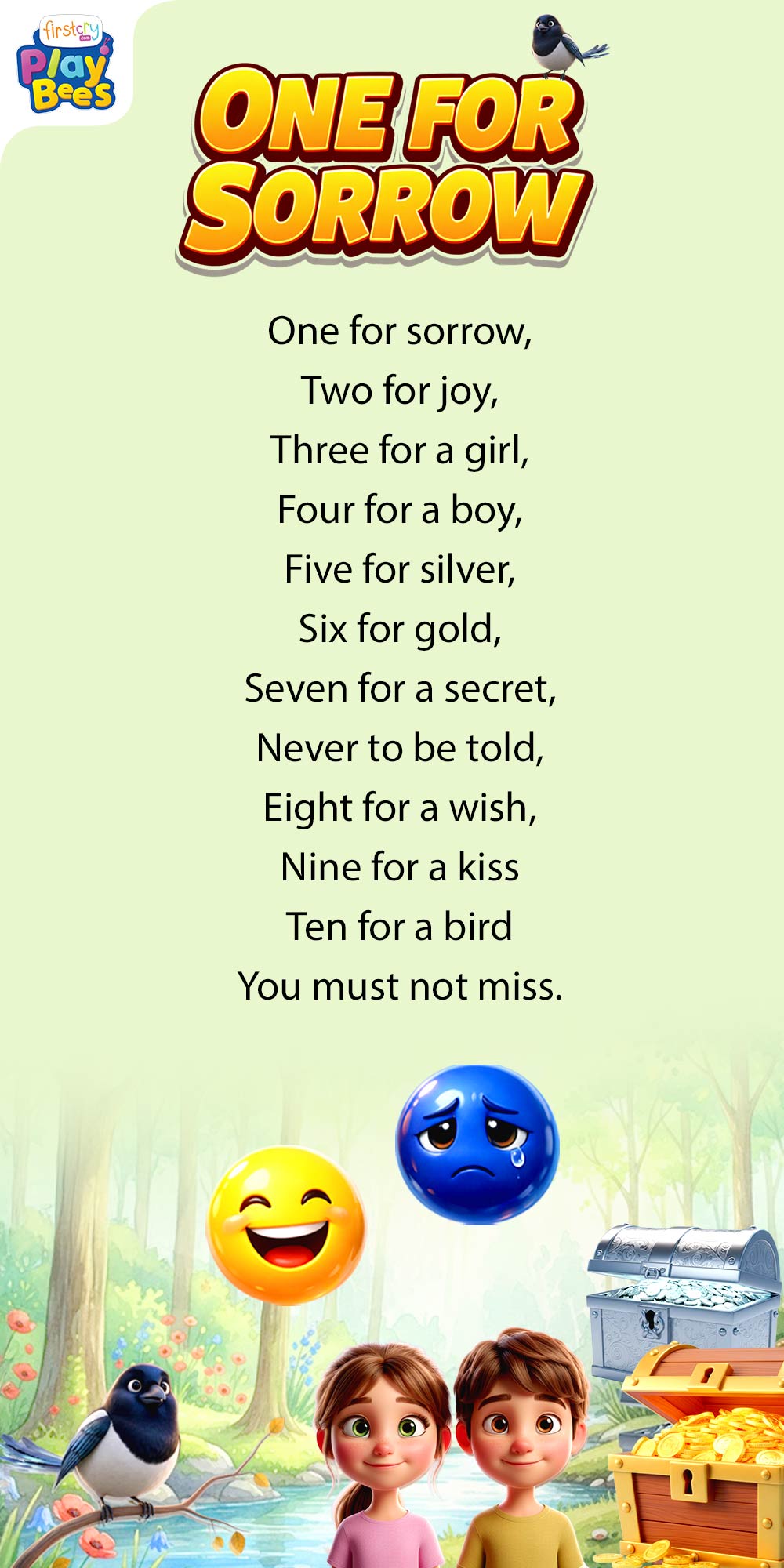
One For Sorrow Song Lyrics
This traditional counting rhyme, often searched as One For Sorrow words, uses simple lines to help children remember numbers through a familiar pattern.
One for sorrow,
Two for joy,
Three for a girl,
Four for a boy,
Five for silver,
Six for gold,
Seven for a secret,
Never to be told,
Eight for a wish,
Nine for a kiss
Ten for a bird
You must not miss.
Other Versions of the One For Sorrow Song
Over time, this rhyme has been shared in slightly different forms across regions and generations.
Version 1 (Extended Counting Version)
One for sorrow,
Two for joy,
Three for a girl,
Four for a boy,
Five for silver,
Six for gold,
Seven for a secret never to be told,
Eight for a wish,
Nine for a kiss,
Ten for a bird you must not miss.
Version 2 (Traditional Folk Variant)
One for sorrow,
Two for mirth,
Three for a wedding,
Four for a birth,
Five for riches,
Six for gold,
Seven for a secret that’s never told.
Version 3 (Short Classroom Version)
One for sorrow,
Two for joy,
Three for a girl,
Four for a boy,
Five for silver,
Six for gold.
Gestures – How to Teach One For Sorrow to Kids
Using actions makes the rhyme more engaging and helps children remember the words more easily. Simple movements also support coordination and listening skills.
- Hold up one finger while saying “One for sorrow” to clearly connect the number with the action.
- Raise two fingers and smile for “Two for joy” to show the happy meaning of the line.
- Point to yourself gently during “Three for a girl” to help children relate the words to people.
- Point outward or to a friend for “Four for a boy” to make the rhyme interactive.
- Pretend to hold shiny coins for “Five for silver” to spark imagination.
- Make a small treasure-holding motion for “Six for gold” to keep the movement playful and clear.
History & Quick Facts
“One For Sorrow” is a traditional English counting rhyme linked to old folklore about magpies. It does not have a known single author and was passed down orally through generations before being written down. The rhyme became widely known in the 19th century, when collections of folk rhymes and children’s verses were first published. Over time, it became popular in homes and schools because of its simple counting structure and cultural storytelling elements.
Interesting Facts
- The rhyme is based on old beliefs about magpies and what seeing them might mean.
- Different regions in England use slightly different versions of the lines.
- Some versions extend the rhyme beyond seven to include more numbers.
- The tune is often spoken or chanted rather than sung to a fixed melody.
- It has appeared in books, TV shows, and children’s collections worldwide.
- Children enjoy guessing what each number might represent before hearing the line.
Suitable Age & Learnings
This rhyme is ideal for children aged 3 to 7 years and works well in both home and classroom settings. Its gentle pace makes it suitable for early learners as well as slightly older children exploring folklore.
- Counting skills: Children learn to recognize numbers in sequence through repetition.
- Memory development: Repeating lines helps improve recall and confidence.
- Listening skills: Kids practice focusing on words and meanings as the rhyme progresses.
- Vocabulary growth: Words like sorrow, joy, silver, and gold expand language awareness.
- Cultural awareness: The rhyme introduces traditional folklore in a simple way.
- Observation skills: It encourages children to notice birds and nature around them.
FAQs
1. What is the rhyming scheme of One For Sorrow?
The rhyming scheme of One For Sorrow follows a simple paired pattern (A A B B C C), where lines are grouped together by meaning rather than perfect end rhymes. This loose structure makes the rhyme easy for children to remember and enjoyable to recite aloud.
2. Why is “One For Sorrow” good for early learning?
“One For Sorrow” helps children develop counting skills, memory, and listening abilities while introducing them to simple folklore through rhythm and repetition.
“One For Sorrow” is a timeless nursery rhyme that blends counting, tradition, and gentle storytelling. Its simple structure makes it easy for children to follow along and feel successful as they learn. Parents and teachers value it for encouraging early number skills without pressure. The rhyme also opens the door to conversations about birds, nature, and old traditions. With gestures and repetition, it becomes a fun group activity rather than just a verse to memorize. Overall, it remains a warm and meaningful rhyme that children can enjoy again and again while learning through play.
Explore Other Rhymes for Kids:
Solomon Grundy Nursery Rhyme With Lyrics
Sing a Song of Sixpence Nursery Rhyme With Lyrics
Thirty Days Hath September Nursery Rhyme With Lyrics