
Table of Contents
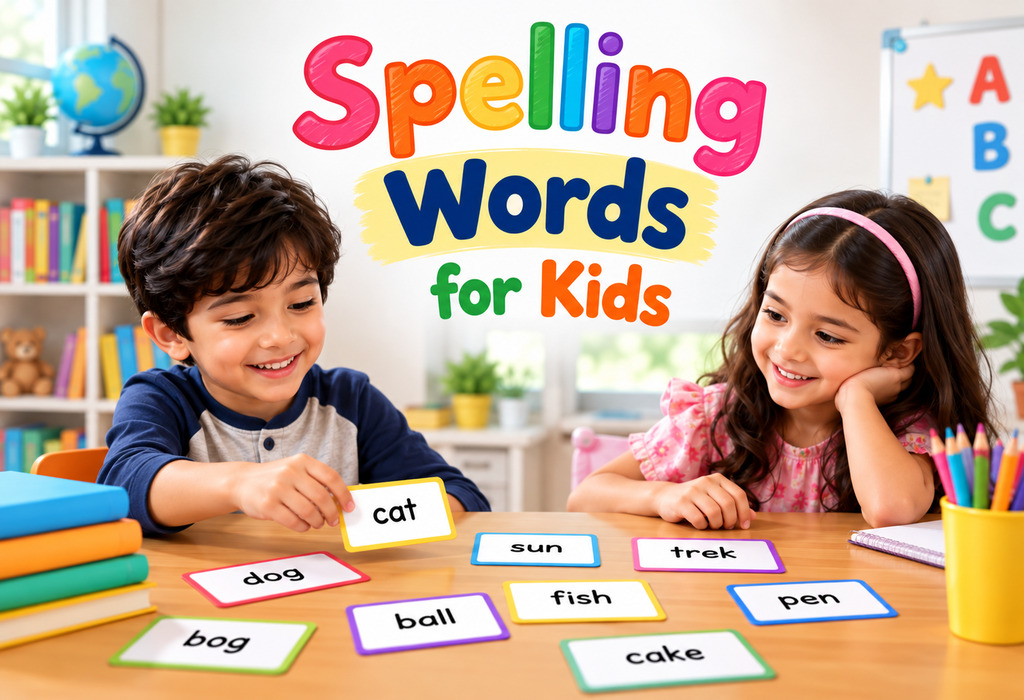
Spelling is one of the first skills that helps children feel confident as readers and writers. When a child can spell a word correctly, they recognize it faster on the page and use it more easily in their own sentences. This guide gives parents and teachers practical spelling words for kids, organized by age and grade in easy tables, along with simple ways to practice at home or in the classroom. Start at the level that fits your child, and move up once the words feel easy.
Why Spelling Practice Matters
Spelling and reading grow together. Each time a child sounds out a word, notices a pattern, and writes it down, the brain links the sound of the word to its look on the page. Over time this makes reading smoother and writing less stressful.
Regular practice also builds confidence. A child who knows how to spell common words can focus on sharing ideas instead of worrying about every letter. Short, steady practice sessions of ten to fifteen minutes work better than one long weekly session.
Spelling Words for Pre K
Children at this stage are just beginning to connect letters with sounds. The best spelling words for pre k are short, simple, and easy to sound out. Most of them have three letters and follow a regular pattern.
| cat | dog | sun | mom |
| dad | run | big | red |
| yes | hat | bus | cup |
| pig | bed | hop | net |
At this age, keep practice playful. Let your child trace letters in sand, build words with magnetic letters, or point out the first letter of objects around the house. Praise effort more than accuracy.
Spelling Words for Kindergarten
Kindergarten is when children learn many of the most common words in the English language, often called sight words. These words show up again and again in books, so learning them early makes reading much easier. The following spelling words for kindergarten are a good starting point.
| the | and | see | can |
| like | play | you | we |
| my | is | it | look |
| said | come | away | was |
| are | for | go | little |
Many of these words cannot be sounded out perfectly, so children need to see them often. Put a few words on index cards, tape them to the fridge, and read them together each morning. Add two or three new words each week and review the old ones.
1st Grade Spelling Words
By first grade, children start working with longer words, blends, and simple spelling patterns such as silent e and double letters. Our list of 1st grade spelling words includes everyday words your child will meet in stories and schoolwork.
| because | friend | thank | where |
| they | water | again | would |
| could | small | about | think |
| house | jump | plant | black |
| green | stop | drink | three |
Encourage your child to look for patterns. For example, “would” and “could” end the same way, and “small” and “ball” share a sound. Noticing these links turns memorizing into understanding, and that makes spelling easier to remember.
Words a Second Grader Should Know How to Spell
Second graders are expected to handle trickier vowel sounds, plurals, and words with endings such as ing and ed. If you are wondering about the words a second grader should know how to spell, this table covers many of the most useful ones.
| always | before | brother | caught |
| enough | great | listen | mother |
| people | place | school | started |
| today | together | which | every |
| never | party | seven | window |
Some of these words break the usual rules, so they need extra attention. Ask your child to say the word slowly, write it, cover it, and then write it again from memory. This simple routine works well for hard words.
Spelling Words for 2nd and 3rd Graders
As children move from second to third grade, spelling lists grow to include longer words, prefixes, suffixes, and words that are easy to confuse. These spelling words for 2nd and 3rd graders help bridge that step.
| beautiful | believe | certain | different |
| favorite | special | thought | through |
| trouble | wonder | library | difficult |
| neighbor | between | kitchen | answer |
| minute | early | question | decide |
Third graders can also start learning small rules. For instance, when a word ends in a silent e, drop the e before adding ing, as in “make” and “making.” Teaching a rule along with a word helps children spell many other words they have not studied yet.
How to Practice Children’s Spelling Words at Home
Good practice does not need to feel like homework. With a few creative ideas, children’s spelling words can become part of daily play.
- Rainbow writing: Write each word in pencil, then trace over it with three different colored crayons or markers.
- Word building: Use letter tiles, magnets, or cut up paper squares to build each word letter by letter.
- Sky writing: Have your child spell the word out loud while tracing the letters in the air with a finger.
- Spelling scavenger hunt: Hide word cards around the room and ask your child to find them and spell each one aloud.
- Silly sentences: Ask your child to use a spelling word in a funny sentence, then write it down.
- Spelling games: Play hangman, word bingo, or a spelling relay with family members to keep things lively.
Short sessions with plenty of variety keep young learners interested. Always celebrate small wins, such as spelling a tricky word correctly for the first time.
Tips to Make Spelling Easier
Keep a few simple habits in mind as you practice together.
- Start small. Choose five to ten words at a time so your child does not feel overwhelmed. Mix new words with a few familiar ones to keep confidence high.
- Read together every day. The more words children see in books, the more naturally they remember how those words are spelled. Point out interesting words as you read.
- Use mistakes as learning moments. If your child misspells a word, stay positive. Show the correct spelling, point out the part that was tricky, and try again together.
- Review often. Words fade from memory if they are not used, so revisit earlier lists once a week. A quick five minute review keeps old words fresh.
- Connect words to real life. Ask your child to spell words from grocery labels, street signs, or favorite books. Seeing spelling in everyday places shows children why it matters.
Spelling is a skill that grows step by step, and the right words at the right age make learning feel natural. Whether your child is working on spelling words for pre k or moving toward third grade lists, steady practice and encouragement make a big difference. Keep sessions short, playful, and filled with praise so that learning stays fun. Revisit old words often while adding new ones at a comfortable pace. With patience and a little creativity, your child will build the spelling confidence that supports reading and writing for years to come.