
Table of Contents
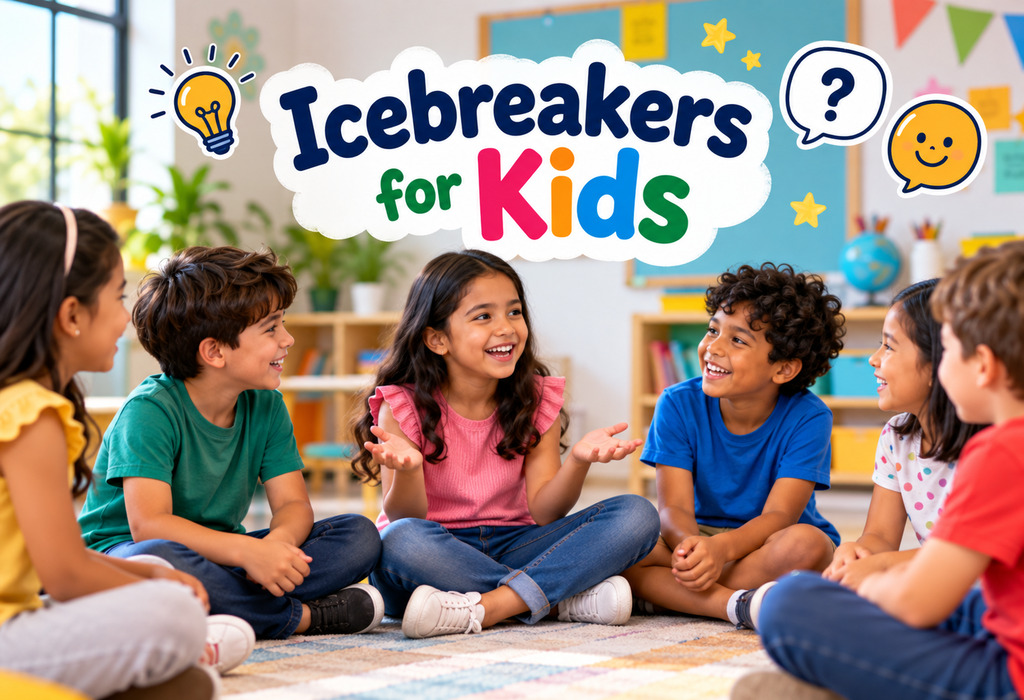
The first day of school, a new club, or a playdate with unfamiliar faces can make many children go quiet. A little structure helps them relax and start talking. Simple icebreaker questions for kids give shy children an easy way to share, and they give outgoing children a chance to listen. Pair them with icebreaker games for kids, and a nervous room turns into a giggling one in a few minutes. This guide brings together easy questions, silly prompts, and quick activities that work for classrooms, birthday parties, camps, and family gatherings.
Why Icebreakers Work for Kids
Children feel more confident when they know what to expect. A short, friendly activity at the start of a session lowers worry and helps them see that others share their likes and dislikes. Icebreakers also build listening skills, turn taking, and speaking confidence. Teachers often notice that a class that starts with a warm up stays calmer and more focused afterward. The best prompts are short, have no wrong answers, and let every child join in at their own comfort level.
Icebreakers for Kindergarteners
Little learners need simple questions they can answer in a word or two. These icebreakers for kindergarteners keep things light and use ideas they know well.
- What is your favorite color?
- What is your favorite animal?
- Do you like cats or dogs more?
- What is your favorite thing to eat for breakfast?
- What toy do you love to play with?
Let children answer by pointing, holding up a picture card, or using a hand signal if speaking feels hard. Short turns keep everyone interested.
Ice Breakers for First Graders
By first grade, children can share a little more and explain why. These ice breakers for first graders encourage short sentences and a bit of imagination.
- What is your favorite game to play at recess?
- If you could have any pet, what would it be?
- What is your favorite food, and why do you like it?
- What makes you smile?
- What is the best thing you did last weekend?
A good tip is to answer first yourself. When children hear a grown up share an honest answer, they feel safe doing the same.
Icebreakers for Second Graders
Second graders enjoy comparing and choosing. These icebreakers for second graders mix favorites with playful “would you rather” style choices.
- Would you rather fly like a bird or swim like a dolphin?
- What is your favorite book or story?
- What is one thing you are really good at?
- If you had a superpower, what would it be?
- What is your favorite season, and what do you like to do in it?
These prompts often spark follow up chats, so leave a minute or two for children to react to each other.
Ice Breaker for 3rd Graders
Eight and nine year olds like humor, teamwork, and a small challenge. An ice breaker for 3rd graders can go a little deeper while still feeling fun.
- If you could visit any place in the world, where would you go?
- What is one thing you want to learn this year?
- What is the kindest thing someone has done for you?
- If you could invent a new snack, what would it taste like?
- What is your favorite thing to do with your friends?
- If you could have dinner with any cartoon character, who would you pick?
Third graders also love hearing what classmates chose, so invite them to say “me too” when they share an answer.
Funny Icebreaker Questions for Students
Laughter is the fastest way to break tension. These funny icebreaker questions for students work well across many ages and are perfect when the room needs energy.
- If your pet could talk, what would it say first?
- Would you rather have spaghetti hair or marshmallow shoes?
- What is the silliest dance move you know?
- If you could turn any food into a pet, what would you choose?
- What would a robot say if it had to cook dinner?
- If you were a superhero with a silly power, what would it be?
Encourage giggles but remind children to laugh with each other and not at each other. A simple rule at the start keeps the mood kind.
Fun Icebreaker Games for Kids
Questions are great, but movement helps children who find it hard to sit and talk. Here are easy icebreaker games for kids that need almost no setup.
1. Two Truths and a Fib: Each child shares two true facts and one made up fact about themselves. The group guesses which one is the fib. Younger children can share one true fact and one pretend fact.
2. Find Someone Who: Give children a simple list such as “find someone who has a pet” or “find someone who likes pizza.” They walk around and collect names. It gets everyone talking to many classmates.
3. Pass the Ball: Children sit in a circle and toss a soft ball. Whoever catches it answers a question from a jar, then passes it on. It keeps attention high because no one knows who is next.
4. Name and Motion: Each child says their name and adds a small movement. The group repeats both. It helps children learn names faster and shakes out extra energy.
5. Would You Rather Line: Mark two sides of the room. Read a “would you rather” question, and children move to the side that matches their choice. It shows them how many classmates share the same taste.
Easy Ice Breaker Activities for Kids
If you want something more creative, these ice breaker activities for kids let children show who they are without needing many words.
- All About Me Poster: Children draw their family, favorite food, and hobby on a sheet of paper, then share it with a partner.
- Show and Tell Bag: Ask each child to bring one small item that matters to them and explain it in a sentence or two.
- Human Bingo: Create a bingo grid with traits like “has a sibling” or “likes soccer.” Children search the room to fill the squares.
- Group Story Chain: One child starts a story with a sentence, and the next adds another. The tale gets sillier with every turn.
- Draw and Guess: A child draws something they love, and the group guesses what it is.
These activities work well because every child can take part in a way that suits them, whether they prefer talking, drawing, or moving.
Tips for Running Icebreakers Smoothly
A few small habits make a big difference when leading any group.
- Keep it short: Five to ten minutes is enough to warm up a group without losing attention.
- Let children pass: Allow a child to skip a turn and return later. Pressure often makes shy kids pull back.
- Match the age: Choose simpler prompts for younger children and add choices or reasons for older ones.
- Join in: Answer a question yourself so children see that sharing is safe and enjoyable.
- Use a question jar: Write prompts on slips of paper and let children draw one. The surprise adds excitement.
- Celebrate every answer: A smile or a thank you tells each child their voice matters.
You can also rotate questions through the week so that children learn something new about each other every day.
Icebreakers turn a group of strangers into a friendly team in just a few minutes. The questions and games above suit different ages, from kindergarten to third grade, and they keep sharing light and fun. Try a mix of quiet questions, silly prompts, and active games so every child finds a style they enjoy. Remember to keep turns short, let shy children take their time, and join in yourself. With a little practice, these simple activities will make any classroom, party, or gathering feel warm and welcoming.