
Table of Contents
Remember the sing song joy of a nursery rhyme? Children love the bouncy sound of words that end alike, and that love is a powerful learning tool. Rhyming words for kindergarten help young learners notice the sounds inside words, which is a key step towards reading and spelling. When a child hears that “cat” and “hat” end the same way, they begin to understand how language is built. This guide shares rhyming words, fun sentences, and simple ways to practise at home or in class.
What Are Rhyming Words?
Rhyming words are words that have the same ending sound. They may be spelled differently, but they sound alike when spoken. For example, “play” and “day” rhyme, and so do “blue” and “shoe.”
Rhyming is part of phonological awareness, the skill of hearing and playing with the sounds in spoken language. Children who can spot rhymes often find it easier to decode new words when they begin to read.
Why Rhyming Matters in Kindergarten
Rhyming does more than make language fun. It supports several early skills at once.
- Listening skills: Children learn to tune in to the small sounds in words.
- Vocabulary growth: Each rhyme family introduces several new words together.
- Reading readiness: Recognising word endings helps children sound out new words.
- Memory: Rhymes are easy to remember, which is why songs and poems stick.
- Confidence: Guessing the next rhyming word makes children feel clever and capable.
Common Rhyming Words for Kindergarten
Here are common rhyming words for kindergarten, grouped by word family. Each group is short and simple, so little learners can read, say, and remember them with ease.
| Word Family | Rhyming Words | Example Sentence |
| at | cat, hat, bat, mat, rat | The cat sat on the mat. |
| an | can, fan, man, pan, van | The man put a pan in the van. |
| ig | big, dig, pig, wig, fig | The big pig can dig. |
| og | dog, log, frog, fog, hog | The frog sat on a log. |
| ot | hot, pot, dot, cot, lot | The pot is hot. |
| ug | bug, hug, mug, rug, jug | A bug sat on the rug. |
| un | sun, run, fun, bun, spun | The sun is fun when I run. |
| ake | cake, lake, make, bake, take | Let us bake a cake by the lake. |
| ay | day, play, say, way, stay | I can play all day. |
| ee | bee, tree, see, free, knee | I see a bee in the tree. |
That gives you easy rhyming words for kindergarten to explore. Pick one family at a time so children are not overwhelmed.
How to Teach Rhymes to Kindergarten Children
Wondering how to teach rhymes to kindergarten learners? The best approach is playful, short, and repeated often. Here are simple steps that work.
1. Start With Listening
Before children can make rhymes, they need to hear them. Read rhyming picture books and nursery rhymes aloud. Pause before the last word of a line and let the child fill it in. This simple trick builds prediction skills and keeps them engaged.
2. Teach One Word Family at a Time
Choose a family such as “at” and say the words slowly: cat, hat, mat. Ask the child what they notice. Most will point out that the endings sound the same. Move to a new family only when they feel comfortable.
3. Use Pictures and Objects
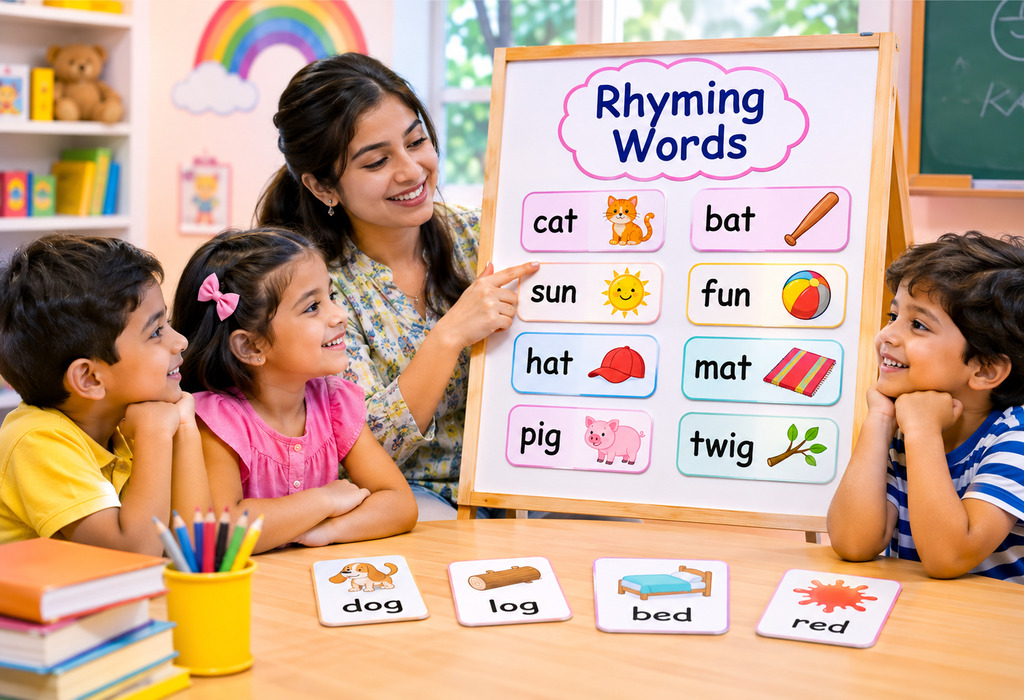
Young children learn best through things they can see and touch. Place a toy cat, a hat, and a mat on the table and say the words together. Picture cards also work well for matching games.
4. Play Rhyming Games
Games turn practice into fun. Try these ideas:
- Rhyme match: Lay out picture cards and ask children to pair the ones that rhyme.
- Odd one out: Say three words, such as “bug, rug, sun,” and ask which one does not rhyme.
- Rhyme chain: Take turns saying words that rhyme with “bee” until someone runs out.
- Clap and rhyme: Clap once for each word in a rhyming pair to feel the rhythm.
5. Sing and Move
Songs and action rhymes help children remember sounds through movement. Clapping, marching, or jumping on each rhyming word makes the lesson feel like play.
Kindergarten Rhyming Sentences
Short sentences help children see how rhymes work in real language. Here are kindergarten rhyming sentences you can read aloud together.
- The cat sat on the mat.
- A big pig can dig.
- The frog sat on a log.
- I see a bee in the tree.
- The sun is fun when I run.
- A bug on the rug gave me a hug.
- The star is far from the car.
- Let us bake a cake by the lake.
- The dog hid in the fog.
- I can play all day.
Read each sentence slowly and ask the child to point out the rhyming words. Then challenge them to make up a new sentence of their own.
Easy Activities to Practise at Home
You do not need special materials to practise rhyming. Everyday moments are full of chances.
- Car ride rhymes: Pick a word, like “car,” and take turns naming rhymes.
- Bedtime books: Choose rhyming stories and let your child guess the last word on each page.
- Rhyme hunt: Walk around the house and find objects that rhyme with a chosen word.
- Draw and rhyme: Ask your child to draw two things that rhyme, such as a bug and a mug.
- Name rhymes: Make silly rhymes with family names. Children love this one.
Tips for Parents and Teachers
A few small habits make rhyming practice more effective.
- Keep sessions short, about five to ten minutes.
- Celebrate effort, even when the answer is not a true rhyme.
- Accept made up words at first. Nonsense rhymes like “mat” and “zat” still show that a child hears the pattern.
- Repeat favourite rhymes often. Repetition builds confidence.
- Mix rhyming with other sound games, such as clapping syllables.
Frequently Asked Questions
1. At what age do children start to rhyme?
Many children begin to enjoy rhymes around age three and can produce simple rhymes by age four or five.
2. What if my child cannot hear rhymes yet?
Do not worry. Keep reading rhyming books and singing songs. Hearing rhymes often is the best way to build the skill.
3. Do rhyming words have to be spelled the same?
No. Words like “blue” and “shoe” rhyme even though their endings look different. Rhyme is about sound, not spelling.
Rhyming words for kindergarten open the door to a lifetime of confident reading and speaking. By practising word families, singing songs, and playing simple games, children build strong listening and vocabulary skills. Short sentences and daily routines make the learning feel natural and joyful. Parents and teachers can use the 50 words in this guide as a starting point and add new ones as children grow. With patience, laughter, and plenty of repetition, every little learner can discover the magic of rhyme.