
Table of Contents
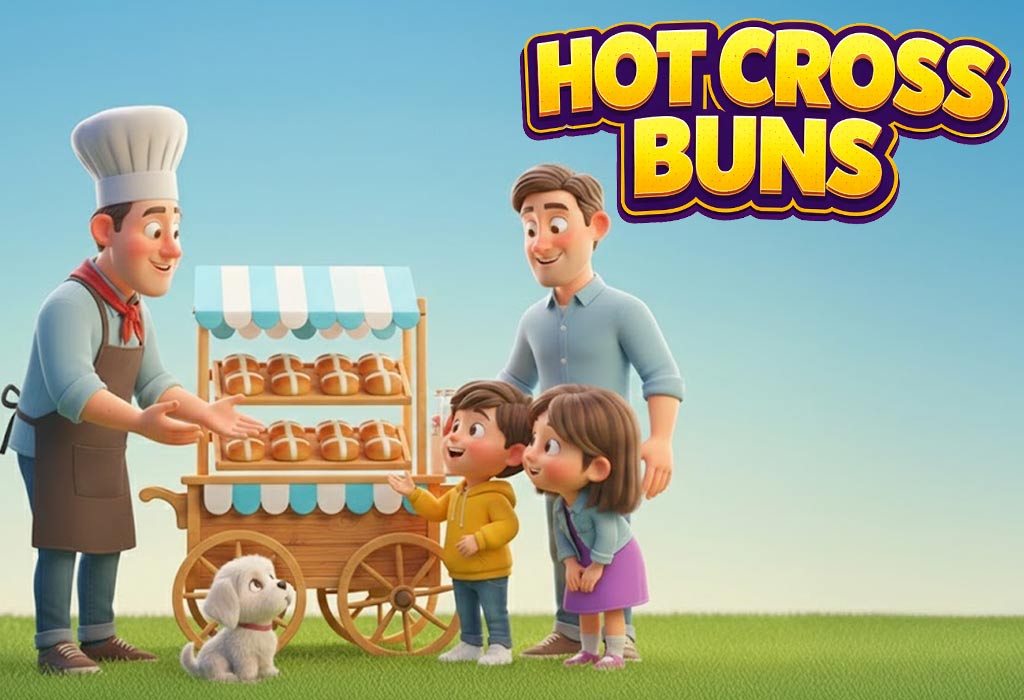
“Hot Cross Buns” is a cheerful and rhythmic nursery rhyme about sweet, freshly baked buns that are traditionally enjoyed during Easter. The rhyme is short, catchy, and easy to remember, which makes it a favorite among young children. Kids love repeating the simple lines and pretending to buy the tasty buns while singing along. The playful rhythm and repetition keep little learners engaged and smiling.
For parents and teachers, this rhyme is a wonderful early learning tool. It helps children practice counting, listening skills, and clear pronunciation. The repeated phrases build memory and confidence in speaking. Because it is short and musical, even toddlers can quickly join in and feel proud of learning a complete song.
Hot Cross Buns Song Lyrics
Singing and repeating the Hot Cross Buns words is a fun way for children to build rhythm and memory skills. Below are the full lyrics of this classic rhyme.
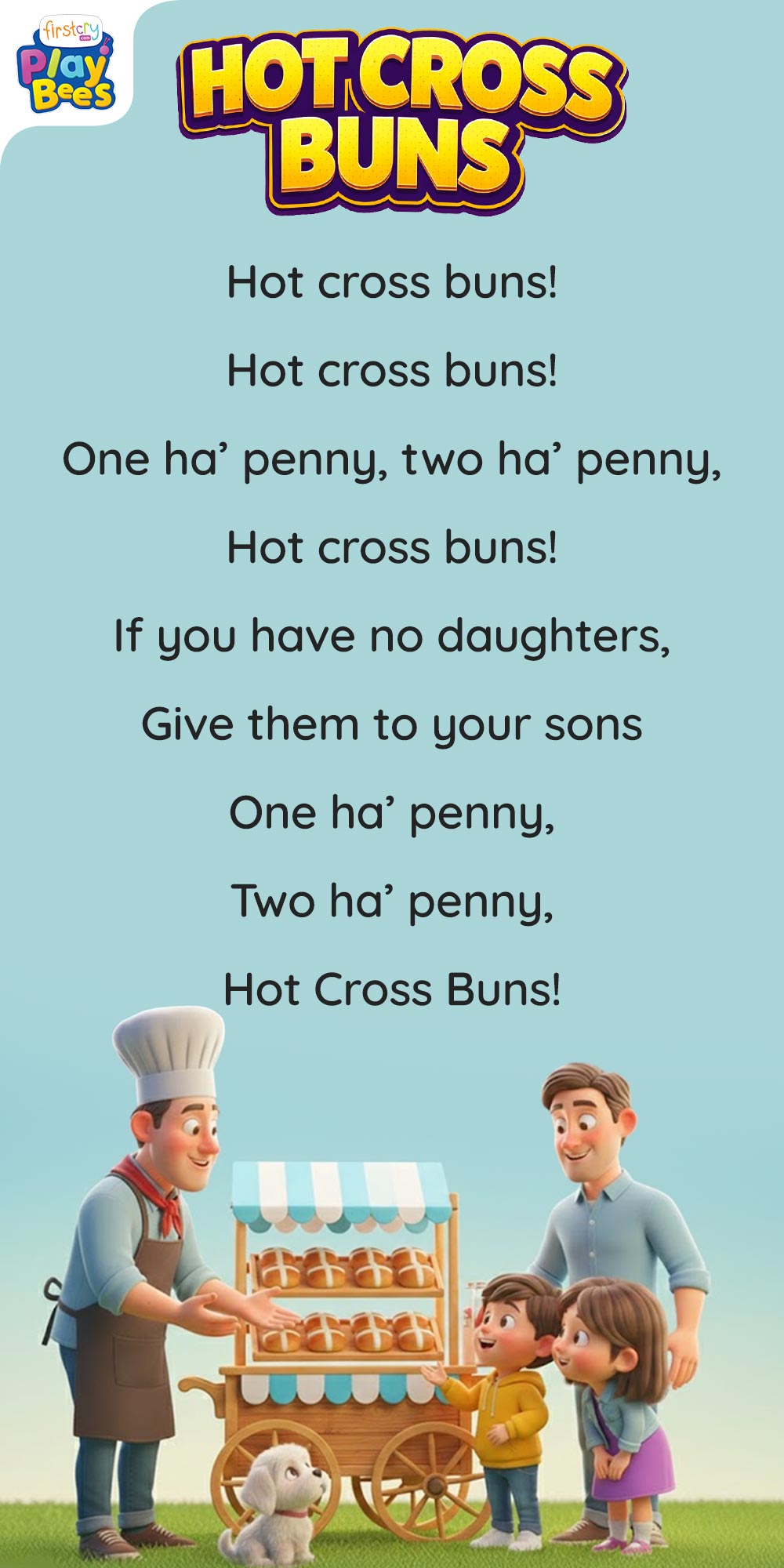
Hot cross buns!
Hot cross buns!
One ha’ penny, two ha’ penny,
Hot cross buns!
If you have no daughters,
Give them to your sons
One ha’ penny,
Two ha’ penny,
Hot Cross Buns!
Other Versions of Hot Cross Buns Song
Here are some commonly shared alternate versions of Hot Cross Buns that are often sung in classrooms and homes:
1. Shorter Classroom Version (First Stanza Only)
Hot cross buns!
Hot cross buns!
One a penny,
Two a penny,
Hot cross buns!
2. “Children” Version (More Inclusive Wording)
Hot cross buns!
Hot cross buns!
One a penny,
Two a penny,
Hot cross buns!
If you have no children,
Give them to your friends.
One a penny,
Two a penny,
Hot cross buns!
3. Sharing-Themed Version
Hot cross buns!
Hot cross buns!
One a penny,
Two a penny,
Hot cross buns!
Share them with your family,
Share them with your friends.
One a penny,
Two a penny,
Hot cross buns!
Gestures – How to Teach Hot Cross Buns to Kids
Adding simple actions makes the rhyme more engaging and helps children remember the words better. Here’s an easy step-by-step way to teach it:
- Pretend to hold a tray – Hold both hands out in front as if carrying a tray of warm buns while saying “Hot cross buns!”
- Point to the buns – Use your finger to point down at your imaginary tray to show excitement about the buns.
- Show number one – Raise one finger when saying “One a penny” to help children connect numbers with words.
- Show number two – Raise two fingers for “Two a penny” so kids can practice counting.
- Open arms wide – Stretch your arms outward when saying “If you have no daughters” to show sharing.
- Pretend to give – Make a gentle giving motion with your hands during “Give them to your sons” to act out generosity.
History & Quick Facts
“Hot Cross Buns” is believed to date back to 18th-century England, where street vendors sold hot cross buns during Easter. The rhyme was first published around 1798 in a British children’s book called Tommy Thumb’s Pretty Song Book. The author is unknown, as many nursery rhymes were passed down orally before being printed. The song became popular because of its catchy tune and connection to Easter traditions. Over time, it spread to classrooms around the world and is now often one of the first songs children learn to sing or play on simple instruments like the recorder.
Interesting Facts
- The rhyme is connected to Easter traditions, as hot cross buns are usually eaten on Good Friday in England.
- The cross on top of the bun represents a religious symbol, which is why the buns are special during Easter time.
- The tune is often used to teach beginners how to play simple instruments like the piano or recorder because it has an easy melody.
- The rhyme has been translated into different languages, making it popular with children around the world.
- It was originally a street cry shouted by sellers to attract customers to buy their fresh buns.
- Because of its simple counting lines, many teachers use it as an early math learning song in preschool.
Suitable Age & Learnings
“Hot Cross Buns” is best suited for children aged 2 to 6 years, as the lyrics are short and repetitive. The rhyme supports early learning in fun and meaningful ways.
- Counting Skills – Children learn basic number concepts through “one” and “two” in a natural and playful way.
- Listening Skills – The repetition helps kids focus carefully on sounds and words.
- Memory Building – Repeating short lines strengthens recall and confidence.
- Sharing Values – The lines about giving buns encourage kindness and generosity.
- Vocabulary Growth – Words like “penny,” “daughters,” and “sons” introduce new language gently.
- Rhythm Awareness – The steady beat helps children understand musical patterns and timing.
FAQs
1. What is the rhyming scheme of Hot Cross Buns?
The rhyme follows a simple AABBA pattern, with “buns” rhyming in the first, second, and last lines, and “penny” rhyming in the middle lines.
2. Is Hot Cross Buns a Christmas or Easter song?
It is traditionally linked to Easter, especially Good Friday, when hot cross buns are commonly eaten in England.
3. Why is Hot Cross Buns often taught in music class?
Its simple melody and repeating notes make it perfect for beginners learning instruments like the recorder or piano.
“Hot Cross Buns” is a timeless nursery rhyme that continues to bring joy to young learners around the world. Its short and rhythmic lines make it easy for toddlers and preschoolers to sing with confidence. Beyond the fun melody, the rhyme gently introduces counting, sharing, and new vocabulary. Parents and teachers appreciate how naturally it supports early literacy and music skills. With simple gestures and repetition, children quickly feel proud of mastering the song. This classic rhyme remains a sweet and meaningful part of early childhood learning.
Explore Other Rhymes for Kids:
The Muffin Man Nursery Rhyme With Lyrics
Patty Cake Song Nursery Rhyme With Lyrics
Apples and Bananas Nursery Rhyme With Lyrics