
Table of Contents
“A for Apple” is a cheerful alphabet rhyme that introduces young children to the letter A and simple vocabulary. The rhyme usually connects each letter with a familiar word, making it easy and fun for little learners to remember. Kids enjoy singing it because of its catchy rhythm, clear sounds, and easy-to-follow pattern. The repetition helps them recognize letters and build confidence while speaking. Parents and teachers love this rhyme because it gently supports early reading skills, listening skills, and pronunciation. As children sing along, they begin to connect letters with everyday objects around them. This playful learning method makes the alphabet feel exciting instead of overwhelming. “A for Apple” is often one of the first rhymes toddlers learn, and it creates a strong foundation for early literacy in a joyful and engaging way.
A for Apple Song Lyrics
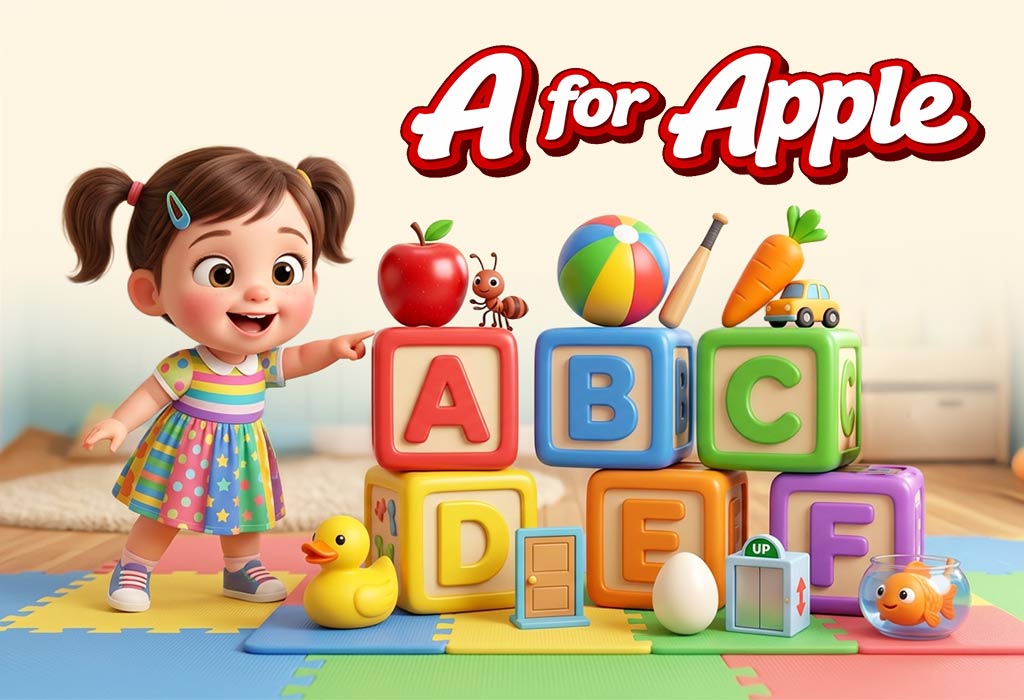
The cheerful A for Apple words introduce children to the alphabet in a simple and rhythmic way. Below are the commonly sung lyrics inspired by the traditional ABC song.
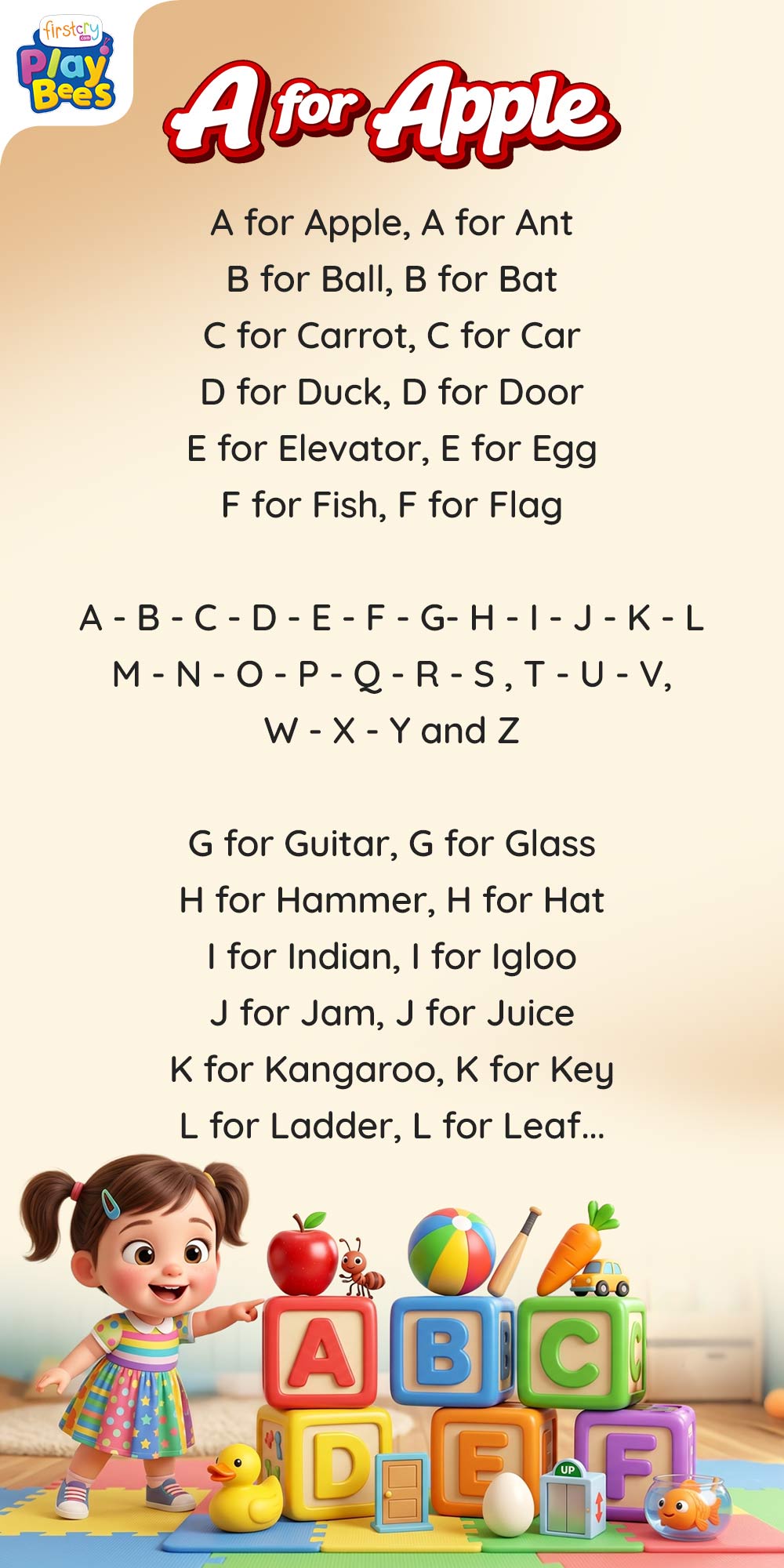
A for Apple, A for Ant
B for Ball, B for Bat
C for Carrot, C for Car
D for Duck, D for Door
E for Elevator, E for Egg
F for Fish, F for Flag
A – B – C – D – E – F – G
H – I – J – K – L – M – N – O – P
Q – R – S , T – U – V,
W – X – Y and Z
G for Guitar, G for Glass
H for Hammer, H for Hat
I for Indian, I for Igloo
J for Jam, J for Juice
K for Kangaroo, K for Key
L for Ladder, L for Leaf
A – B – C – D – E – F – G
H – I – J – K – L – M – N – O – P
Q – R – S , T – U – V,
W – X – Y and Z
M for Monkey, M for Mouse
N for Nail, N for Nose
O for Octopus, O for Orange
P for Paint, P for Popcorn
Q for Question, Q for Queen
R for Radio, R for Rake
A – B – C – D – E – F – G
H – I – J – K – L – M – N – O – P
Q – R – S , T – U – V,
W – X – Y and Z
S for Saw, S for Snake
T for Tree, T for Train
U for Umbrella, U for Unicorn
V for Vacuum, V for Violin
W for Whale, W for Watch
X Axe Box Fox
Y for Yo yo, Y for Yacht
Z for Zebra, Z for Zebra
A – B – C – D – E – F – G
H – I – J – K – L – M – N – O – P
Q – R – S , T – U – V,
W – X – Y and Z
Other Versions of A for Apple Song
Over time, teachers and parents have created several fun variations of this rhyme to suit different learning styles and cultures. Here are some common alternate versions:
1. Short Alphabet Version
This version focuses only on the first few letters to make it easier for toddlers.
A for Apple, B for Ball,
C for Cat, D for Doll.
2. Phonics Sound Version
Instead of saying just the letter name, this version emphasizes the letter sound.
A says /a/ for Apple,
B says /b/ for Ball,
C says /k/ for Cat.
3. Action-Based Version
This playful version adds simple actions for each word.
A for Apple (pretend to eat),
B for Ball (bounce your hands),
C for Cat (make whiskers).
4. Cultural Variation Version
In some regions, familiar local objects replace certain words.
A for Aeroplane,
B for Bat,
C for Car,
D for Drum.
5. Classroom Chant Version
Some teachers use a rhythmic chant instead of a melody.
A for Apple — red and sweet!
B for Ball — bounce your feet!
Gestures – How to Teach A for Apple to Kids
Using simple actions while singing helps children remember the rhyme better and keeps them actively engaged. Here are easy movement-based gestures you can follow:
- Pretend to hold and eat an apple as you say “A for Apple,” encouraging children to copy the biting action.
- Bounce your hands like holding a ball when saying “B for Ball,” showing the motion of a ball moving up and down.
- Use your fingers as cat whiskers on your cheeks for “C for Cat,” making a playful cat face.
- Open your arms wide like an elephant trunk for “E for Elephant,” pretending your arm is a swinging trunk.
- Fly your arms like bird wings during words like “P for Parrot” to add fun movement.
- Point upward and trace big letters in the air as you sing each line, helping children connect the sound with the letter shape.
History & Quick Facts
“A for Apple” is not a single authored poem but part of the broader alphabet teaching tradition. The alphabet song itself is based on the melody of “Twinkle, Twinkle, Little Star,” which comes from the 18th-century French tune “Ah! vous dirai-je, maman.” Over time, educators began pairing each alphabet letter with simple, familiar objects to help children learn letter sounds. This method became popular in schools during the 19th and 20th centuries as early childhood education expanded. “A for Apple” became widely used in English-speaking countries and later around the world due to its simplicity and effectiveness in teaching phonics.
Interesting Facts
- The tune used for many alphabet rhymes is the same melody as “Twinkle, Twinkle, Little Star,” which makes it easier for children to learn quickly.
- The rhyme is translated into many languages, helping children worldwide begin learning English letters.
- “A for Apple” is often one of the first phonics lessons introduced in preschool classrooms.
- Many educational books and flashcards use apple as the example for the letter A because it is easy to recognize.
- The rhyme is commonly included in kindergarten programs, educational TV shows, and learning apps.
- Teachers sometimes change the objects in the rhyme to match local culture or classroom themes.
Suitable Age & Learnings
“A for Apple” rhyme is ideal for children aged 2 to 5 years, especially toddlers and preschoolers beginning to learn letters. It supports early literacy in a fun and engaging way while building confidence in speaking and listening.
- Alphabet Recognition: Children learn to identify letters from A to Z in a structured order.
- Phonics Awareness: The rhyme helps kids connect letter names with beginning sounds like “A” with apple.
- Vocabulary Building: Children are introduced to common everyday words like apple, ball, and cat.
- Listening Skills: Repetition improves their ability to focus and follow along.
- Memory Development: Singing the sequence strengthens recall skills.
- Motor Coordination: When combined with gestures, it improves hand and body coordination.
FAQs
1. What is the rhyming scheme of A for Apple?
A for Apple follow an AABB rhyme scheme.
2. How can parents make the rhyme more engaging at home?
Parents can add actions, flashcards, or real objects like fruits and toys to make learning interactive and fun.
“A for Apple” is a timeless and joyful way to introduce children to the alphabet. Its simple structure, familiar objects, and catchy rhythm make early learning feel playful rather than pressured. When combined with gestures and repetition, it strengthens both memory and language skills. Parents and teachers can easily adapt it to suit their child’s pace and interests. Whether sung at home, in preschool, or during playtime, this rhyme builds a strong foundation for reading and writing. Most importantly, it helps children discover that learning letters can be a happy and exciting adventure.
Explore Other Rhymes for Kids:
Apples and Bananas Nursery Rhyme With Lyrics
Johny Johny, Yes Papa Nursery Rhyme With Lyrics
Way Up High in the Apple Tree Nursery Rhyme With Lyrics