
Table of Contents
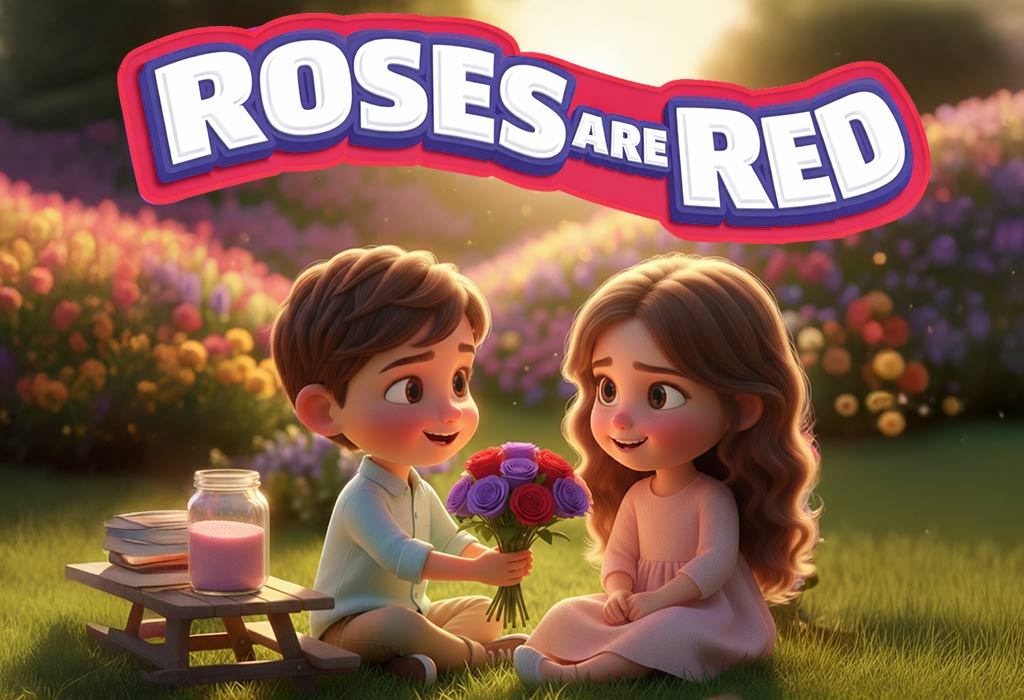
“Roses are Red” is one of the most loved short rhymes that children hear early in life. The rhyme uses simple words, bright imagery, and a gentle rhythm that makes it easy for kids to remember and repeat. Children enjoy the playful comparison of colors and the sweet message about love and friendship. Because the lines are short and predictable, young learners quickly build confidence while reciting it. Parents and teachers often use this rhyme to introduce basic vocabulary such as colors, flowers, and emotions. It also supports early literacy by helping kids notice rhyming sounds and sentence patterns. Beyond learning, the rhyme encourages creativity, as children can make their own versions and express feelings in a fun way. Its timeless charm makes it perfect for home, preschool, and storytime activities.
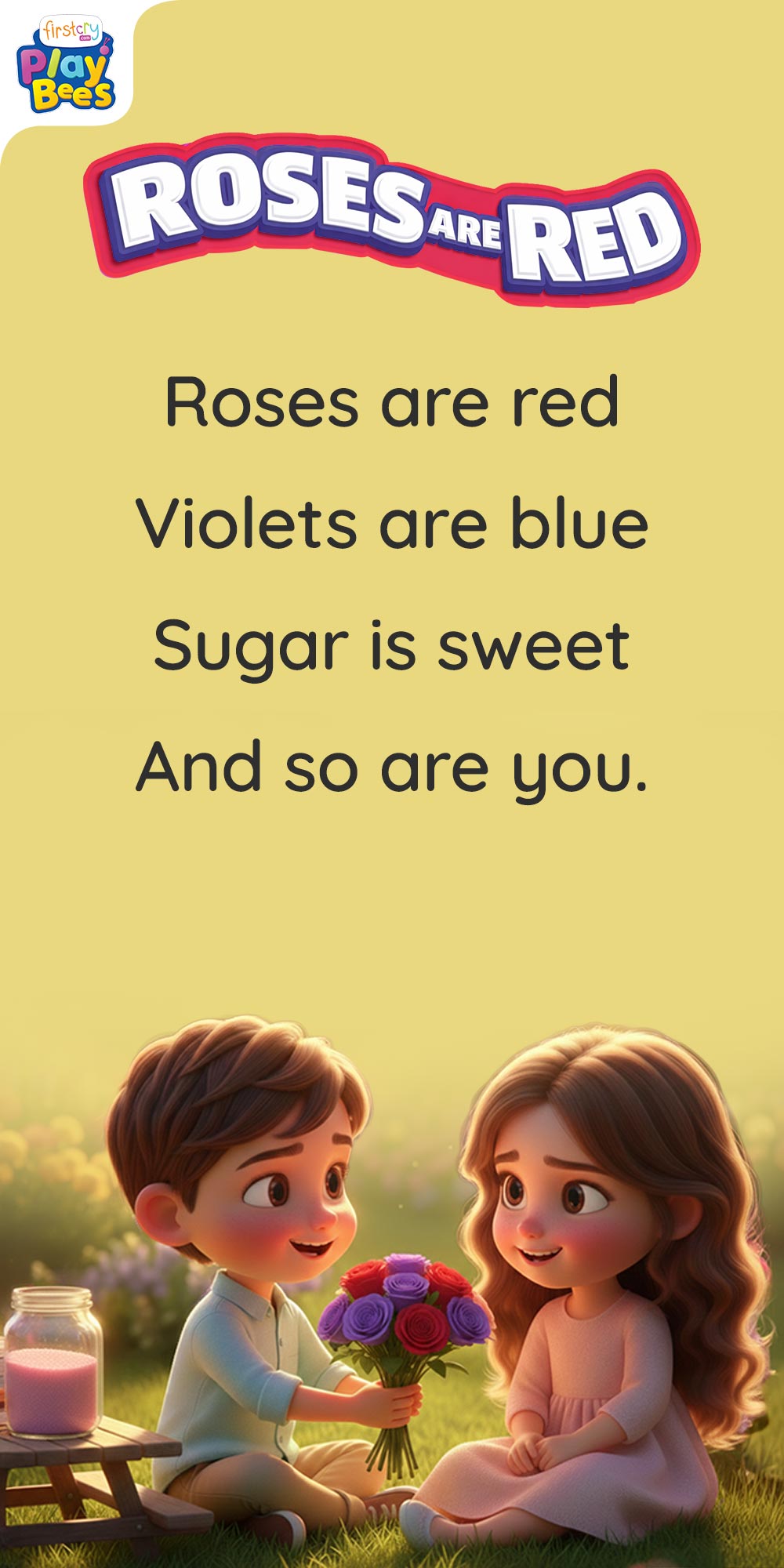
Roses are Red Song Lyrics
Enjoy these classic Roses are Red words that children love to recite and share with friends and family.
Roses are red,
Violets are blue,
Sugar is sweet,
And so are you.
Other Versions of Roses are Red Song
Many playful variations of this rhyme exist, allowing children to change words and create their own fun lines.
1. Sweet & Loving
Roses are red,
Violets are blue,
Honey is sweet,
And I love you.
2. Yummy Treat
Roses are red,
Violets are blue,
Cookies are yummy,
And so are you.
3. Toys & Friendship
Roses are red,
Violets are blue,
I like my toys,
And I like you too.
4. Special Friends
Roses are red,
Violets are blue,
Friends are special,
Just like you.
Gestures – How to Teach Roses are Red to Kids
Using simple actions makes the rhyme more engaging and helps children remember each line. These movement-based gestures turn learning into a playful activity.
- Hold both hands like a flower blooming when saying “Roses are red” to show the idea of a flower opening.
- Point toward something blue or pretend to paint the air blue while saying “Violets are blue.”
- Rub your tummy gently during “Sugar is sweet” to show the idea of something tasty.
- Smile widely and point to your cheeks to express happiness while saying “And so are you.”
- Encourage children to repeat each line with actions to build confidence and memory.
- Finish with a group hug or clap so kids associate the rhyme with positive feelings.
History & Quick Facts
The “Roses are Red” rhyme has very old roots, tracing back to a poem written by Edmund Spenser in 1590 in The Faerie Queene. Over time, the verse was shortened and adapted into the familiar four-line version children know today. The simple structure and clear rhyme made it popular in classrooms, greeting cards, and especially Valentine’s Day messages. Because it is easy to change, people created many variations, helping the rhyme spread across cultures and generations.
Interesting Facts
- The rhyme originally appeared in a much longer poem before becoming a short children’s verse.
- It is widely used in Valentine cards because it expresses affection in a simple way.
- Children enjoy making their own funny versions, which supports creativity and language play.
- The rhyme has been translated into many languages while keeping the same rhyming pattern.
- Teachers often use it to introduce the concept of rhyming pairs like red and blue.
- The verse appears in books, songs, memes, and classroom activities, showing its lasting popularity.
Suitable age & Learnings
This rhyme is ideal for toddlers and preschoolers, typically ages 2 to 6 years. Its short length and clear rhythm make it easy for early learners to understand and repeat.
- Rhyming skills improve as children notice sound pairs like blue and you.
- Vocabulary grows through simple words related to colors, flowers, and feelings.
- Memory skills develop because the rhyme is short and repetitive.
- Emotional expression is encouraged as kids learn words that describe affection and kindness.
- Creativity increases when children invent their own versions of the rhyme.
- Listening and speaking skills strengthen as kids recite the rhyme with gestures and group activities.
FAQs
1. What is the rhyming scheme of Roses are Red?
The rhyme follows an AABB pattern where the last words of lines two and four rhyme.
2. Why do children like the Roses are Red rhyme?
Kids enjoy its short lines, clear rhythm, and the sweet message that is easy to remember.
3. Can children create their own versions of the rhyme?
Yes, making new versions helps children practice language, creativity, and humor.
“Roses are Red” remains a timeless rhyme that blends learning with warmth and fun. Its simple structure makes it perfect for early readers and first-time reciters. Through colors, rhythm, and emotion, children build important language skills without feeling pressured. The rhyme also encourages creativity as kids experiment with new words and ideas. Parents and teachers can easily turn it into an interactive activity using gestures and playful variations. Even after generations, its gentle message of kindness keeps it meaningful. This little rhyme proves that short verses can leave a lasting impact on early learning and joyful childhood memories.
Explore Other Rhymes for Kids:
Star Light, Star Bright Nursery Rhyme With Lyrics
Sing a Song of Sixpence Nursery Rhyme With Lyrics
Mary, Mary, Quite Contrary Nursery Rhyme With Lyrics