
Table of Contents
“Early To Bed” is a short and meaningful nursery rhyme that teaches children the importance of healthy daily habits. The rhyme talks about going to bed on time and waking up early, helping little ones understand how simple routines can make them feel fresh, happy, and active. Kids enjoy this rhyme because it is easy to remember, has a gentle rhythm, and shares a positive message in just one line. For parents and teachers, it is a wonderful way to introduce conversations about sleep schedules and healthy living. Reciting this rhyme regularly helps build listening skills, memory, and pronunciation. It also encourages children to follow routines in a fun and playful way, making early learning both meaningful and enjoyable.
Early To Bed Song Lyrics
This classic rhyme shares wise advice about healthy habits, and the Early To Bed words are simple enough for young children to remember easily.
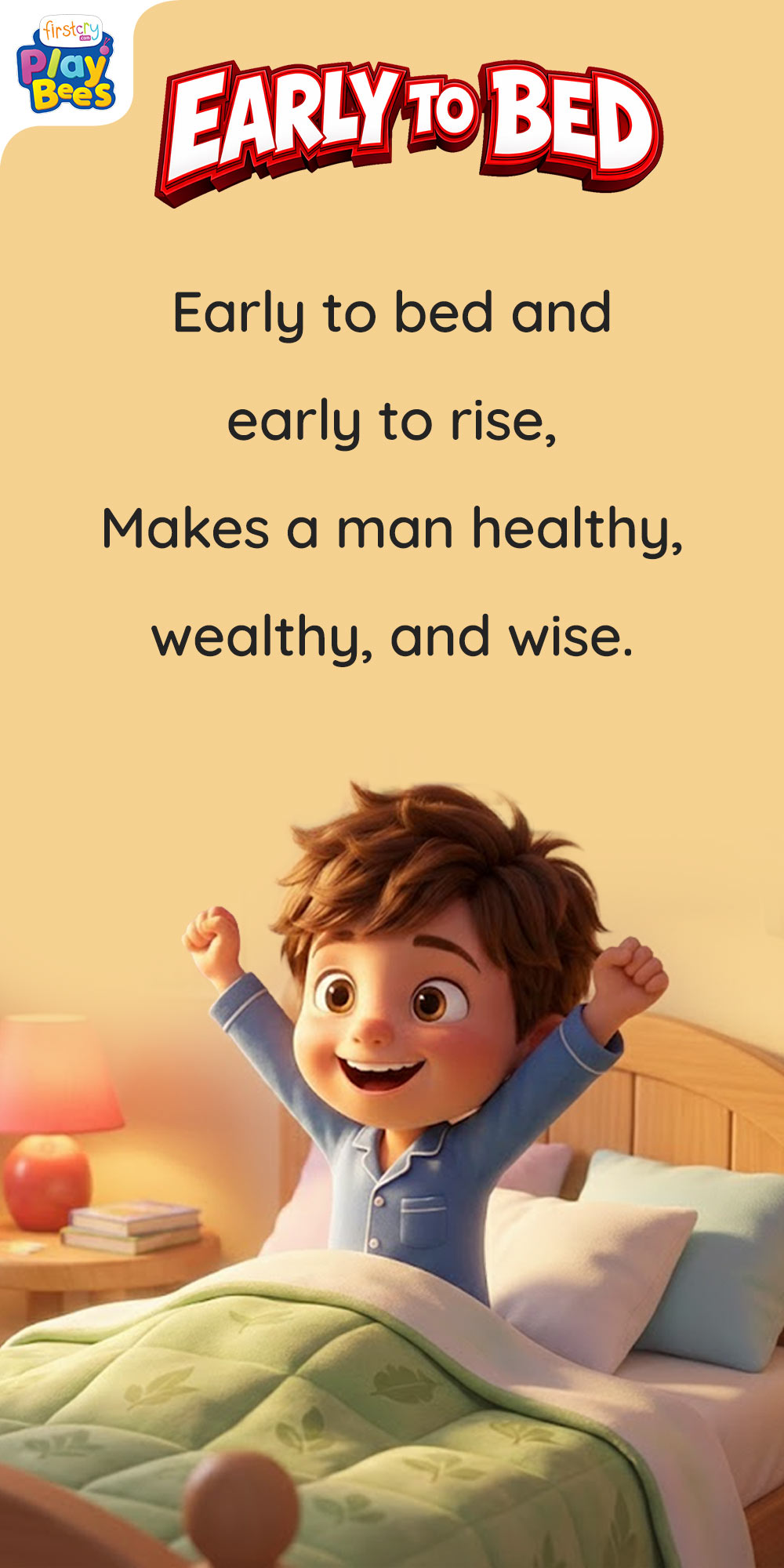
Early to bed and early to rise,
Makes a man healthy, wealthy, and wise.
Other Versions of Early To Bed Song
Over time, a few simple variations of this rhyme have been shared to make it more child-friendly.
1. Child-Friendly Change
Early to bed and early to rise,
Makes a child healthy, wealthy, and wise.
2. Gender-Neutral Variation
Early to bed and early to rise,
Makes us healthy, wealthy, and wise.
3. Extended Classroom Version
Early to bed and early to rise,
Makes a child healthy, wealthy, and wise,
Happy and cheerful all through the day,
Ready to learn, to work, and to play.
4. Positive Habit Extension
Early to bed and early to rise,
Makes you healthy, wealthy, and wise,
Bright in the morning, fresh and smart,
With happy thoughts and a ready heart.
Gestures – How to Teach Early To Bed to Kids
Teaching this rhyme with actions makes it more engaging and easier for children to remember. Simple gestures help children connect words with movements and improve understanding.
- Pretend to Sleep: Ask children to place their hands together under their cheek and tilt their head to one side while saying “Early to bed.”
- Wake Up Stretch: Encourage kids to stretch their arms wide and pretend to wake up happily during “early to rise.”
- Show Strong Muscles: When saying “healthy,” children can flex their arms to show strength.
- Pretend to Count Coins: For “wealthy,” ask kids to rub their fingers together as if counting money.
- Point to Head: During “wise,” children can gently tap their head to show smart thinking.
- Big Smile: End the rhyme with a bright smile to reflect happiness and positivity.
History & Quick Facts
The rhyme “Early to Bed” comes from a famous saying written by Benjamin Franklin in the 18th century. It first appeared in 1735 in his book Poor Richard’s Almanack. The line was part of Franklin’s advice about discipline, hard work, and healthy living. Over time, this wise saying became popular around the world and was included in children’s rhyme collections. Because of its simple language and strong message, it naturally became a nursery rhyme taught to young children. Today, it remains one of the most quoted proverbs about good habits and daily routines.
Interesting Facts
- This rhyme was originally a proverb before becoming a nursery rhyme for children.
- It is popular in many countries and has been translated into different languages.
- The rhyme does not have one fixed tune, so teachers often sing it using simple classroom melodies.
- It is commonly used in schools to teach the importance of daily routines and discipline.
- The message promotes time management and balanced living even for adults.
- It is one of the shortest yet most meaningful rhymes taught in early education.
Suitable Age & Learnings
“Early To Bed” is suitable for children aged 3 to 7 years as it is short, simple, and easy to memorize. The rhyme helps young learners understand healthy routines while building important early learning skills.
- Healthy Habits: Children learn that sleeping early and waking up on time is good for their body and mind.
- Vocabulary Building: Words like “healthy,” “wealthy,” and “wise” introduce new concepts and meanings.
- Memory Skills: The short and rhythmic line helps improve recall and repetition skills.
- Listening Skills: Kids practice careful listening when repeating the rhyme after parents or teachers.
- Life Lessons: The rhyme gently introduces the value of discipline and self-care.
- Rhythm & Pronunciation: Repeating the line helps improve speech clarity and rhythm awareness.
FAQs
1. What is the rhyming scheme of Early To Bed?
The rhyming scheme is AABB style in sound, with “rise” and “wise” forming a clear rhyming pair at the end of the two lines.
2. Who wrote the Early To Bed rhyme?
The line was originally written by Benjamin Franklin in Poor Richard’s Almanack in 1735.
3. Why is Early To Bed important for kids?
It teaches children the value of good sleep habits, discipline, and maintaining a healthy daily routine.
“Early To Bed” may be short, but its message is powerful and timeless. This simple rhyme gently reminds children that healthy routines can shape a happy and successful life. With its easy words and meaningful lesson, it fits perfectly into bedtime routines and classroom activities. Parents and teachers can use it as a starting point to talk about sleep habits and responsibility. Adding gestures and repetition makes learning even more fun and memorable. Even after centuries, this little rhyme continues to guide young minds toward healthy, positive living.
Explore Other Rhymes for Kids:
This Old Man Nursery Rhyme With Lyrics
Wee Willie Winkie Nursery Rhyme With Lyrics
Brush, Brush, Brush Your Teeth Nursery Rhyme With Lyrics