

Table of Contents
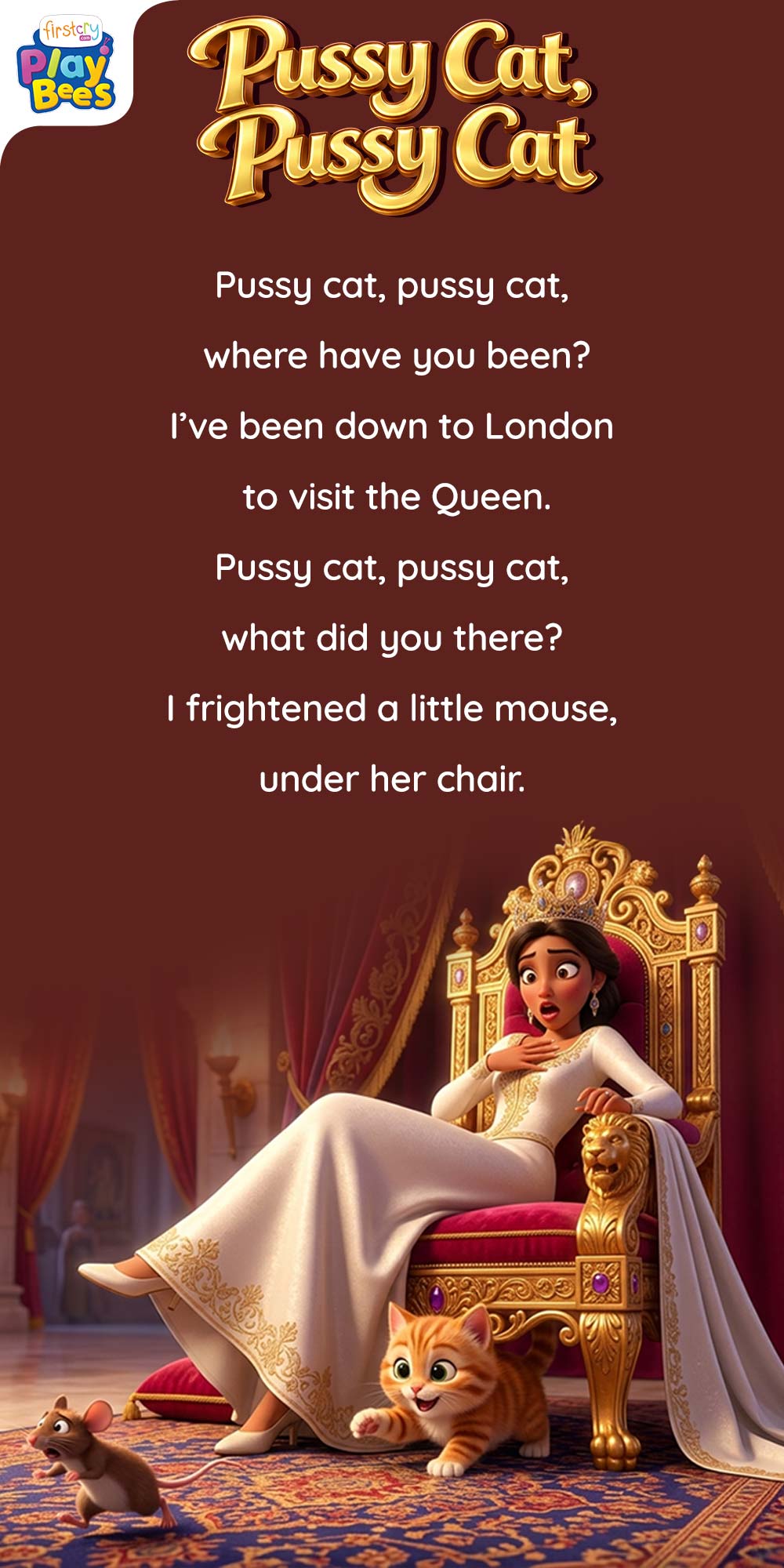
Pussy Cat, Pussy Cat is a classic nursery rhyme about a curious little cat who travels to London to visit the Queen. Instead of being impressed by royalty, the cat becomes more interested in chasing a small mouse under the chair. This playful and simple storyline makes children smile and sparks their imagination. Kids enjoy the rhyme because it is short, rhythmic, and easy to remember. The gentle humor and repetition help little ones join in quickly. For parents and teachers, this rhyme is a lovely tool for early learning. It supports listening skills, builds vocabulary, improves pronunciation, and introduces children to rhyming patterns in a fun and engaging way.
Pussy Cat, Pussy Cat Song Lyrics
Here are the classic Pussy Cat, Pussy Cat words that children love to sing and recite:
Pussy cat, pussy cat, where have you been?
I’ve been down to London to visit the Queen.
Pussy cat, pussy cat, what did you there?
I frightened a little mouse, under her chair.
Other Versions of Pussy Cat, Pussy Cat Song
Over time, a few playful variations of this rhyme have appeared in books and classrooms.
1. City Change
Pussy cat, pussy cat, where have you been?
I’ve been to Paris to visit the Queen.
Pussy cat, pussy cat, what did you there?
I frightened a little mouse under her chair.
2. Gentler Action
Pussy cat, pussy cat, where have you been?
I’ve been to London to visit the Queen.
Pussy cat, pussy cat, what did you there?
I chased a little mouse under her chair.
3. Simpler Wording
Pussy cat, pussy cat, where have you been?
I’ve been to London to visit the Queen.
Pussy cat, pussy cat, what did you there?
I frightened a little mouse under the chair.
4. Repeated Ending
Pussy cat, pussy cat, where have you been?
I’ve been to London to visit the Queen.
Pussy cat, pussy cat, what did you there?
I frightened a little mouse under her chair,
Under her chair, under her chair.
Gestures – How to Teach Pussy Cat, Pussy Cat to Kids
Teaching this rhyme with actions makes it more exciting and easier for children to remember. Simple hand movements and facial expressions can bring the story to life in a joyful way.
- Raise your hands like little paws and pretend to be a cat while saying “Pussy cat, pussy cat.”
- Point around the room with a curious look when saying “where have you been?”
- Pretend to walk proudly like royalty when saying “visit the Queen.”
- Make a surprised face and place your hand above your eyes as if looking around during “what did you there?”
- Wiggle your fingers like a tiny mouse when saying “a little mouse.”
- Bend slightly and point under an imaginary chair to show “under her chair.”
History & Quick Facts
Pussy Cat, Pussy Cat is a traditional English nursery rhyme that dates back to the early 19th century. It was first published around 1805 in collections of popular nursery rhymes. The author of the rhyme is unknown, as many nursery rhymes were passed down orally before being written. The mention of London and the Queen reflects British culture and history, which helped the rhyme become widely recognized in England. Over time, it spread to other countries through books, schools, and storytelling traditions, becoming a favorite among young children worldwide.
Interesting Facts
- This rhyme is believed to have been inspired by stories about cats in royal palaces, which makes it feel playful and grand.
- The rhyme is often included in classic nursery rhyme collections printed in the 1800s.
- It has been translated into several languages so children around the world can enjoy it.
- The short four line structure makes it one of the easiest rhymes for toddlers to memorize.
- Many preschool teachers use it to introduce children to the idea of question and answer patterns in poetry.
- The rhyme is commonly sung to a simple traditional tune that makes it catchy and fun for group recitation.
Suitable Age & Learnings
Pussy Cat, Pussy Cat is ideal for toddlers and preschoolers aged 2 to 5 years. Its short length and clear rhythm make it perfect for early learners who are just beginning to speak and sing.
- Children learn rhyming words like “been” and “Queen,” which build early phonics awareness.
- The rhyme introduces simple question and answer patterns that improve listening skills.
- Kids expand their vocabulary with words like “London,” “Queen,” and “mouse.”
- Acting out the rhyme strengthens fine and gross motor skills through gestures.
- Repeating the lines helps improve memory and speech clarity.
- The story encourages imagination as children picture a cat visiting a royal palace.
FAQs
1. What is the rhyming scheme of Pussy Cat, Pussy Cat?
The rhyme follows an AABB pattern, where “been” rhymes with “Queen” and “there” rhymes with “chair.”
2. Is Pussy Cat, Pussy Cat suitable for toddlers?
Yes, it is short, simple, and easy to memorize, making it perfect for toddlers and preschoolers.
3. What does this rhyme teach children?
It helps children learn rhyming words, build vocabulary, improve listening skills, and develop imagination through storytelling.
Pussy Cat, Pussy Cat is a timeless nursery rhyme that continues to delight young children with its playful story and gentle rhythm. Its simple structure makes it easy for little learners to remember and repeat with confidence. Through singing and actions, children strengthen language skills while having fun. Parents and teachers can use this rhyme as a joyful introduction to poetry and storytelling. The charming image of a curious cat visiting the Queen adds a touch of wonder to early learning. With its mix of rhythm, humor, and imagination, this classic rhyme remains a warm favorite in homes and classrooms everywhere.
Explore Other Rhymes for Kids:
Hey Diddle Diddle Nursery Rhyme With Lyrics
Little Miss Muffet Nursery Rhyme With Lyrics
Three Little Kittens Nursery Rhyme With Lyrics