
Table of Contents
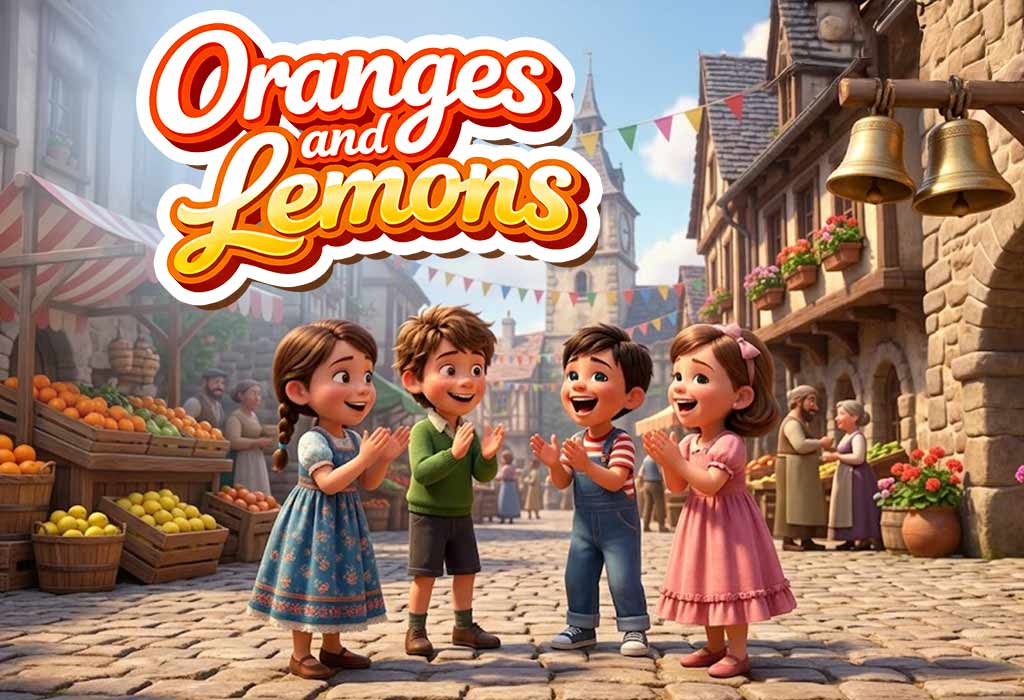
“Oranges and Lemons” is a traditional nursery rhyme that children have enjoyed for many generations. The rhyme talks about the bells of famous churches in London and the sounds they make. Kids love this rhyme because of its rhythmic pattern, playful words, and the fun game that often goes along with it. When children sing it together, they also enjoy the movements and actions that come with the song. The rhyme helps young learners develop listening skills, rhythm awareness, and early language abilities. It also introduces them to simple rhyming words and musical patterns. Parents and teachers often use this rhyme during playtime or circle time because it encourages group participation. Overall, “Oranges and Lemons” is both entertaining and educational for young children.
Oranges and Lemons Song Lyrics
Here are the classic Oranges and Lemons words that children love to sing and play along with.
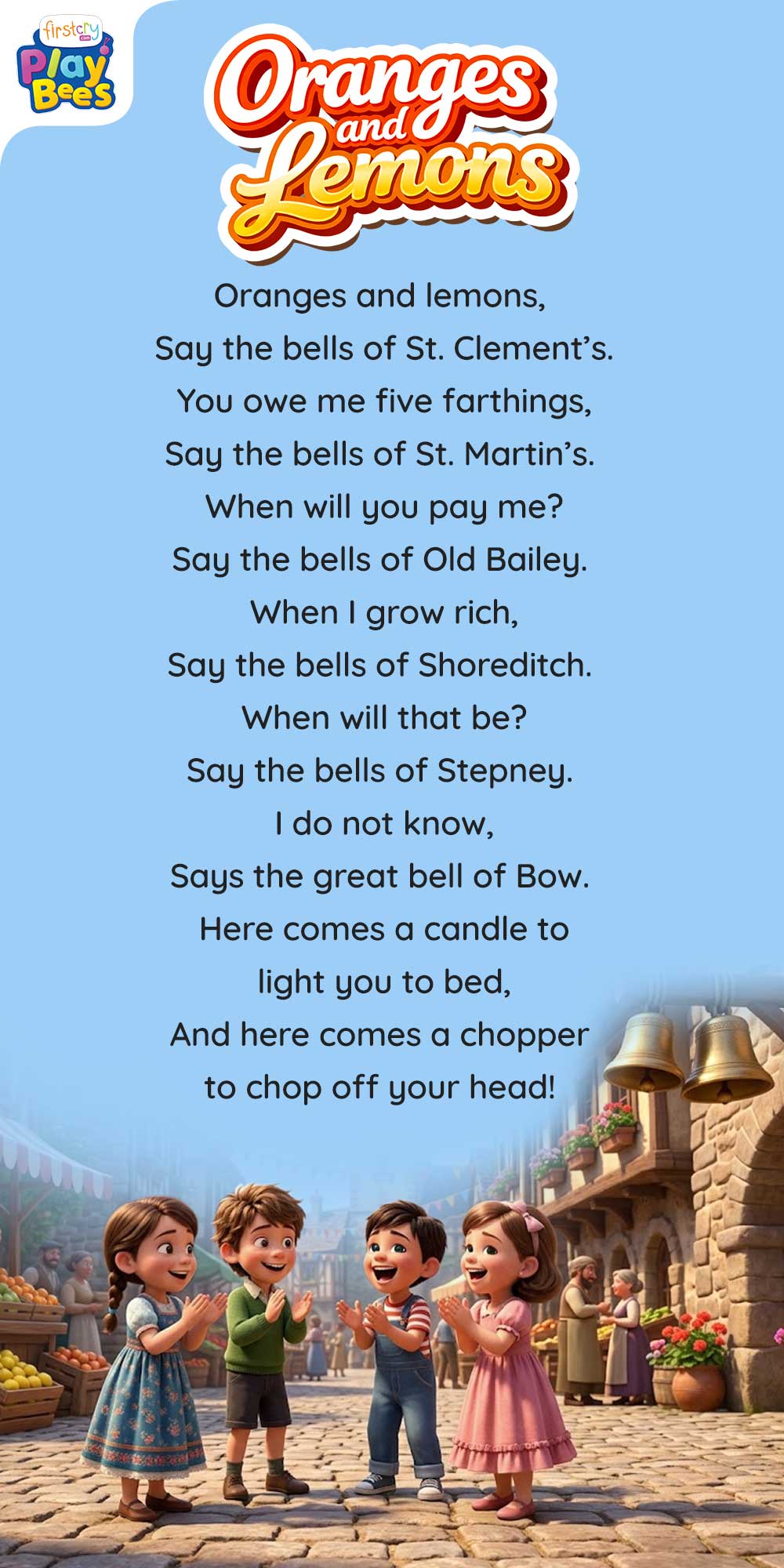
Oranges and lemons,
Say the bells of St. Clement’s.
You owe me five farthings,
Say the bells of St. Martin’s.
When will you pay me?
Say the bells of Old Bailey.
When I grow rich,
Say the bells of Shoreditch.
When will that be?
Say the bells of Stepney.
I do not know,
Says the great bell of Bow.
Here comes a candle to light you to bed,
And here comes a chopper to chop off your head!
Other Versions of Oranges and Lemons Song
Over time, different regions have sung slightly different versions of this rhyme.
Bull’s eyes and targets, say the bells of St. Margaret’s.
Brickbats and tiles, say the bells of St. Giles’.
Halfpence and farthings, say the bells of St. Martin’s.
Gestures – How to Teach Oranges and Lemons to Kids
Teaching actions along with the rhyme makes it more exciting and easier for children to remember. These simple gestures turn the rhyme into a fun group activity.
- Bell Ringing Motion: Children raise their hands and gently swing them side to side like ringing bells while singing about the church bells.
- Counting Gesture: When singing about “five farthings,” kids can show five fingers to connect the words with numbers.
- Thinking Pose: At the line “I do not know,” children can tap their heads or shrug their shoulders to show confusion.
- Walking Fingers: During the lines about going to bed, kids can move their fingers like someone walking slowly.
- Candle Action: Children pretend to hold a candle and slowly move it forward as if lighting the way.
- Final Game Gesture: Two children raise their arms to make an arch while others walk under it, and on the final line the arch gently lowers to “catch” someone.
History & Quick Facts
“Oranges and Lemons” is a very old English nursery rhyme believed to have originated in London, England. The rhyme mentions the bells of several famous London churches, which may have helped people remember the different church bells and their sounds. The exact author of the rhyme is unknown, as many nursery rhymes were passed down through oral tradition. One of the earliest printed versions appeared in the 18th century. Over time, it became popular in schools and playground games where children would walk under an arch formed by two players. The rhyme continues to be shared across generations because of its catchy rhythm and interactive play style.
Interesting Facts
- The rhyme mentions several real churches in London, making it both a song and a tiny piece of local history.
- It is often played as a traditional playground game where children walk under an arch while singing.
- Some modern versions remove the last line to make the rhyme more suitable for younger children.
- The rhyme has been translated and sung in different countries around the world.
- The bells mentioned in the rhyme were once important signals in London for events and daily life.
- “Oranges and Lemons” is considered one of the oldest English nursery rhymes still commonly taught to children.
Suitable Age & Learnings
“Oranges and Lemons” is generally suitable for children aged 3 to 7 years. The rhyme combines music, rhythm, and movement, which helps young learners stay engaged while building early learning skills.
- Rhyming Awareness: Children learn to recognize rhyming patterns, which supports early reading and phonics development.
- Listening Skills: Singing along helps children practice listening carefully and following the rhythm of the song.
- Memory Development: Repeating the lines helps kids improve recall and memory skills.
- Vocabulary Growth: Kids learn new words such as “bells,” “farthings,” and names of places.
- Social Interaction: The group game encourages teamwork and cooperation with other children.
- Motor Skills: Gestures and movement help improve coordination and physical participation.
FAQs
1. What is the rhyming scheme of Oranges and Lemons?
The rhyme mainly follows a simple rhyming pattern where pairs of lines rhyme, helping children easily remember and sing the song.
2. Why is Oranges and Lemons popular with children?
Children enjoy the catchy rhythm, repetitive lines, and the fun game played along with the rhyme.
3. Is Oranges and Lemons based on real places?
Yes, the rhyme mentions real churches in London and the bells associated with them.
“Oranges and Lemons” is a timeless nursery rhyme that has entertained children for centuries. Its musical rhythm, simple words, and playful actions make it easy for kids to learn and enjoy. The rhyme also introduces young learners to rhyming patterns, listening skills, and teamwork through group play. Even though it began as a traditional English rhyme, it is now shared by families and teachers around the world. Singing and acting out the rhyme together creates joyful learning moments for children. Overall, “Oranges and Lemons” remains a wonderful way to combine fun, music, and early learning in a child-friendly activity.
Explore Other Rhymes for Kids:
Pop Goes the Weasel Nursery Rhyme With Lyrics
Sing a Song of Sixpence Nursery Rhyme With Lyrics
London Bridge Is Falling Down Nursery Rhyme With Lyrics