
Table of Contents
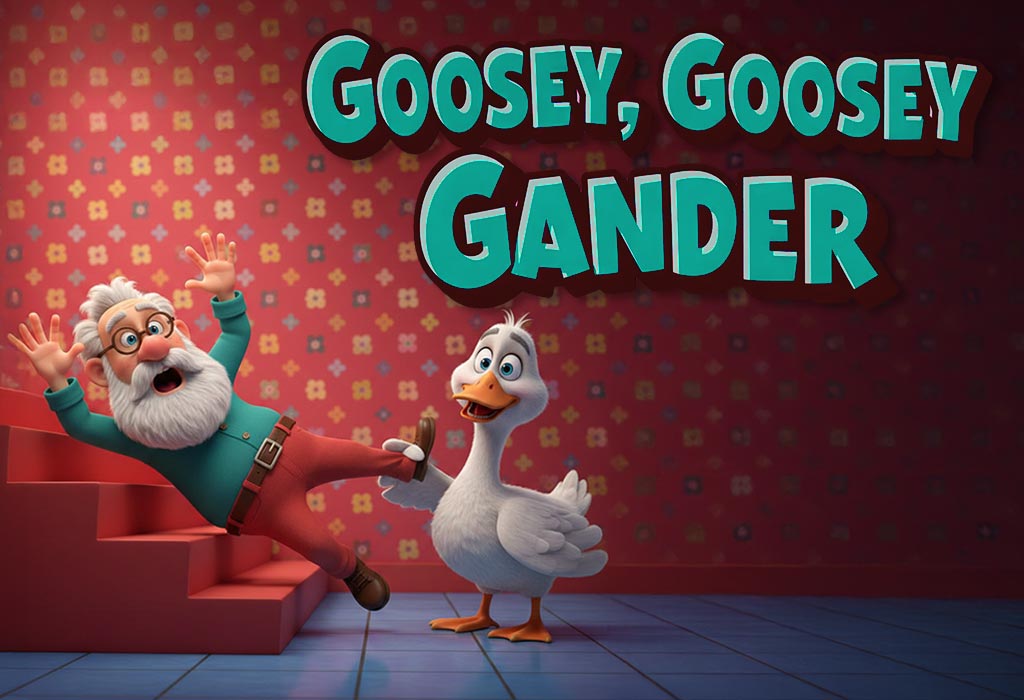
“Goosey, Goosey Gander” is a classic nursery rhyme that has been loved by children for many generations. The rhyme tells a simple and playful story about someone wandering through a house and meeting an old man along the way. Kids enjoy this rhyme because of its catchy rhythm, fun storytelling, and easy-to-remember lines. When children sing or listen to it, they often imagine the silly goose wandering around the house, which makes the rhyme exciting and engaging. Nursery rhymes like this are also helpful for early learning. They support language development, help children recognize rhyming words, and improve listening skills. Parents and teachers often use this rhyme to introduce rhythm, storytelling, and new vocabulary to young learners in a fun and interactive way.
Goosey, Goosey Gander Song Lyrics
Below are the classic Goosey, Goosey Gander words, a traditional rhyme children enjoy singing and reciting together.
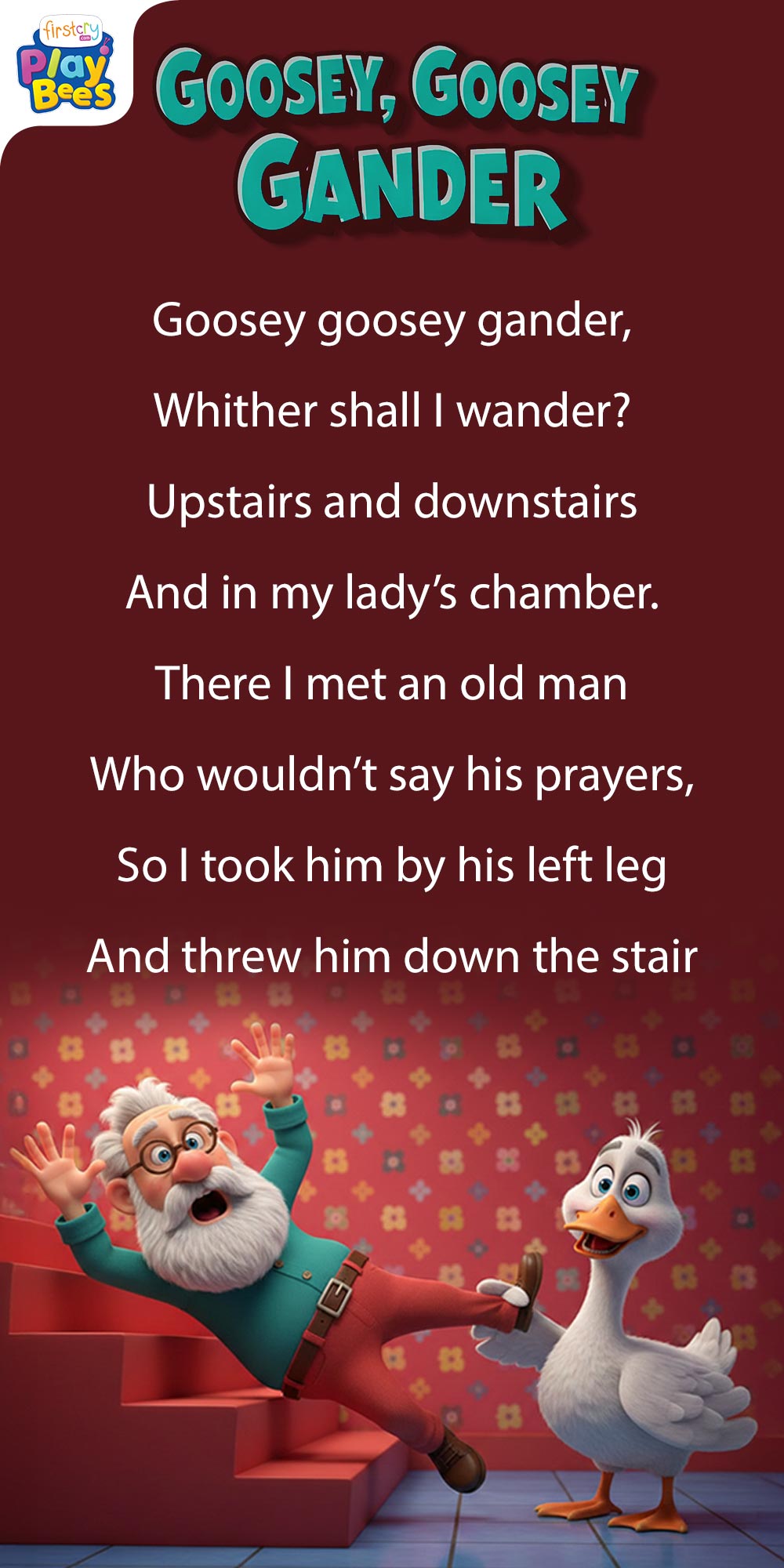
Goosey goosey gander,
Whither shall I wander?
Upstairs and downstairs
And in my lady’s chamber.
There I met an old man
Who wouldn’t say his prayers,
So I took him by his left leg
And threw him down the stair
Other Versions of Goosey, Goosey Gander Song
Over the years, a few alternate versions of this rhyme have appeared in books and traditional collections.
1. Original Early Version (1784)
Goose-a goose-a gander,
Where shall I wander?
Up stairs and down stairs,
In my lady’s chamber;
There you’ll find a cup of sack
And a race of ginger.
2. Additional Verse from Another Version
The stairs went crack,
He nearly broke his back.
And all the little ducks went,
“Quack, quack, quack.”
Gestures – How to Teach Goosey, Goosey Gander to Kids
Teaching this rhyme with actions makes it more fun and easier for children to remember. Simple gestures help kids connect movement with words and stay engaged while learning.
- Pretend to waddle like a goose – When saying “Goosey goosey gander,” children can flap their arms and waddle like a goose to act out the character.
- Look around while wandering – During “Whither shall I wander?” kids can place a hand above their eyes and pretend to look around the room.
- Point up and down – For “Upstairs and downstairs,” children can point upward and then downward to show the direction of movement.
- Tiptoe quietly – While saying “In my lady’s chamber,” kids can tiptoe slowly to pretend they are entering a quiet room.
- Act surprised when meeting the old man – When the rhyme mentions meeting the old man, children can open their eyes wide or make a surprised face.
- Stomp and slide hands down – For “threw him down the stair,” kids can gently stomp their feet and move their hands downward to show the action in a playful way.
History & Quick Facts
“Goosey, Goosey Gander” is an English nursery rhyme that has been around for centuries. The earliest known version of the rhyme appeared in 1784 in a book called Gammer Gurton’s Garland or The Nursery Parnassus. Like many traditional rhymes, the author is unknown, and it was passed down through oral storytelling before being written down. Over time, the rhyme became widely known in English-speaking countries and appeared in many nursery rhyme collections. Some historians believe it may reference religious conflicts in England when Catholic priests were secretly hidden in homes during times of persecution. Today, however, it is mostly enjoyed as a fun rhyme for children rather than for its historical meaning.
Interesting Facts
- Very old rhyme: “Goosey, Goosey Gander” dates back to at least the late 18th century and has been sung by children for more than 200 years.
- Anonymous author: Like many traditional nursery rhymes, the original writer is unknown because the rhyme was passed down orally for generations.
- Recorded in famous rhyme books: It appeared in early nursery rhyme collections such as Gammer Gurton’s Garland, helping it spread widely.
- Possible historical meaning: Some historians believe the rhyme may hint at religious tensions in England involving hidden priests.
- Different lyric variations: Several versions of the rhyme exist, with slightly different lines or extra verses added over time.
- Still popular today: The rhyme continues to appear in children’s books, educational programs, and animated nursery rhyme videos.
Suitable Age & Learnings
“Goosey, Goosey Gander” is suitable for children aged 2 to 6 years, as its short lines and rhythm are easy for young learners to follow. The rhyme also helps develop important early learning skills through repetition, rhythm, and storytelling.
- Language development: Children hear new words and sentence patterns that help improve their vocabulary and speaking skills.
- Rhyming awareness: The rhyme helps kids recognize rhyming sounds, which is an important step toward reading readiness.
- Listening skills: Following the story while singing improves attention and listening abilities.
- Memory building: Repeating the lines helps children strengthen memory and recall skills.
- Creative imagination: Kids imagine the wandering goose and the rooms in the house, which encourages creative thinking.
- Movement coordination: When paired with actions and gestures, the rhyme helps develop basic motor skills and body coordination.
FAQs
1. What is the rhyming scheme of Goosey, Goosey Gander?
The rhyme typically follows a pattern similar to ABCB DEFE, where some lines rhyme while others simply maintain rhythm, making it easy and fun to recite.
2. Is Goosey, Goosey Gander suitable for toddlers?
Yes, it is suitable for toddlers and preschoolers because it has a simple rhythm, short lines, and a memorable story that young children enjoy.
3. Why do children enjoy Goosey, Goosey Gander?
Children enjoy it because the rhyme is catchy, easy to repeat, and can be acted out with fun movements and expressions.
“Goosey, Goosey Gander” is a timeless nursery rhyme that has entertained children for generations. Its rhythmic lines and simple story make it easy for young learners to remember and enjoy. Singing this rhyme can turn learning into a playful activity that builds language, listening, and memory skills. Parents and teachers often use it during story time, circle time, or action songs to keep children engaged. Even though the rhyme has historical roots, today it is simply a fun and lively part of childhood learning. Sharing classic rhymes like this helps children connect with language, rhythm, and imagination in a joyful way.
Explore Other Rhymes for Kids:
Three Blind Mice Nursery Rhyme With Lyrics
Hey Diddle Diddle Nursery Rhyme With Lyrics
Sing a Song of Sixpence Nursery Rhyme With Lyrics