
Table of Contents
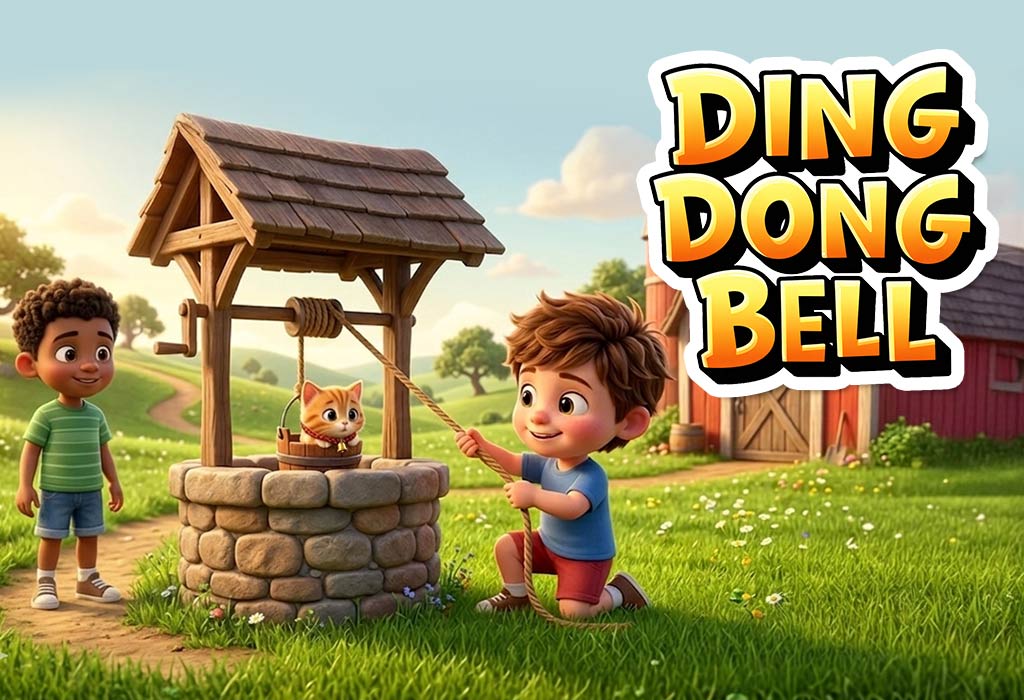
“Ding Dong Bell” is a classic nursery rhyme that tells a short, memorable story about a cat and a bell ringing sound. The rhyme has been loved by children for generations because of its catchy rhythm, simple language, and playful storytelling. Kids enjoy repeating the “ding dong” sound, which makes the rhyme fun to sing and easy to remember. Parents and teachers often use it to introduce young children to rhyming words, rhythm, and early storytelling. The rhyme also opens gentle conversations about kindness and caring for animals. Because the lines are short and repetitive, children can quickly learn the words and join in singing. This makes “Ding Dong Bell” a great rhyme for group activities, circle time, and early reading practice at home or in preschool classrooms.
Ding Dong Bell Song Lyrics
The Ding Dong Bell words are short, rhythmic, and easy for young children to memorize and sing along with.
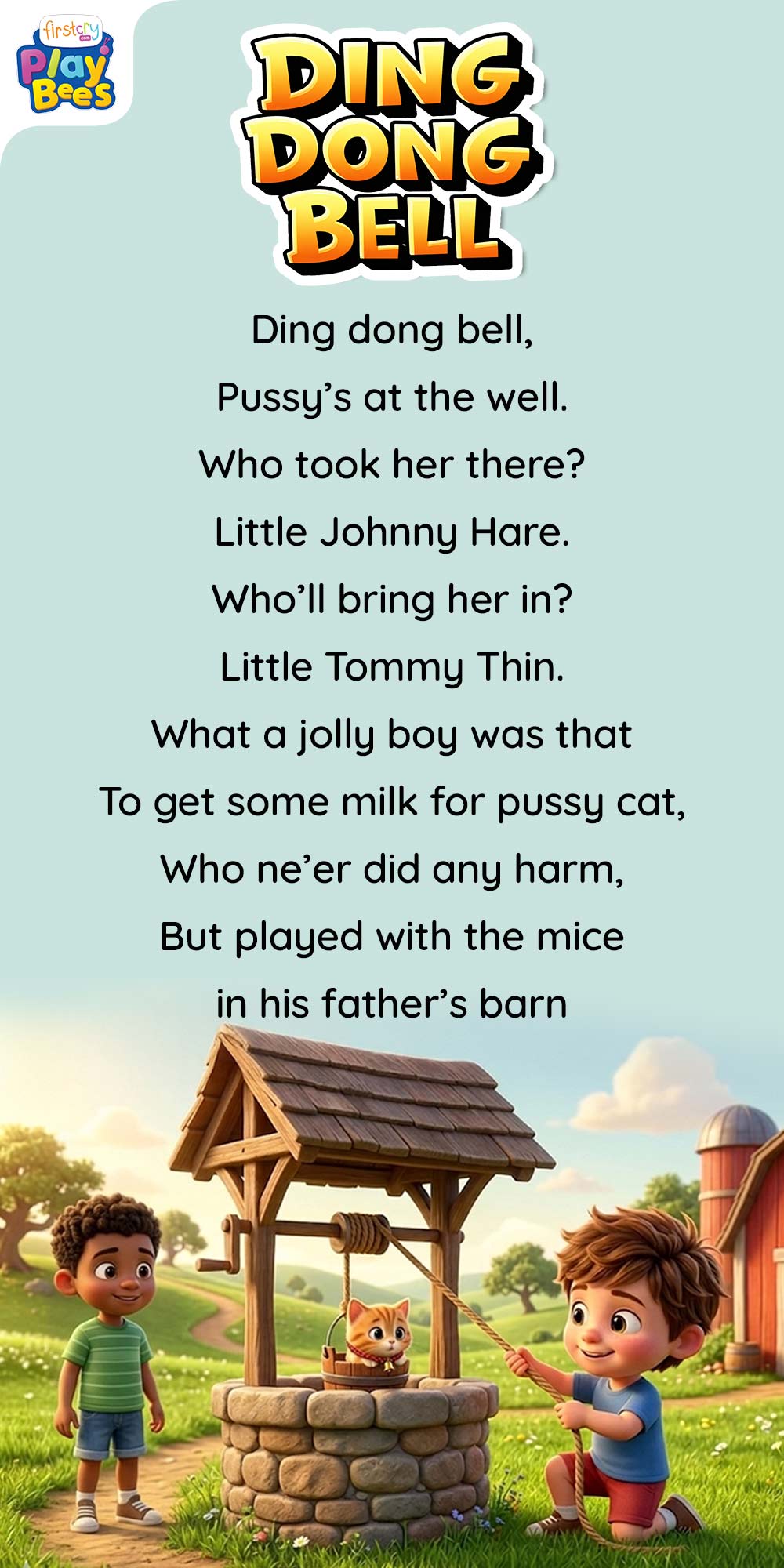
Ding dong bell,
Pussy’s at the well.
Who took her there?
Little Johnny Hare.
Who’ll bring her in?
Little Tommy Thin.
What a jolly boy was that
To get some milk for pussy cat,
Who ne’er did any harm,
But played with the mice in his father’s barn
Watch the Video : Ding Dong Bell
Ding Ding Dong Bell Song Audio
Other Versions of Ding Dong Bell Song
Over time, a few slightly different versions of the rhyme have appeared in books and classrooms.
Ding, dong, bell,
Pussy’s in the well.
Who put her in?
Little Johnny Green.
Who pulled her out?
Little Tommy Stout.
What a naughty boy was he
To try to drown poor pussy.
Gestures – How to Teach Ding Dong Bell to Kids
Adding simple actions helps children understand the story and makes the rhyme more fun to perform.
- Ring the bell motion: Move both hands like you are ringing a big bell when saying “Ding, dong, bell.”
- Point downward for the well: Point down toward the floor with both hands to show the cat is in the well.
- Point to an imaginary person: When saying “Who put her in?” point outward as if asking the group a question.
- Pretend to drop something: Use a gentle dropping motion with your hands when mentioning Little Johnny Flynn putting the cat in the well.
- Pulling action: Pretend to pull a rope upward when saying “Who pulled her out?” to act out rescuing the cat.
- Finger wag for naughty boy: Shake your finger playfully to show that the boy’s action was naughty.
History & Quick Facts
“Ding Dong Bell” is a very old English nursery rhyme whose author is unknown. The rhyme is believed to date back to around 1580, making it one of the oldest nursery rhymes still known today. It later appeared in print in the famous children’s collection “Tommy Thumb’s Pretty Song Book” in 1744. Over time, the rhyme became part of the traditional Mother Goose nursery rhyme collection. Its simple storytelling and moral lesson about kindness to animals helped it stay popular in homes and schools for centuries.
Interesting Facts
- The rhyme is believed to be over 400 years old, making it one of the earliest nursery rhymes recorded in English.
- Many teachers use it to discuss kindness toward animals, since the story shows that hurting animals is wrong.
- “Ding dong” is an example of an onomatopoeia, which means the words imitate the sound of a bell ringing.
- The rhyme appears in several Mother Goose collections, helping it spread widely across English-speaking countries.
- It has been translated into many languages, allowing children around the world to enjoy the rhyme.
- Some modern versions are shortened for preschoolers, focusing only on the first few lines.
Suitable Age & Learnings
“Ding Dong Bell” is most suitable for children ages 2 to 6 years, as the rhyme uses simple words and a clear rhythm that young learners can easily follow. It supports early childhood development by introducing rhythm, vocabulary, and basic storytelling.
- Rhyming awareness: Children hear rhyming sounds like bell and well, which helps them recognize sound patterns in language.
- Listening skills: Kids learn to listen carefully and repeat lines, improving attention and memory.
- Vocabulary building: Words such as bell, well, naughty, and pussy cat introduce simple new vocabulary.
- Story understanding: The rhyme tells a short story with characters and actions, helping children follow a narrative.
- Moral learning: It gently teaches children that being cruel to animals is wrong and kindness matters.
- Movement coordination: Adding gestures while singing helps improve motor skills and body coordination.
FAQs
1. What is the rhyming scheme of Ding Dong Bell?
The rhyme mainly follows an AABB style pattern, where words like bell/well and in/Flynn rhyme in pairs.
2. Is Ding Dong Bell suitable for toddlers?
Yes, toddlers can enjoy the rhyme because of its simple sounds, repetition, and easy-to-follow rhythm.
3. What lesson does the rhyme teach children?
The rhyme teaches a gentle moral about being kind to animals and not hurting them, which parents and teachers often discuss after singing.
“Ding Dong Bell” is a timeless nursery rhyme that has entertained children for centuries. Its catchy rhythm, playful sound effects, and short storyline make it easy for young learners to enjoy and remember. Beyond the fun singing, the rhyme also offers meaningful lessons about kindness and responsibility. When paired with gestures and actions, it becomes an engaging activity that encourages participation and movement. Parents and teachers often include it during story time, music sessions, or early reading practice. By sharing this rhyme, adults help children build language skills, imagination, and empathy. Even after hundreds of years, “Ding Dong Bell” continues to ring happily in classrooms and homes around the world.
Watch Other Videos:
Looby Loo Video
Hot Cross Buns Video
Peter Piper Picked a Peck of Pickled Pepper Video
Explore Other Rhymes for Kids:
Hey Diddle Diddle Nursery Rhyme With Lyrics
Three Little Kittens Nursery Rhyme With Lyrics
Pussy Cat, Pussy Cat Nursery Rhyme With Lyrics