
Table of Contents
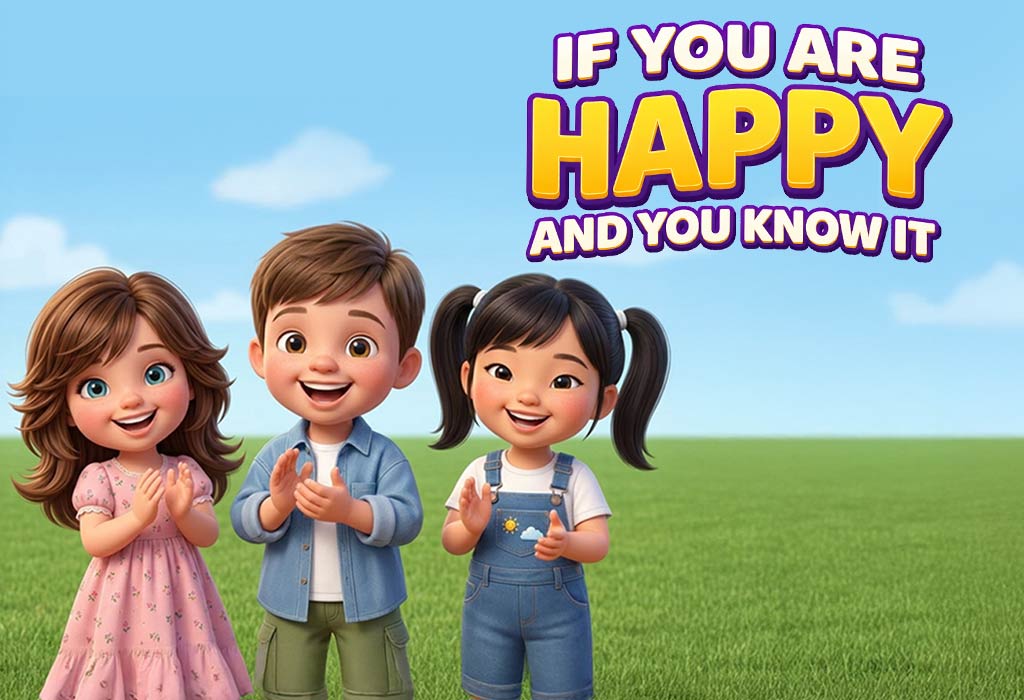
“If You Are Happy And You Know It” is a cheerful and interactive nursery rhyme that encourages children to express their feelings through fun actions like clapping, stomping, and shouting hooray. The song is loved by young kids because it combines music, movement, and simple words that are easy to remember and repeat. As children sing along, they actively participate by performing actions that match the lyrics, making the rhyme lively and engaging. Parents and teachers often use this rhyme during playtime or group activities because it keeps children involved and excited. Beyond the fun, the rhyme also supports early learning by improving listening skills, coordination, and vocabulary. With its joyful rhythm and simple instructions, it helps children understand emotions while building confidence and social interaction in a playful way.
If You Are Happy And You Know It Song Lyrics
Many parents and teachers search for the If You Are Happy And You Know It words because the rhyme is widely used in classrooms and playgroups to encourage singing, movement, and joyful participation.
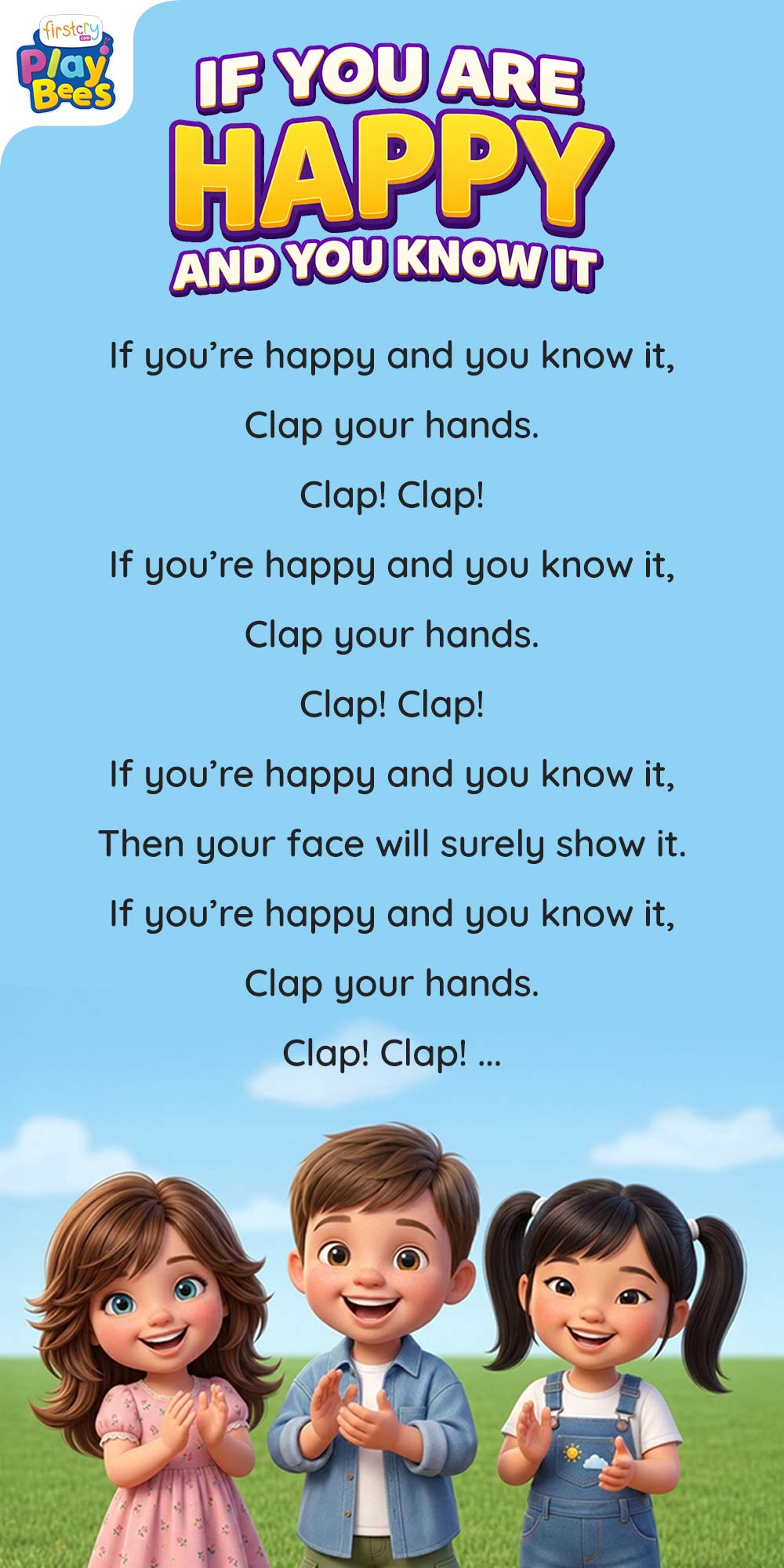
If you’re happy and you know it,
Clap your hands.
Clap! Clap!
If you’re happy and you know it,
Clap your hands.
Clap! Clap! If you’re happy and you know it,
Then your face will surely show it.
If you’re happy and you know it,
Clap your hands.
Clap! Clap!
If you’re happy and you know it,
stomp your feet.
stomp! stomp!
If you’re happy and you know it,
stomp your feet.
stomp! stomp!
If you’re happy and you know it,
Then your face will surely show it.
If you’re happy and you know it,
stomp your feet.
stomp! stomp!
If you’re happy and you know it,
Shout “hurray!”
hurray!
If you’re happy and you know it,
Shout “hurray!”
hurray!
If you’re happy and you know it,
Then your face will surely show it.
If you’re happy and you know it,
Shout “hurray!”
hurray!
If you’re happy and you know it,
Do all three
Clap!stomp!hurray!
If you’re happy and you know it,
Do all three
Clap! stomp! hurray!
If you’re happy and you know it,
Then your face will surely show it.
If you’re happy and you know it,
Do all three
Clap! stomp! hurray!
Other Versions of If You Are Happy And You Know It Song
Many playful variations of the rhyme exist, allowing teachers and parents to add new actions and keep children engaged.
If you’re happy and you know it, nod your head,
If you’re happy and you know it, nod your head,
If you’re happy and you know it, then your face will surely show it,
If you’re happy and you know it, nod your head.
If you’re happy and you know it, tap your knees,
If you’re happy and you know it, tap your knees,
If you’re happy and you know it, then your face will surely show it,
If you’re happy and you know it, tap your knees.
If you’re happy and you know it, jump up high,
If you’re happy and you know it, jump up high,
If you’re happy and you know it, then your face will surely show it,
If you’re happy and you know it, jump up high.
If you’re happy and you know it, spin around,
If you’re happy and you know it, spin around,
If you’re happy and you know it, then your face will surely show it,
If you’re happy and you know it, spin around.
If you’re angry and you know it, take a breath,
If you’re angry and you know it, take a breath,
If you’re angry and you know it, take a breath and count to three,
If you’re angry and you know it, take a breath.
If you’re sleepy and you know it, close your eyes,
If you’re sleepy and you know it, close your eyes,
If you’re sleepy and you know it, then your face will surely show it,
If you’re sleepy and you know it, close your eyes.
Gestures – How to Teach If You Are Happy And You Know It to Kids
Teaching this rhyme with actions makes it easier for children to understand the lyrics while enjoying movement and rhythm. Simple gestures also help improve coordination and participation during group singing.
- Clap your hands: When the lyrics say “clap your hands,” encourage children to clap loudly and rhythmically to match the beat of the song.
- Stomp your feet: Ask children to stomp their feet on the floor while standing to feel the rhythm and enjoy the action.
- Shout hooray: Children can raise their hands in the air and shout “hooray” with excitement to express happiness.
- Do all three actions: In the final verse, guide kids to clap, stomp, and shout one after another while singing.
- Use big smiles: Encourage children to smile while performing the actions to connect the rhyme with feelings of happiness.
- Repeat with new actions: After learning the main actions, introduce fun movements like jumping or spinning to keep the activity lively.
History & Quick Facts
“If You Are Happy And You Know It” is believed to have roots in folk music traditions and has been passed down through generations as a participatory children’s song. The exact author of the rhyme is unknown, which is common for many traditional nursery songs. Some researchers suggest that the tune may have been influenced by folk melodies from different cultures and gradually adapted into a children’s action song. Over time, it became popular in schools, preschools, and playgroups around the world because it encourages movement and interaction. Today, it is one of the most recognized action rhymes used to teach emotions and participation in early childhood learning.
Interesting Facts
- The rhyme is considered an action song because children perform physical movements while singing the lyrics.
- It has been translated into many languages, allowing children around the world to enjoy the song.
- Teachers often use it in classrooms as an icebreaker activity to energize children and encourage participation.
- The song helps children understand emotions like happiness by connecting feelings with expressions and actions.
- New verses are frequently added by parents and teachers to include creative movements and keep the rhyme interesting.
- The tune is simple and repetitive, which makes it easy for toddlers and preschoolers to learn quickly.
Suitable age & Learnings
“If You Are Happy And You Know It” is ideal for toddlers and preschoolers, usually between 2 and 6 years of age. The rhyme combines music, actions, and emotions, making it a valuable learning tool for early childhood development.
- Emotional expression: Children learn to recognize and express feelings such as happiness through actions and facial expressions.
- Listening skills: Following the instructions in the lyrics helps children improve their listening and attention skills.
- Motor coordination: Actions like clapping and stomping help develop body coordination and physical movement.
- Vocabulary building: Kids learn simple action words such as clap, stomp, shout, and know.
- Social interaction: Singing the rhyme together in groups encourages teamwork and shared participation.
- Confidence building: Performing actions while singing helps children feel comfortable expressing themselves in front of others.
FAQs
1. What is the rhyming scheme of If You Are Happy And You Know It?
The rhyme mostly follows a simple repeating pattern where the last lines end with similar sounds such as “hands,” “feet,” or “hooray,” making the rhythm easy for children to remember.
2. Why do children enjoy singing If You Are Happy And You Know It?
Children enjoy the rhyme because it combines singing with fun actions, allowing them to move, laugh, and actively participate.
3. Can teachers create new actions for the rhyme?
Yes, teachers and parents often add new actions like jumping, spinning, or tapping knees to make the rhyme more interactive and exciting.
“If You Are Happy And You Know It” remains one of the most joyful and engaging nursery rhymes for young children. Its combination of music, simple words, and playful actions makes it perfect for early learning environments. As children clap, stomp, and cheer, they not only enjoy the song but also develop important skills such as coordination and listening. The rhyme also helps children connect emotions with expressions, making learning both meaningful and fun. Because it is easy to adapt with new actions, it continues to stay fresh and exciting for every generation of learners. Whether sung at home or in the classroom, this lively rhyme brings smiles, movement, and learning together in a delightful way.
Explore Other Rhymes for Kids:
Open Shut Them Nursery Rhyme With Lyrics
One Little Finger Nursery Rhyme With Lyrics
Head, Shoulders, Knees and Toes Nursery Rhyme With Lyrics