
Table of Contents
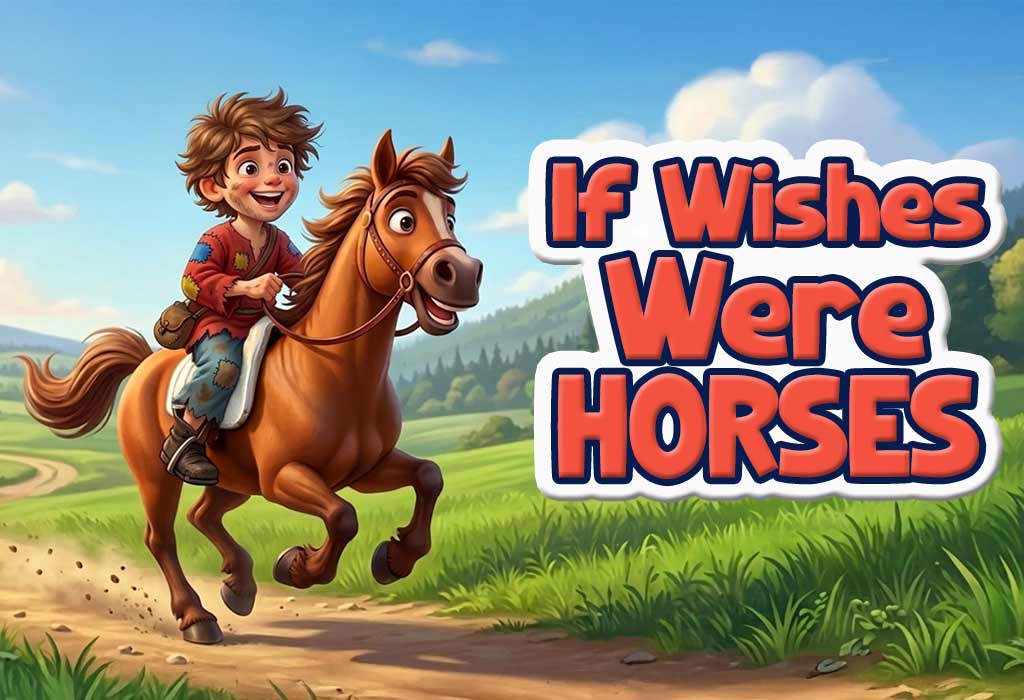
Nursery rhymes are a fun way for children to enjoy music, language, and imagination. If Wishes Were Horses is a short and playful rhyme that talks about dreams and wishes in a humorous way. The rhyme uses simple words and a memorable rhythm, making it easy for kids to listen, remember, and repeat. Children enjoy it because it paints a funny picture of people getting whatever they wish for. At the same time, it gently teaches an important idea that wishing alone does not always make things happen. Parents and teachers often use this rhyme to introduce early vocabulary, rhythm, and listening skills. Its simple structure makes it perfect for storytelling, singing, or reciting together during playtime or learning activities.
If Wishes Were Horses Song Lyrics
This traditional rhyme is short and easy for children to remember, and the If wishes were horses words are often shared during storytelling or sing-along activities.
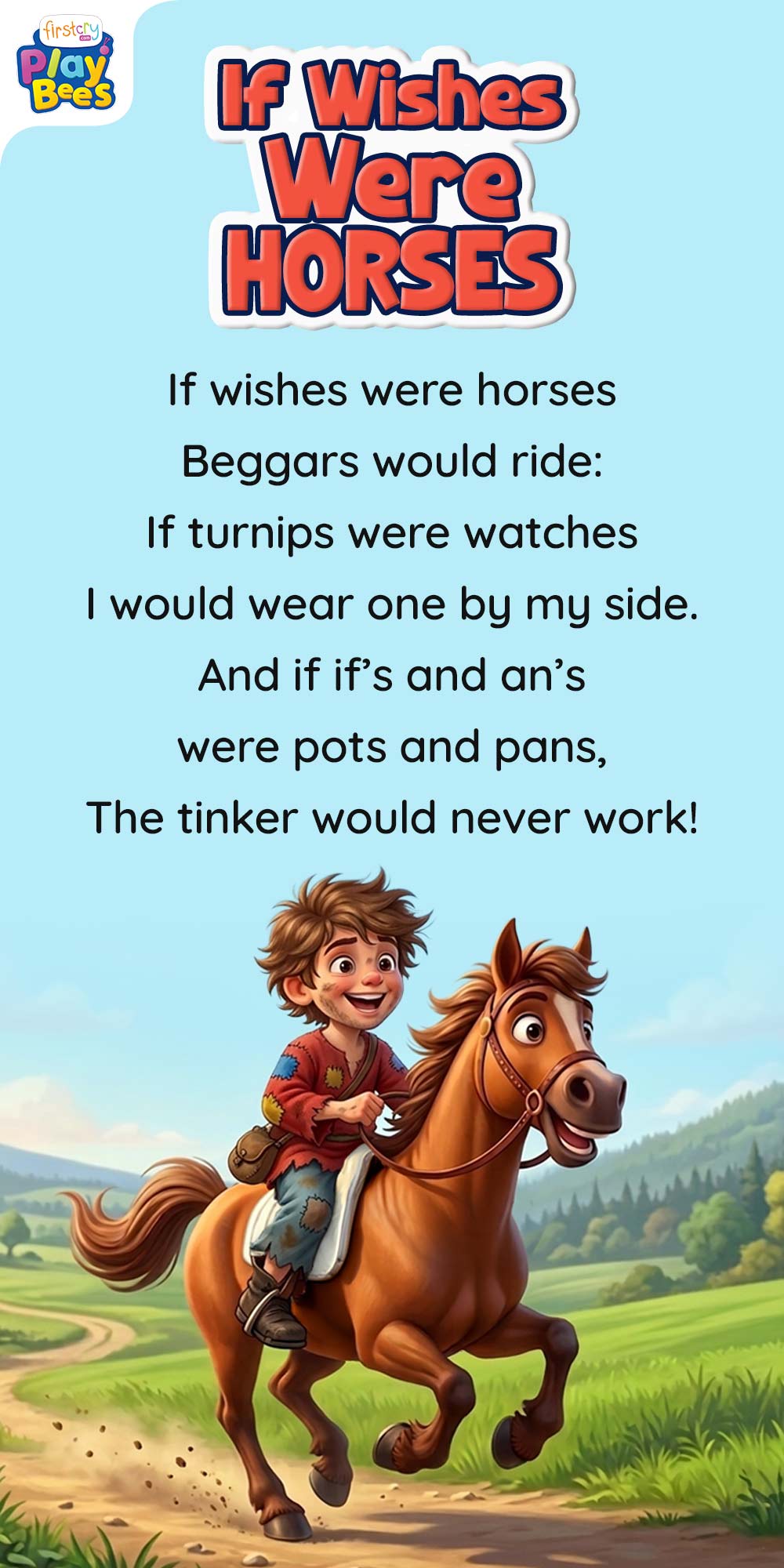
If wishes were horses
Beggars would ride:
If turnips were watches
I would wear one by my side.
And if if’s and an’s were pots and pans,
The tinker would never work!
Other Versions of If Wishes Were Horses Song
Over time, this traditional rhyme has appeared in slightly different forms, with a few word changes depending on the region or storyteller.
Short Version
If wishes were horses, beggars would ride,
If turnips were watches, I would wear one by my side.
Traditional Version
If wishes were horses, beggars would ride,
If turnips were watches, I’d wear one by my side,
If “ifs” and “ands” were pots and pans,
There’d be no work for tinkers’ hands.
Alternate Version
If wishes were horses, beggars might ride,
If turnips were watches, I’d wear one with pride.
Gestures – How to Teach If Wishes Were Horses to Kids
Teaching nursery rhymes with actions helps children remember the words better and makes learning more fun. Simple gestures and movements can turn the rhyme into an engaging activity for young learners.
- Pretend riding a horse by holding imaginary reins and bouncing slightly when saying “If wishes were horses, beggars would ride.”
- Point to the wrist like a watch when saying “If turnips were watches,” helping children connect the words with a simple action.
- Show wearing a watch by tapping the wrist again while saying “I would wear one by my side.”
- Make a cooking gesture with both hands when saying “If ifs and ands were pots and pans.”
- Pretend fixing pots by tapping imaginary tools together while saying “There’d be no work for tinkers’ hands.”
- Clap or repeat the rhyme together at the end to reinforce the rhythm and help children remember the lines.
History & Quick Facts
“If Wishes Were Horses” is a traditional English proverb that eventually became a short nursery rhyme. The phrase dates back several centuries and was commonly used in England to remind people that wishing alone cannot make things happen. The expression appeared in written records as early as the 16th century, and variations of the rhyme were later included in collections of English proverbs and nursery rhymes. Because of its clever wording and humorous imagery, it became popular in storytelling, poetry, and children’s rhymes. Over time, the rhyme was passed down orally and appeared in children’s books and educational materials.
Interesting Facts
- The rhyme originally began as a proverb used by adults to explain that simply wishing for something does not guarantee it will happen.
- The phrase has been recorded in English writings since the 1500s, making it one of the older sayings adapted into a children’s rhyme.
- The “tinker” mentioned in the rhyme refers to a traditional craftsman who repaired pots and pans.
- Different regions sometimes shorten the rhyme and only use the first two lines.
- The rhyme appears in many nursery rhyme collections and is often used in classroom reading activities.
- Because it is very short, the rhyme is commonly used to teach rhythm and rhyme patterns to early learners.
Suitable Age & Learnings
This rhyme is ideal for young children who are beginning to enjoy simple language and playful storytelling. It is most suitable for kids aged 3 to 7 years, as the short lines and rhythm make it easy to remember and repeat.
- Understanding imagination and wishes helps children think creatively while learning that dreams and reality can be different.
- Building vocabulary introduces words such as “wishes,” “beggars,” and “tinker,” expanding children’s language knowledge.
- Listening and memory skills improve as kids repeat the rhyme and remember the sequence of lines.
- Rhythm and rhyme recognition helps children notice patterns in language, which supports early reading development.
- Creative thinking is encouraged when children imagine horses, watches, and everyday objects in playful ways.
- Confidence in speaking grows as children recite the rhyme aloud with gestures and actions.
FAQs
1. What is the meaning of If Wishes Were Horses rhyme?
The rhyme humorously explains that simply wishing for something does not automatically make it happen, encouraging children to understand the difference between dreams and reality.
2. What is the rhyming scheme of If wishes were horses?
The rhyme generally follows an AABB rhyme pattern, where the first two lines rhyme with each other and the last two lines form another rhyming pair.
3. Why is If Wishes Were Horses popular with children?
Children enjoy the rhyme because it is short, rhythmic, and filled with funny ideas that are easy to imagine and repeat.
“If Wishes Were Horses” is a short but meaningful nursery rhyme that combines humor, imagination, and a gentle life lesson. Its simple wording and rhythmic flow make it easy for children to learn and remember. Parents and teachers often use it to introduce early language skills and encourage creative thinking. The rhyme also helps kids explore new vocabulary and understand playful expressions. Through actions, repetition, and storytelling, it becomes an engaging learning activity. Even though it is very old, the rhyme continues to entertain and teach children today, proving that simple words and imagination can create lasting enjoyment for young learners.
Explore Other Rhymes for Kids:
Hey Diddle Diddle Nursery Rhyme With Lyrics
The Farmer in the Dell Nursery Rhyme With Lyrics
Old Macdonald Had A Farm Nursery Rhyme With Lyrics