
Table of Contents
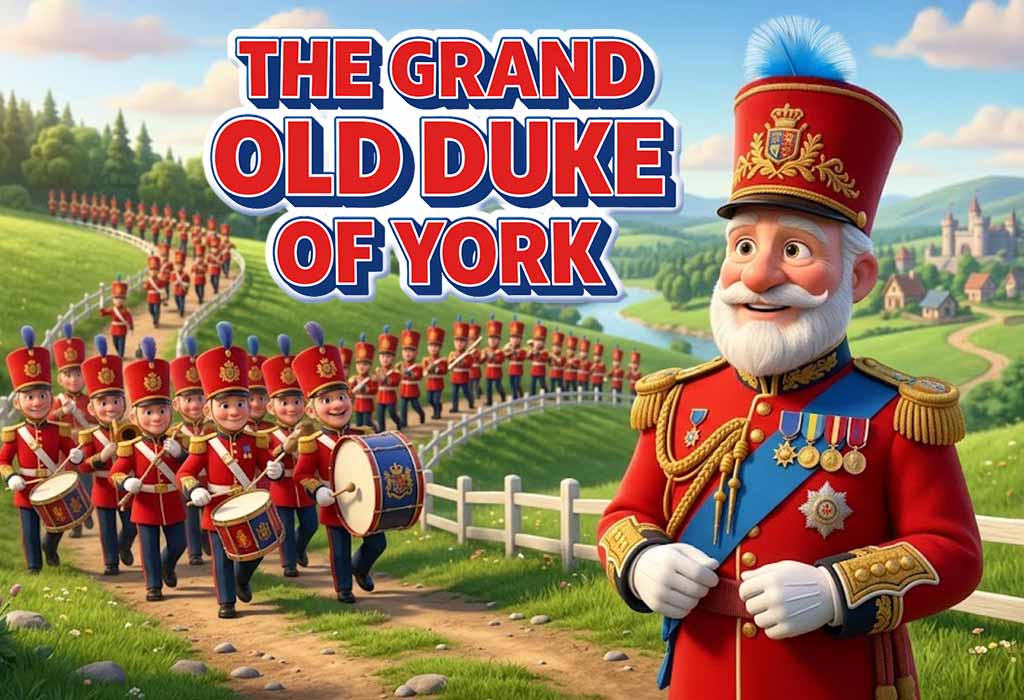
“The Grand Old Duke of York” is a classic nursery rhyme that tells a simple and playful story about a duke who marches his men up and down a hill. Its repetitive lines and easy rhythm make it especially enjoyable for young children. Kids love the actions and movements that go along with the song, which keeps them active and engaged. For parents and teachers, this rhyme is a great way to introduce early learning concepts such as rhythm, direction, and coordination. It also supports listening skills and memory development. With its fun structure and lively actions, this timeless rhyme continues to be a favorite in homes and classrooms alike.
The Grand Old Duke of York Song Lyrics
Here are The Grand Old Duke of York words that children enjoy singing along with:
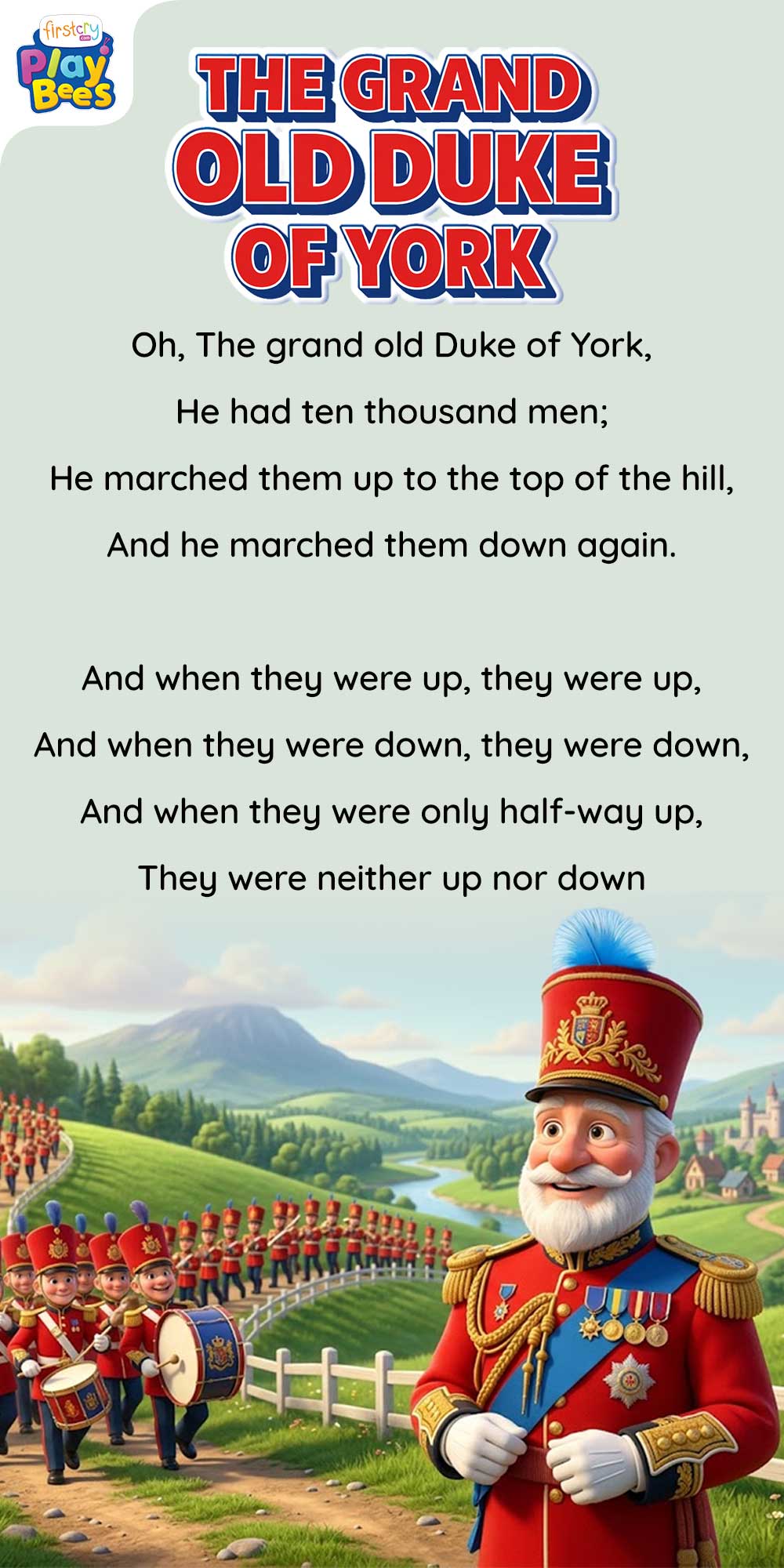
Oh, The grand old Duke of York,
He had ten thousand men;
He marched them up to the top of the hill,
And he marched them down again.
And when they were up, they were up,
And when they were down, they were down,
And when they were only half-way up,
They were neither up nor down
Other Versions of The Grand Old Duke of York Song
This rhyme also has a few playful variations that children may hear in different regions or performances.
1. The Duke and His Marching Men
Oh, the grand old Duke of York,
He had ten thousand men,
He marched them up to the top of the hill,
And he marched them down again.
2. Up, Down, and Halfway There
And when they were up, they were up,
And when they were down, they were down,
And when they were only halfway up,
They were neither up nor down.
Gestures – How to Teach The Grand Old Duke of York to Kids
Teaching this rhyme with actions makes it more exciting and helps children understand the meaning better. Simple movements also improve coordination and memory.
- March in place while singing about the duke and his men to help children connect with the marching theme.
- Raise both hands upward when singing “up to the top of the hill” to show the upward movement clearly.
- Lower hands down slowly when singing “marched them down again” to match the direction in the rhyme.
- Stand tall when saying “when they were up” so children understand the position visually.
- Crouch or bend knees when singing “when they were down” to represent going down.
- Pause midway with a half-standing pose during “halfway up” to help children understand the idea of middle or balance.
History & Quick Facts
“The Grand Old Duke of York” is believed to date back to the 18th century and is often linked to Prince Frederick, Duke of York and Albany, who was a British royal and military leader. Although no single author is officially credited, the rhyme likely developed as a playful or humorous song about military actions. It was first published in the early 19th century in collections of English nursery rhymes. Over time, it became popular in schools and homes because of its simple lyrics and action-based storytelling.
Interesting Facts
- The rhyme is often connected to a real historical figure, making it both fun and educational for children.
- It is widely used in early childhood classrooms to teach movement and direction concepts.
- The tune is simple and repetitive, which helps children learn and remember it quickly.
- This rhyme has been translated into different languages and adapted worldwide.
- It is commonly used in group activities because children can act out the marching together.
- The “up and down” theme makes it a great introduction to basic opposites for young learners.
Suitable Age & Learnings
This rhyme is ideal for children aged 2 to 6 years, as it combines music, movement, and simple language. It supports early development by blending fun with foundational learning skills.
- Children learn basic opposites like up and down, which helps build early language understanding.
- The marching actions improve gross motor skills and body coordination in a playful way.
- Repetition in the rhyme strengthens memory and listening skills over time.
- Kids develop rhythm and timing as they sing along with the steady beat.
- The story introduces simple sequencing, helping children follow actions step by step.
- Vocabulary such as duke, march, hill, and halfway expands their word knowledge in a natural context.
FAQs
1. What is the rhyming scheme of The Grand Old Duke of York?
The rhyme follows a simple AABB pattern, making it easy for children to recognize and repeat.
2. Why is this rhyme popular with young children?
Its repetitive structure, simple words, and fun actions make it engaging and easy to learn.
3. Can this rhyme be used for group activities?
Yes, it is perfect for group play as children can march and perform actions together, making learning interactive.
“The Grand Old Duke of York” remains a timeless nursery rhyme that blends fun, movement, and learning in a simple way. Its catchy rhythm and clear actions make it easy for young children to enjoy and remember. Parents and teachers appreciate how it supports early development, from language skills to physical coordination. The rhyme also introduces basic concepts like direction and opposites in a playful manner. Whether sung at home or in the classroom, it encourages active participation and joyful learning. Overall, it is a wonderful addition to any child’s early learning journey.
Explore Other Rhymes for Kids:
This Old Man Nursery Rhyme With Lyrics
Ten Little Indians Nursery Rhyme With Lyrics
The Ants Go Marching Nursery Rhyme With Lyrics