
Table of Contents
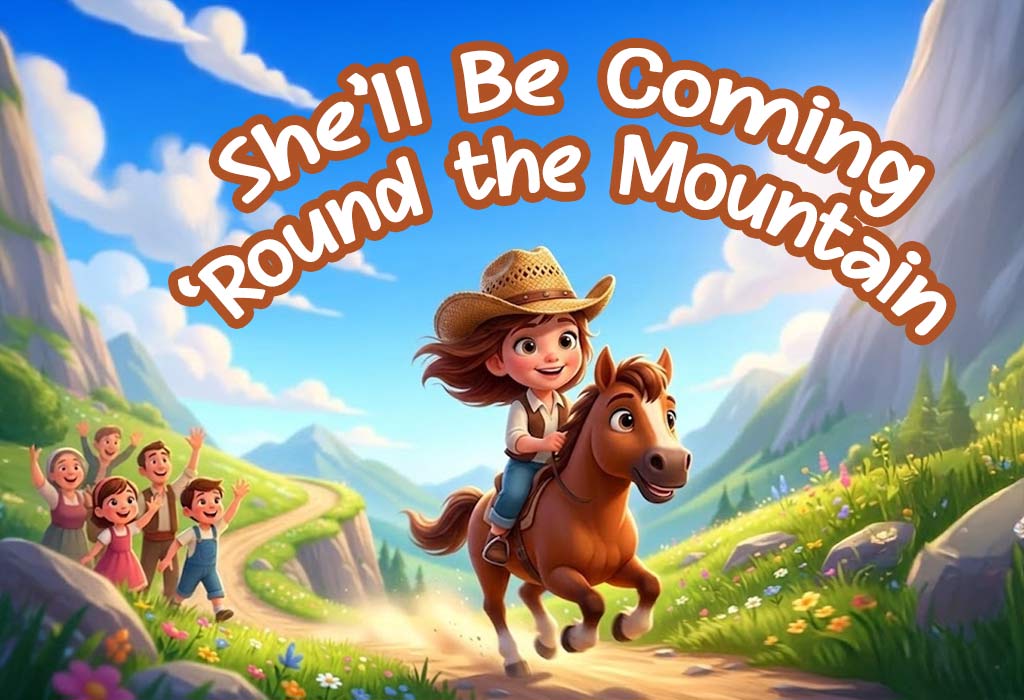
She’ll Be Coming ‘Round the Mountain is a cheerful and lively nursery rhyme that children love to sing along with. The song is about someone exciting arriving, often imagined with fun actions like riding horses or blowing horns, which makes it engaging and playful for young kids. Its repetitive lines and rhythm help children easily remember the words and join in confidently. Kids enjoy the rhyme because it encourages movement, imagination, and group participation. For early learning, it supports language development, listening skills, and memory building. Parents and teachers also appreciate how it brings joy while teaching rhythm, coordination, and basic storytelling in a simple and entertaining way.
She’ll Be Coming ‘Round the Mountain Song Lyrics
Here are the popular She’ll Be Coming ‘Round the Mountain words that children enjoy singing together.
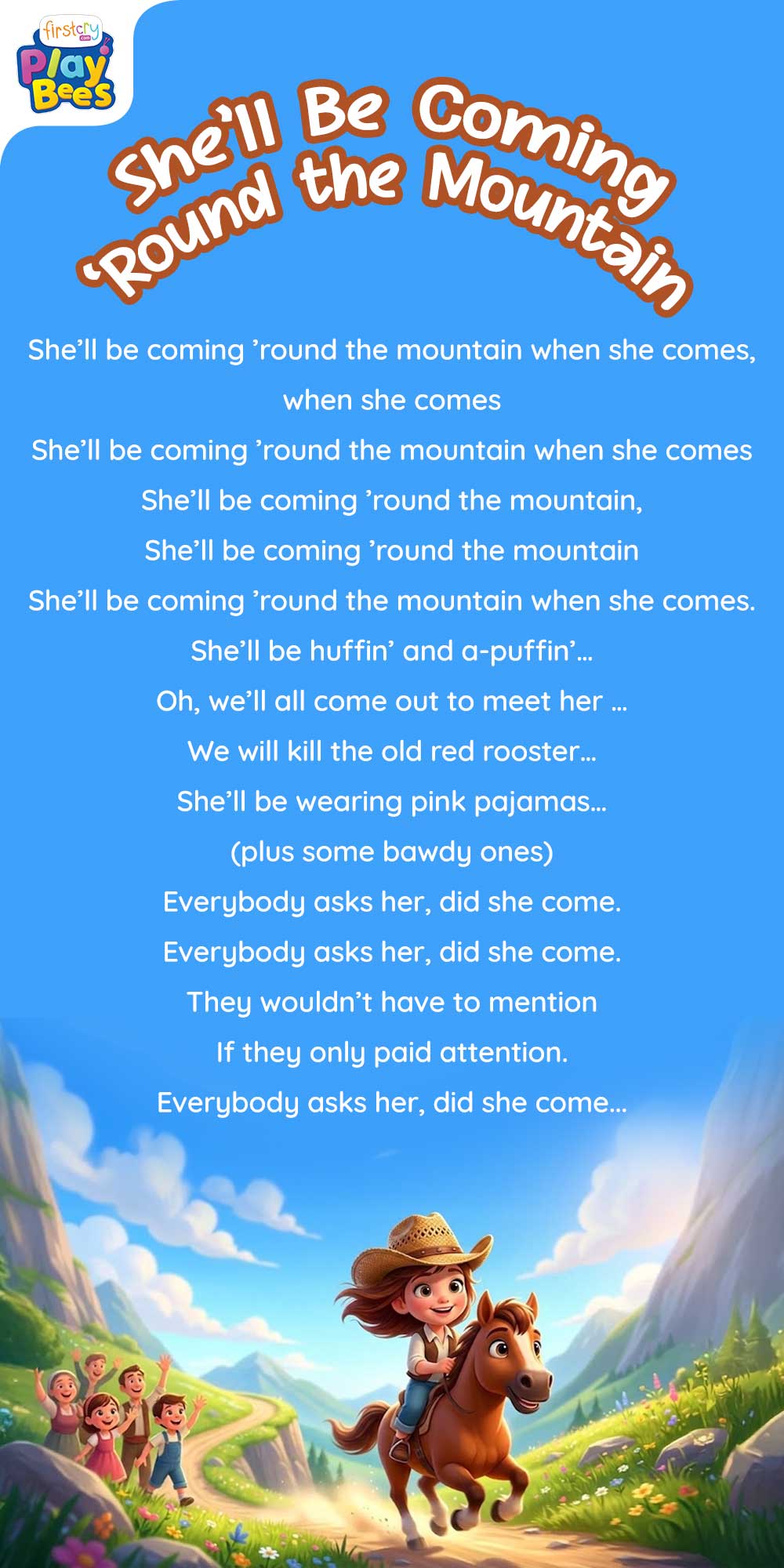
She’ll be coming ’round the mountain when she comes, when she comes
She’ll be coming ’round the mountain when she comes
She’ll be coming ’round the mountain,
She’ll be coming ’round the mountain
She’ll be coming ’round the mountain when she comes.
She’ll be huffin’ and a-puffin’…
Oh, we’ll all come out to meet her …
We will kill the old red rooster…
She’ll be wearing pink pajamas…
(plus some bawdy ones)
Everybody asks her, did she come.
Everybody asks her, did she come.
They wouldn’t have to mention
If they only paid attention.
Everybody asks her, did she come.
She’s got a lovely titillating smile.
She’s got a lovely titillating smile.
She’s got a lovely titi-,
She’s got a lovely titi-,
She’s got a lovely titillating smile.
She’s got a lovely bottom set of teeth.
She’s got a lovely bottom set of teeth.
She’s got a lovely bottom.
She’s got a lovely bottom.
She’s got a lovely bottom set of teeth.
Other Versions of She’ll Be Coming ‘Round the Mountain Song
There are many playful variations of this rhyme that add new verses and actions for extra fun.
She’ll be eating pink ice cream when she comes,
She’ll be eating pink ice cream when she comes,
She’ll be eating pink ice cream,
She’ll be eating pink ice cream,
She’ll be eating pink ice cream when she comes.
She’ll be wearing red pajamas when she comes,
She’ll be wearing red pajamas when she comes,
She’ll be wearing red pajamas,
She’ll be wearing red pajamas,
She’ll be wearing red pajamas when she comes.
She’ll be dancing like a monkey when she comes,
She’ll be dancing like a monkey when she comes,
She’ll be dancing like a monkey,
She’ll be dancing like a monkey,
She’ll be dancing like a monkey when she comes.
She’ll be singing happy songs when she comes,
She’ll be singing happy songs when she comes,
She’ll be singing happy songs,
She’ll be singing happy songs,
She’ll be singing happy songs when she comes.
Gestures – How to Teach She’ll Be Coming ‘Round the Mountain to Kids
Using simple actions makes this rhyme more fun and helps children remember the words better. These easy gestures keep kids active and engaged while learning.
- Move your hands in a circular motion to show “coming round the mountain,” helping kids visualize the action.
- Pretend to hold reins and bounce slightly to act out “driving six white horses.”
- Wave both hands excitedly to show “going out to meet her,” encouraging participation.
- Clap hands or raise arms high while saying “Hallelujah” to express joy.
- March in place with rhythm to match the beat of the song and build coordination.
- Encourage children to add their own gestures for new verses to boost creativity.
History & Quick Facts
She’ll Be Coming ‘Round the Mountain is an American folk song that dates back to the late 19th century. It is believed to have originated from spiritual songs sung by railroad workers and communities in the United States. The tune is thought to be inspired by older gospel music, and over time it became popular as a children’s song due to its catchy rhythm and repetitive lyrics. The rhyme spread widely through oral tradition and later through school teaching and media, making it a well-loved nursery classic around the world.
Interesting Facts
- The song was originally linked to spiritual and railroad culture, which adds depth to its simple tune.
- It became popular among children because of its repetitive and easy-to-learn lyrics.
- Many versions exist, allowing kids to create their own funny or imaginative lines.
- The phrase “six white horses” is one of the most recognizable parts of the rhyme.
- It is often used in classrooms to encourage group singing and participation.
- The rhyme has been translated into different languages, making it popular globally.
Suitable Age & Learnings
This rhyme is suitable for children aged 2 to 6 years, as it is simple, repetitive, and easy to follow. It supports early childhood learning through music, movement, and imagination.
- Language development improves as children repeat words and phrases while singing along.
- Memory skills are strengthened through repetition of lines and verses.
- Listening skills grow as children follow the rhythm and sequence of the song.
- Coordination improves when actions and gestures are added to the rhyme.
- Creativity is encouraged when children invent their own fun versions of the song.
- Vocabulary expands with words like mountain, horses, and meet, helping early communication.
FAQs
1. What is the rhyming scheme of She’ll Be Coming ‘Round the Mountain?
The rhyme follows a simple repeating pattern where the last words of each line rhyme, making it easy for children to remember and sing.
2. Why do kids enjoy this rhyme so much?
Kids love it because of its catchy tune, repetitive lyrics, and the fun actions they can perform while singing.
3. Can this rhyme be used for group activities?
Yes, it is perfect for group singing, classroom activities, and circle time as it encourages participation and coordination.
She’ll Be Coming ‘Round the Mountain is a joyful and timeless nursery rhyme that continues to delight young children. Its simple lyrics and rhythmic pattern make it easy to learn and fun to sing along. The rhyme encourages movement, imagination, and group interaction, which are important for early development. With its playful nature, children can also create their own versions and explore creativity. Parents and teachers can use it as a great tool for building language and coordination skills. Overall, this classic rhyme brings smiles, laughter, and meaningful learning moments to every child’s day.
Explore Other Rhymes for Kids:
Skip to My Lou Nursery Rhyme With Lyrics
The Ants Go Marching Nursery Rhyme With Lyrics
The Wheels on the Bus Nursery Rhyme With Lyrics