
Table of Contents
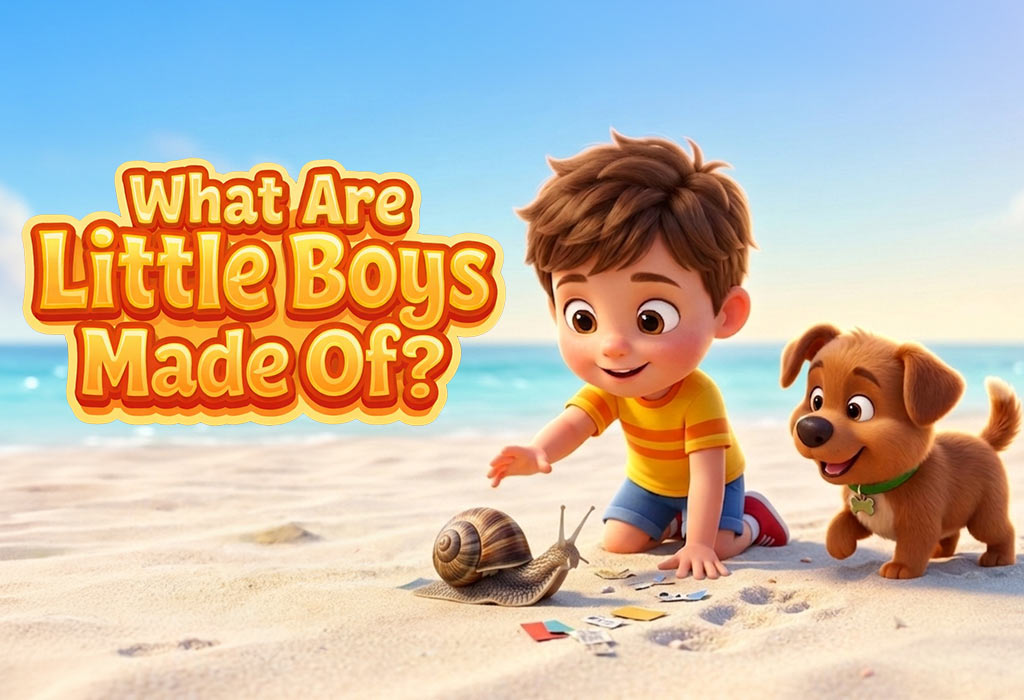
“What Are Little Boys Made Of?” is a classic nursery rhyme that playfully describes what boys and girls are “made of” using fun and imaginative words. Children enjoy this rhyme because of its catchy rhythm, simple repetition, and cheerful tone that makes it easy to remember and recite. It often brings smiles and giggles as kids repeat the quirky ingredients like frogs, snails, and sugar. For parents and teachers, this rhyme is a gentle way to introduce early language skills, rhyming patterns, and listening abilities. It also encourages imagination and helps children connect words with sounds. Simple and engaging, this timeless rhyme continues to be a favorite in early childhood learning and playful storytelling moments.
What Are Little Boys Made Of Song Lyrics
Here are the playful What Are Little Boys Made Of words that children love to sing and repeat.
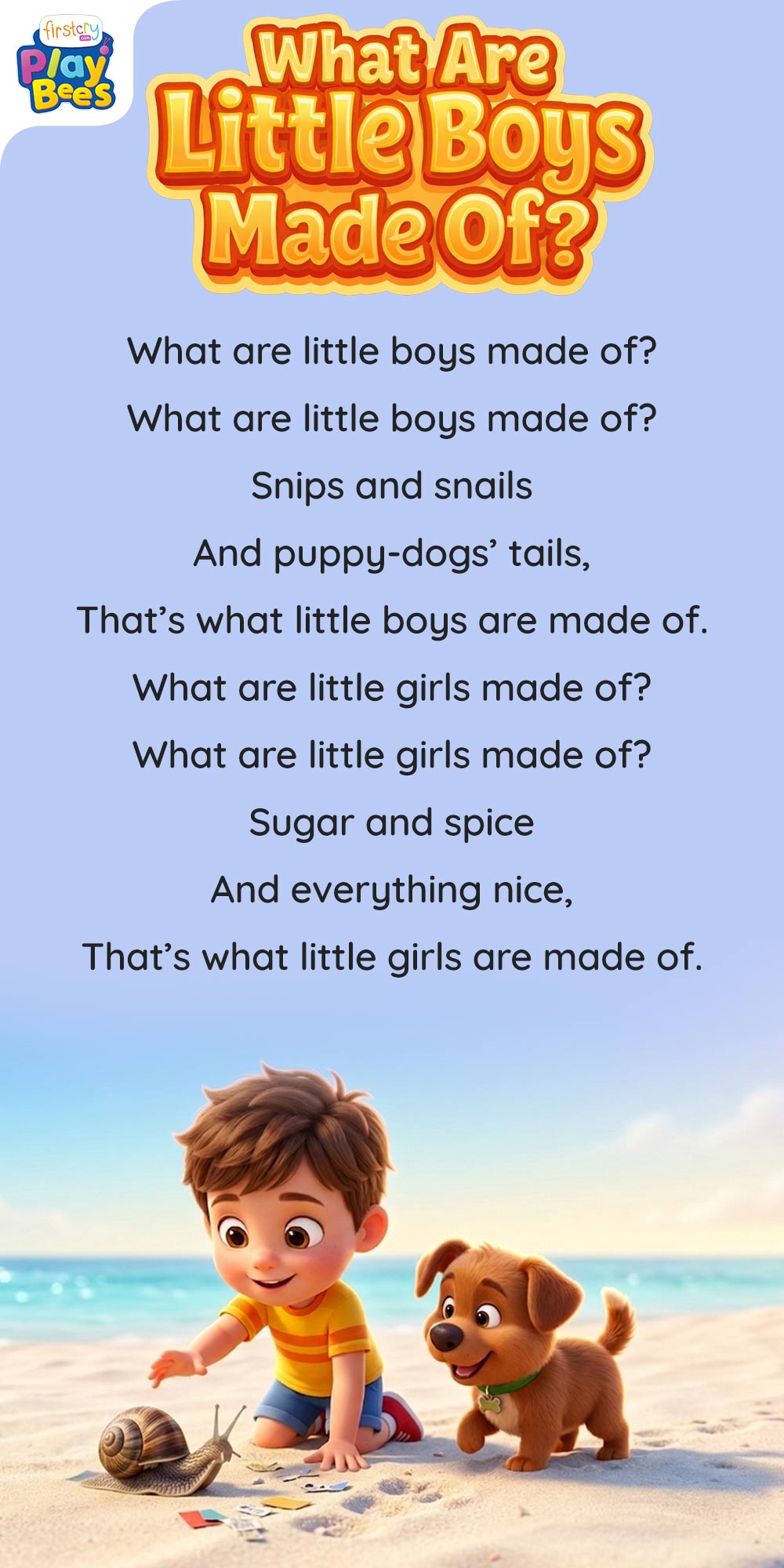
What are little boys made of?
What are little boys made of?
Snips and snails
And puppy-dogs’ tails,
That’s what little boys are made of.
What are little girls made of?
What are little girls made of?
Sugar and spice
And everything nice,
That’s what little girls are made of.
Other Versions of What Are Little Boys Made Of Song
This rhyme has a few fun variations that add new lines or modern twists to the original.
Version 1: With Baby Verse
What are little babies made of?
What are little babies made of?
Love and kisses,
Hugs and wishes,
That’s what little babies are made of.
Version 2: Extended Traditional Style
What are little boys made of?
What are little boys made of?
Frogs and snails
And puppy dogs’ tails,
That’s what little boys are made of.
What are little girls made of?
What are little girls made of?
Sugar and spice
And everything nice,
That’s what little girls are made of.
What are young men made of?
What are young men made of?
Sighs and leers,
And crocodile tears,
That’s what young men are made of.
What are young women made of?
What are young women made of?
Rings and jewels,
And fancy shoes,
That’s what young women are made of.
Version 3: Modern Inclusive Version
What are little children made of?
What are little children made of?
Giggles and dreams,
And teamwork it seems,
That’s what little children are made of.
Version 4: Positive Traits Version
What are little boys made of?
What are little boys made of?
Kindness and care,
And courage to share,
That’s what little boys are made of.
What are little girls made of?
What are little girls made of?
Strength and grace,
And a bright, happy face,
That’s what little girls are made of.
Gestures – How to Teach What Are Little Boys Made Of to Kids
Using simple actions makes this rhyme more engaging and helps children remember it better. These easy gestures turn learning into a fun activity.
- Point to boys around or to yourself when saying “little boys” so children connect the words with people.
- Pretend to hop like a frog and wiggle fingers for snails to make the imagery lively and memorable.
- Wag an imaginary tail behind you during “puppy dogs’ tails” to add humor and movement.
- Open your palms like presenting something while saying “that’s what little boys are made of” to emphasize the line.
- Sprinkle imaginary sugar and add a gentle sway for “sugar and spice” to show softness and sweetness.
- End with a happy clap or smile during “everything nice” to reinforce a positive feeling.
History & Quick Facts
“What Are Little Boys Made Of?” is a traditional English nursery rhyme that dates back to the early 19th century. It first appeared in a publication called Tommy Thumb’s Pretty Song Book, one of the earliest collections of nursery rhymes. The exact author is unknown, as it was part of oral storytelling traditions before being written down. Over time, the rhyme became widely popular in homes and schools due to its rhythmic style and playful descriptions. It has since remained a well-loved rhyme across generations.
Interesting Facts
- This rhyme is over 200 years old and has been passed down through generations in many countries.
- The ingredients listed in the rhyme are symbolic and meant to be playful rather than literal.
- It has been translated into several languages while keeping its fun and rhythmic nature.
- The rhyme is often used in early education to teach opposites and descriptive words.
- Some modern versions adapt the wording to be more inclusive and balanced.
- It is commonly featured in children’s books, songs, and classroom activities worldwide.
Suitable age & Learnings
This rhyme is suitable for children aged 2 to 6 years as it uses simple language and repetition. It supports early learning by building vocabulary and encouraging active participation.
- Children learn rhyming words like “snails” and “tails,” which helps develop phonemic awareness.
- The rhyme introduces descriptive vocabulary such as “spice” and “nice” in a fun context.
- Repetition improves memory and helps children recall words more easily.
- Actions and gestures enhance motor skills and coordination during learning.
- Listening and speaking skills improve as children repeat and perform the rhyme.
- It encourages imagination by using creative and playful imagery.
FAQs
1. What is the rhyming scheme of What Are Little Boys Made Of?
The rhyme follows an AABB pattern where pairs of lines rhyme together, making it easy for children to remember.
2. Why do kids enjoy this rhyme so much?
Kids enjoy it because of its playful words, simple rhythm, and the fun actions that can be added while reciting it.
3. Can this rhyme be used for learning activities?
Yes, it is great for teaching vocabulary, rhyming skills, and coordination through actions and repetition.
“What Are Little Boys Made Of?” is a timeless nursery rhyme that continues to delight young learners with its playful charm. Its simple words and catchy rhythm make it easy for children to learn and enjoy. Beyond entertainment, it plays an important role in early language development and creative thinking. With gestures and actions, it becomes even more engaging and memorable for kids. Parents and teachers can use this rhyme as a fun teaching tool in daily routines. Its lasting popularity shows how simple rhymes can create joyful learning experiences. Overall, it remains a sweet and meaningful part of childhood learning and storytelling.
Explore Other Rhymes for Kids:
Georgie Porgie Nursery Rhyme With Lyrics
Little Jack Horner Nursery Rhyme With Lyrics
Diddle, Diddle Dumpling Nursery Rhyme With Lyrics