
Table of Contents
“Lavender’s Blue” is a timeless nursery rhyme loved by children for its gentle tune and sweet, simple lyrics. It’s a delightful rhyme that has been passed down through generations, making it a favorite for early childhood learning. Kids enjoy singing along, especially when they pair it with playful gestures or actions. The song also introduces young learners to rhyming words, which is a great way to boost language skills and early literacy. It’s a soothing and fun melody that also helps children develop rhythm and memory.
Lavender’s Blue Song Lyrics
Here are the lyrics to the beloved “Lavender’s Blue” nursery rhyme. The Lavender’s Blue words will charm both children and parents with their rhythmic flow.
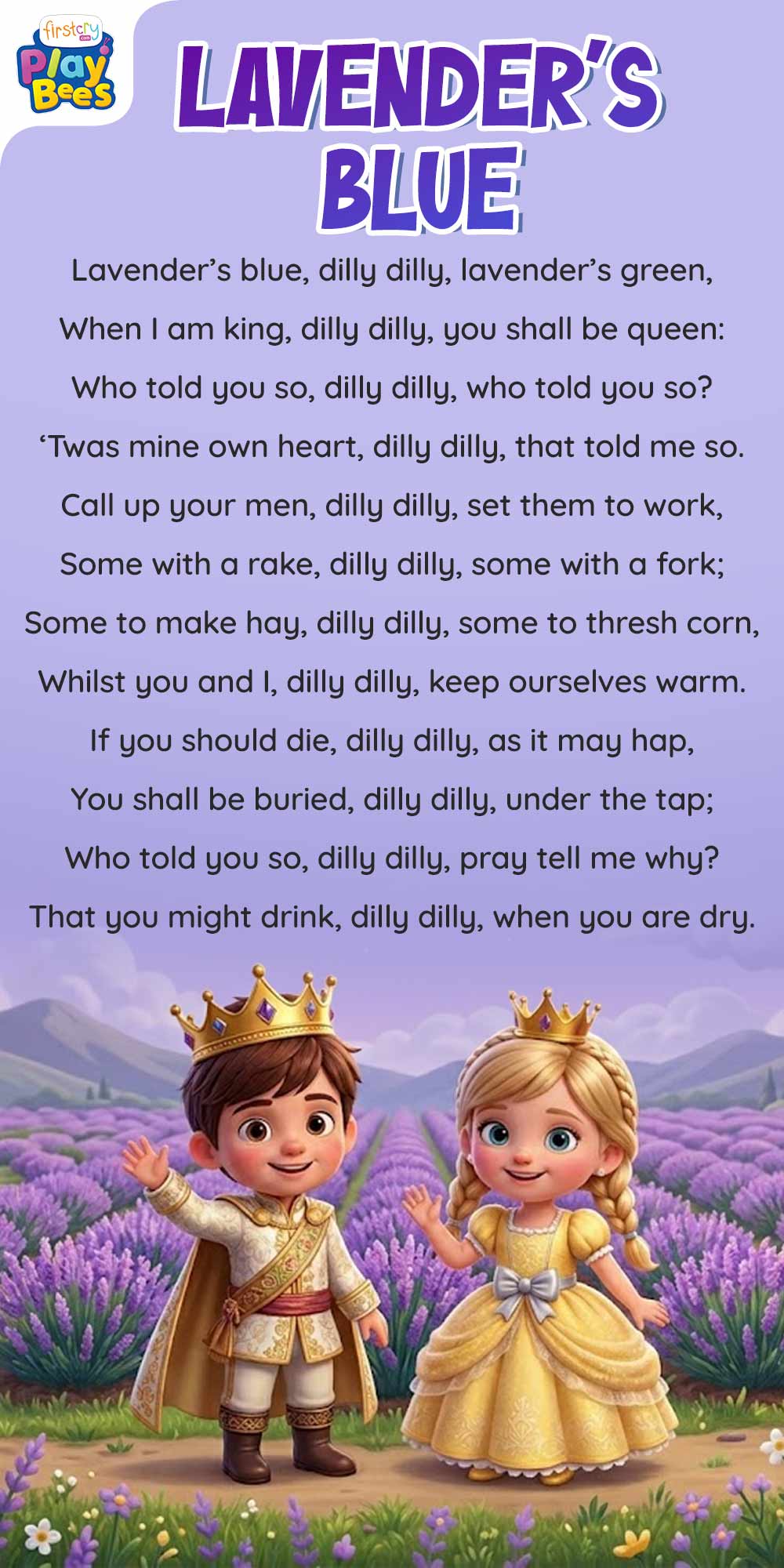
Lavender’s blue, dilly dilly, lavender’s green,
When I am king, dilly dilly, you shall be queen:
Who told you so, dilly dilly, who told you so?
‘Twas mine own heart, dilly dilly, that told me so.
Call up your men, dilly dilly, set them to work,
Some with a rake, dilly dilly, some with a fork;
Some to make hay, dilly dilly, some to thresh corn,
Whilst you and I, dilly dilly, keep ourselves warm.
If you should die, dilly dilly, as it may hap,
You shall be buried, dilly dilly, under the tap;
Who told you so, dilly dilly, pray tell me why?
That you might drink, dilly dilly, when you are dry.
Other Versions of Lavender’s Blue Song
There are several versions of Lavender’s Blue that have been sung in different regions and eras. These variations may include slightly different lyrics or melodies, but they all maintain the gentle, melodic nature that makes this song so enjoyable.
1. Traditional English Version
Lavender’s blue, dilly dilly, lavender’s green,
When I am King, dilly dilly, you shall be Queen.
Who told you so, dilly dilly, who told you so?
‘Twas my own heart, dilly dilly, that told me so.
Call up your men, dilly dilly, set them to work,
Some to the plow, dilly dilly, some to the cart.
Some to make hay, dilly dilly, some to cut corn,
While you and I, dilly dilly, keep ourselves warm.
2. Alternate Folk Version
Lavender’s blue, dilly dilly, lavender’s green,
When I am King, dilly dilly, you shall be Queen.
Who told you so, dilly dilly, who told you so?
‘Twas my own heart, dilly dilly, that told me so.
Call up your men, dilly dilly, set them to work,
Some to the plow, dilly dilly, some to the cart.
Some to make hay, dilly dilly, some to cut corn,
While you and I, dilly dilly, keep ourselves warm.
3. American Adaptation
Lavender’s blue, dilly dilly, lavender’s green,
When I am Queen, dilly dilly, you shall be King.
Who told you so, dilly dilly, who told you so?
‘Twas my own heart, dilly dilly, that told me so.
Call up your men, dilly dilly, set them to work,
Some to the plow, dilly dilly, some to the cart.
Some to make hay, dilly dilly, some to cut corn,
While you and I, dilly dilly, keep ourselves warm.
4. Simple Version for Kids
Lavender’s blue, lavender’s green,
When I am Queen, you shall be King.
Who told you so, who told you so?
‘Twas my own heart, that told me so.
Call up your men, set them to work,
Some to the plow, some to the cart,
Some to make hay, some to cut corn,
While you and I, keep ourselves warm.
Gestures – How to Teach Lavender’s Blue to Kids
Teaching “Lavender’s Blue” to kids can be a fun and interactive experience! Here are simple gestures to help children engage with the rhyme:
- “Lavender’s Blue”: Gently wave your hands in the air to mimic the blooming of lavender flowers.
- “When I am King”: Pretend to place a crown on your head to symbolize becoming a king.
- “Who told you so”: Point to your heart to show that the answer comes from within.
- “Call up your men”: Raise both arms and pretend to call someone to action.
- “Some to the plow”: Make a motion as if holding a plow and pushing it forward.
- “Keep ourselves warm”: Wrap your arms around yourself, mimicking warmth and comfort.
History & Quick Facts
“Lavender’s Blue” is a traditional English nursery rhyme that dates back to the 17th century. It has been recorded in various collections of nursery rhymes, with the earliest known version appearing in the 1600s. Though its exact origins are unclear, the rhyme has been a staple of British folk music and has even been recorded by various artists over the years. Over time, it has become a favorite for young children due to its simplicity and catchy melody.
Interesting Facts
- The rhyme’s gentle melody has made it a favorite in many cultures and countries.
- “Lavender’s Blue” has been sung in countless adaptations, including TV shows, movies, and musical performances.
- It is often sung during playtime and circle games with children, making it a staple in early childhood education.
- The rhyme is known for its use in several versions of children’s stories, where it helps establish a whimsical, fairy-tale atmosphere.
- Translated versions of the song exist in many languages, highlighting its global appeal.
- The tune has been used in various variations of classical music, showing its enduring popularity.
Suitable Age & Learnings
“Lavender’s Blue” is perfect for children between the ages of 2 and 6, making it suitable for preschoolers and early learners. As they sing, children are introduced to several key learning opportunities. Here are some of the lessons children learn through this rhyme:
- Rhyming Words: Children can identify rhyming words such as “blue” and “you,” boosting their early literacy skills.
- Memory: Repeating the rhyme helps children with memory retention as they recall the lyrics and gestures.
- Language Development: The rhyme exposes children to simple sentence structures and vocabulary.
- Motor Skills: The gestures associated with the song promote physical activity and coordination.
- Listening Skills: As children listen to the rhyme, they improve their ability to follow and process sounds.
- Creativity: The simple lyrics and repetitive nature of the song spark children’s creativity and imagination.
FAQs
1. What is the rhyming scheme of Lavender’s Blue?
The rhyming scheme of Lavender’s Blue is AABB, with pairs of lines rhyming together.
2. Why is Lavender’s Blue a good song for kids?
Lavender’s Blue is simple and fun, making it perfect for children to sing along while helping them with memory, language development, and rhythm.
3. Can Lavender’s Blue be used in early childhood education?
Yes, Lavender’s Blue is a great tool in early childhood education for teaching children rhythm, rhyme, and engaging them in movement-based activities.
“Lavender’s Blue” is not just a nursery rhyme; it’s an experience that children and parents can enjoy together. Through its simple words and melody, kids not only learn important language skills but also engage in physical movement, making it a versatile tool for early childhood development. Whether it’s through hand gestures, singing along, or simply enjoying the melody, this rhyme offers lasting educational value. Its history and popularity ensure it will continue to be a favorite for generations to come. A song as sweet as Lavender’s Blue brings joy, learning, and connection, making it a must-have in any child’s nursery rhyme collection.
Explore Other Rhymes for Kids:
Daisy Bell Nursery Rhyme With Lyrics
Oh My Darling Clementine Nursery Rhyme With Lyrics
My Bonnie Lies Over the Ocean Nursery Rhyme With Lyrics