
Table of Contents
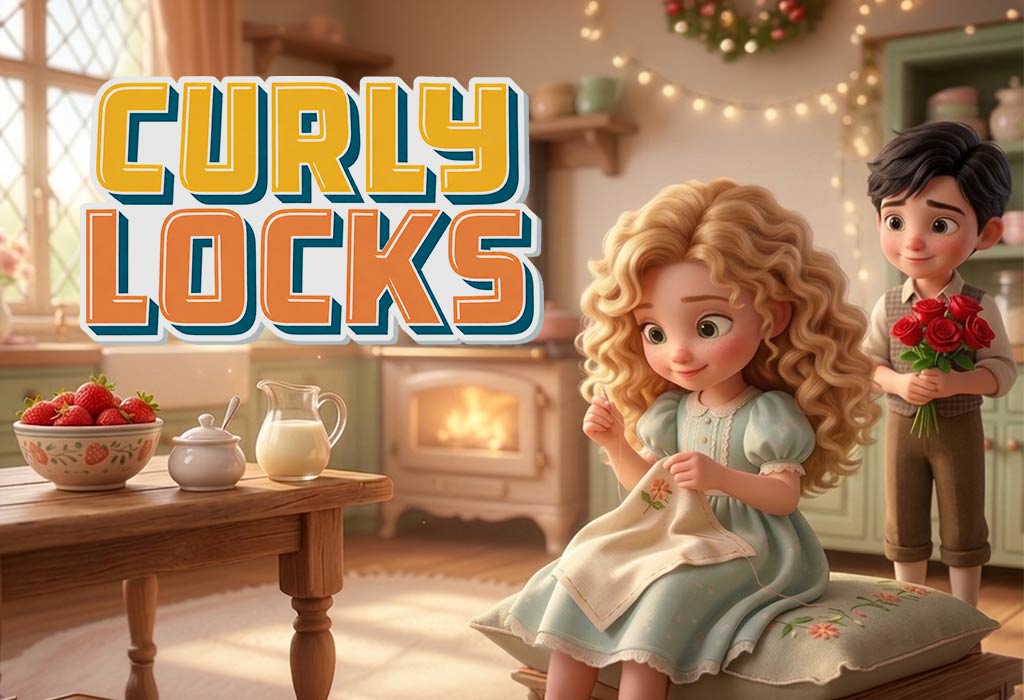
“Curly Locks” is a gentle and playful nursery rhyme that tells the story of a child with curly hair and a visit to the royal palace. Its simple conversation-style lines make it easy for young children to follow and enjoy. Kids love the rhyme because of its rhythm, repetition, and imaginative setting involving kings and queens. It sparks curiosity while keeping learning light and fun. For early learners, this rhyme helps build listening skills, improves memory, and introduces new vocabulary in a natural way. Parents also appreciate how it encourages imagination and role-play. Overall, “Curly Locks” is a sweet and engaging rhyme that supports early language development while keeping children happily entertained.
Curly Locks Song Lyrics
These Curly Locks words are simple, rhythmic, and fun for children to repeat and remember.
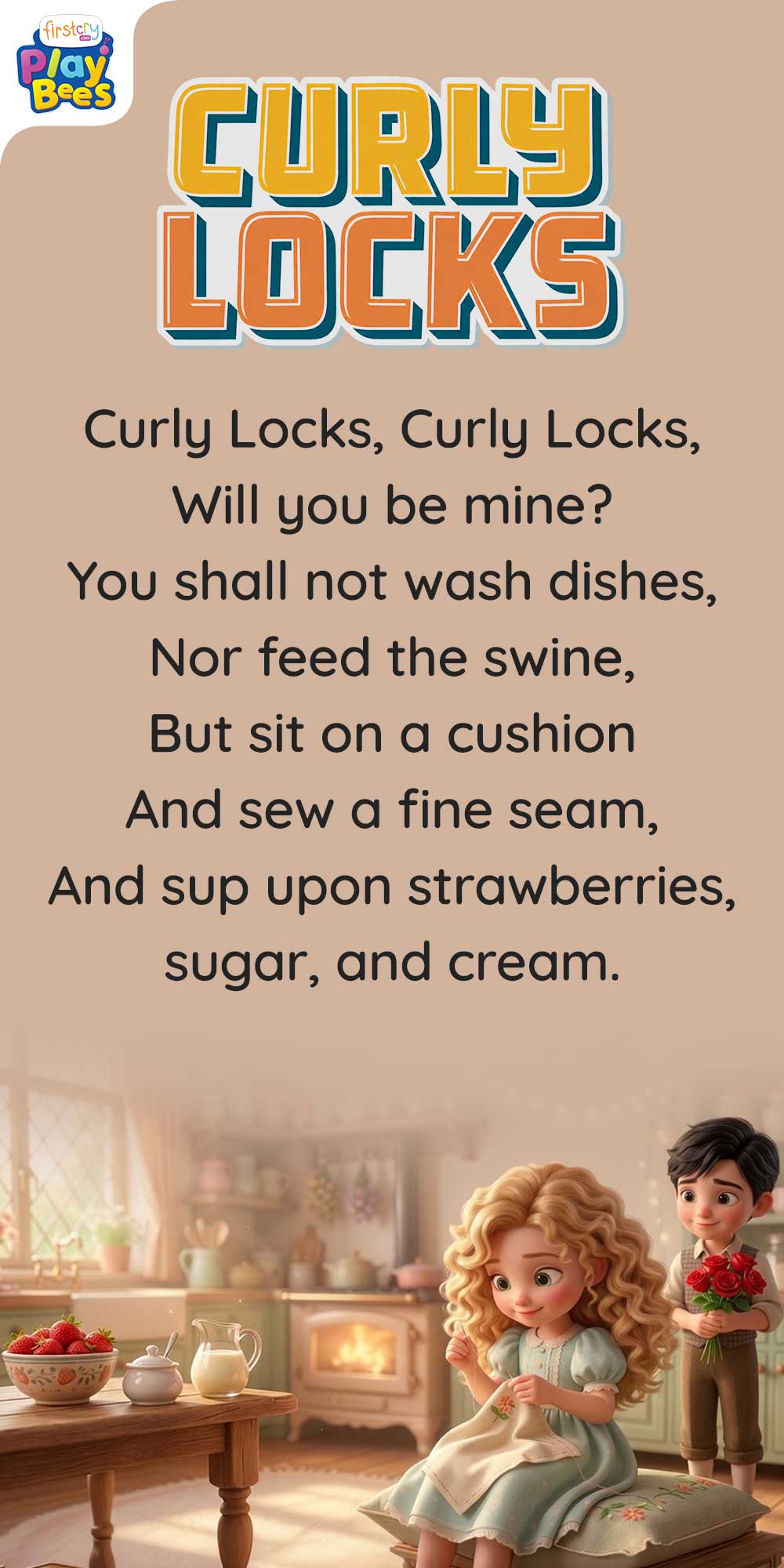
Curly Locks, Curly Locks,
Will you be mine?
You shall not wash dishes,
Nor feed the swine,
But sit on a cushion
And sew a fine seam,
And sup upon strawberries, sugar, and cream.
Other Versions of Curly Locks Song
This rhyme has a few slightly different versions that change small words or phrases while keeping the meaning similar.
- Curly locks, curly locks, wilt thou be mine?
Thou shalt not wash dishes, nor yet feed the swine;
But sit on a cushion and sew a fine seam,
And eat strawberries, sugar, and cream. - Curly locks, curly locks, wilt thou be mine?
You shall not wash dishes, nor yet feed the swine;
But sit on a cushion and sew a fine seam,
And feast upon strawberries, sugar, and cream.
Gestures – How to Teach Curly Locks to Kids
Using simple actions makes this rhyme more fun and helps children remember it easily.
- Make a twirling motion near your head to show “curly locks” and help kids connect the words with hair.
- Point gently forward with both hands when saying “wilt thou be mine” to show asking or inviting.
- Pretend to wash dishes with circular hand movements to act out “wash dishes.”
- Use scooping or feeding gestures to represent “feed the swine” in a playful way.
- Sit down or pretend to sit and mimic sewing with small hand movements for “sew a fine seam.”
- Pretend to eat something delicious with a big smile to show “strawberries, sugar, and cream.”
History & Quick Facts
“Curly Locks” is a traditional English nursery rhyme believed to have originated in the 18th century. Like many classic rhymes, its exact author is unknown, as it was passed down orally before being written and published in collections of nursery rhymes. The rhyme reflects a playful and imaginative view of royal life, which fascinated children at the time. Over the years, it became popular in homes and schools due to its simple structure and engaging theme. Today, it continues to be shared across generations as part of early childhood learning.
Interesting Facts
- The rhyme is believed to be inspired by royal life, which children often find magical and exciting.
- It has been passed down orally for many years before appearing in printed rhyme collections.
- The mention of strawberries and cream reflects a classic English treat enjoyed historically.
- Different versions of the rhyme exist, but the core message remains the same.
- It is often used in preschool settings to teach rhythm and pronunciation.
- The rhyme has been adapted into songs and performances in different cultures.
Suitable Age & Learnings
This rhyme is best suited for children aged 2 to 6 years as it is simple, repetitive, and easy to follow. It supports early learning by combining rhythm, storytelling, and vocabulary in a fun way.
- Language development: Children learn new words like “cushion,” “seam,” and “swine” through repetition.
- Listening skills: The rhyme helps kids focus and understand short conversational sentences.
- Memory building: Repeating the rhyme strengthens recall and sequencing skills.
- Imagination: The royal setting encourages children to imagine castles, kings, and queens.
- Motor skills: Actions and gestures improve coordination and body movement.
- Social learning: Kids learn about roles and polite conversation through the rhyme’s dialogue style.
FAQs
1. What is the rhyming scheme of Curly Locks?
The rhyme follows a simple AABB pattern, where pairs of lines rhyme together, making it easy for children to remember.
2. Why do children enjoy the Curly Locks rhyme?
Children enjoy it because of its musical rhythm, simple language, and imaginative royal theme.
3. Can Curly Locks be used for classroom teaching?
Yes, it is widely used in early education to teach language, rhythm, and basic storytelling skills.
“Curly Locks” is a timeless nursery rhyme that continues to charm children with its gentle rhythm and imaginative theme. Its simplicity makes it perfect for early learners who are just beginning to explore language and storytelling. Through repetition and playful actions, children can easily engage with the rhyme and build important skills. Parents and teachers alike find it useful for both entertainment and education. The rhyme also encourages creativity by introducing a fun royal setting. With its warm and friendly tone, “Curly Locks” remains a lovely addition to any child’s learning journey. It is a small rhyme with a big impact on early childhood development.
Explore Other Rhymes for Kids:
Old King Cole Nursery Rhyme With Lyrics
Little Jack Horner Nursery Rhyme With Lyrics
The Queen of Hearts Nursery Rhyme With Lyrics