
Table of Contents
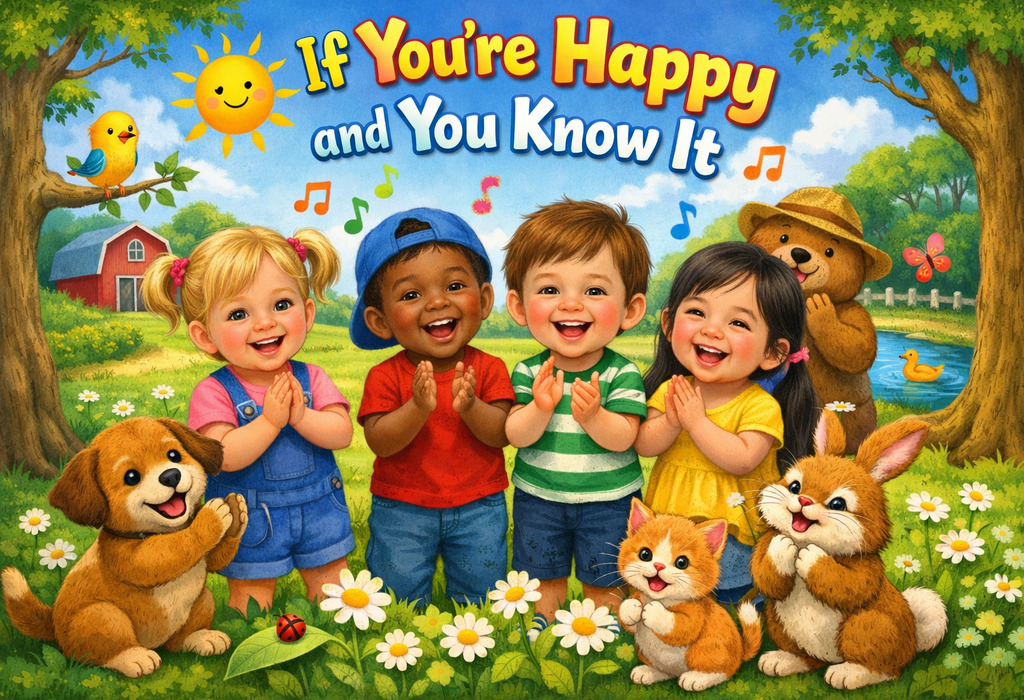
“If You’re Happy and You Know It” is a cheerful and interactive nursery rhyme that encourages children to express their emotions through simple actions like clapping, stomping, and cheering. Kids enjoy this rhyme because it is lively, easy to follow, and involves fun movements that keep them engaged. The repetition and rhythm make it simple for young learners to remember and sing along confidently. This rhyme also supports early learning by helping children recognize emotions, follow instructions, and build coordination skills. It promotes social interaction when sung in groups and boosts language development through repetition of words and phrases. Overall, it is a joyful way for children to learn, move, and express happiness in a playful and meaningful manner.
If You’re Happy and You Know It Song Lyrics
Here are the popular If You’re Happy and You Know It words that children love to sing and act out together.
The first verses of the lyrics are usually:
If you’re happy and you know it, clap your hands
(clap clap)
If you’re happy and you know it, clap your hands
(clap clap)
If you’re happy and you know it, then your face will surely show it
If you’re happy and you know it, clap your hands.
(clap clap)
The “clap your hands” part is then switched with other phrases like:
snap your fingers!
pat your head!
shout Hooray!
nod your head!
turn around!
slap your knees!
etc
Other Versions of If You’re Happy and You Know It Song
Many fun variations of this rhyme exist, adding new actions and creativity to keep children engaged.
1. Nod Your Head
If you’re happy and you know it, nod your head,
If you’re happy and you know it, nod your head,
If you’re happy and you know it,
Then your face will surely show it,
If you’re happy and you know it, nod your head.
2. Jump Around
If you’re happy and you know it, jump around,
If you’re happy and you know it, jump around,
If you’re happy and you know it,
Then your face will surely show it,
If you’re happy and you know it, jump around.
3. Spin Around
If you’re happy and you know it, spin around,
If you’re happy and you know it, spin around,
If you’re happy and you know it,
Then your face will surely show it,
If you’re happy and you know it, spin around.
4. Touch Your Nose
If you’re happy and you know it, touch your nose,
If you’re happy and you know it, touch your nose,
If you’re happy and you know it,
Then your face will surely show it,
If you’re happy and you know it, touch your nose.
5. Wave Your Hands
If you’re happy and you know it, wave your hands,
If you’re happy and you know it, wave your hands,
If you’re happy and you know it,
Then your face will surely show it,
If you’re happy and you know it, wave your hands.
Gestures – How to Teach If You’re Happy and You Know It to Kids
Teaching this rhyme with actions makes learning more fun and helps children stay active and involved. Simple gestures also improve memory and coordination.
- Start by clapping hands together in rhythm so children can easily follow the beat of the song.
- Encourage kids to stomp their feet on the ground to match the lyrics and feel the rhythm.
- Ask children to shout “hooray” loudly to build confidence and excitement.
- Add actions like nodding the head or shaking hands to introduce variety and keep them interested.
- Demonstrate each action slowly first so children understand before singing at full speed.
- Repeat the rhyme with different actions to reinforce learning and make it more enjoyable.
History & Quick Facts
“If You’re Happy and You Know It” is believed to have roots in traditional folk music, with influences traced back to a melody similar to the Spanish song “Molodejnaya.” The rhyme itself does not have a clearly known author, as it evolved over time through oral tradition. It became widely popular in English-speaking countries during the mid-20th century, especially in classrooms and early childhood programs. Its simple structure and interactive style helped it spread quickly among teachers and parents. Today, it remains a global favorite, often adapted into different languages and cultural versions while keeping its core message of expressing happiness.
Interesting Facts
- The rhyme is sung in many countries, and different cultures add their own actions and words to make it unique.
- It is often used in classrooms because it helps children learn through movement and music together.
- The song encourages emotional expression by helping kids understand and show happiness.
- Many versions of the rhyme include creative actions like jumping, spinning, or even making funny faces.
- It is commonly used in group activities, making it a great tool for social bonding among children.
- The tune is simple and repetitive, which makes it easy for even very young children to learn quickly.
Suitable Age & Learnings
This rhyme is ideal for children aged 2 to 6 years, as it matches their developmental stage and love for movement-based learning. It supports both emotional and physical development through fun and repetition.
- Children learn to recognize emotions like happiness and express them through actions and facial expressions.
- It improves listening skills as kids follow instructions given in the lyrics.
- The rhyme enhances motor skills through actions like clapping, stomping, and jumping.
- It builds language skills by repeating simple words and phrases.
- Kids develop confidence when they sing and perform actions in groups.
- It encourages social interaction as children participate together and enjoy shared activities.
FAQs
1. What is the rhyming scheme of If You’re Happy and You Know It?
The rhyme follows a simple and repetitive pattern with similar ending sounds, making it easy for children to remember and sing along.
2. Why is this rhyme good for toddlers?
It combines music with actions, helping toddlers develop coordination, listening skills, and emotional awareness in a fun way.
3. Can this rhyme be taught in groups?
Yes, it is perfect for group settings like classrooms or playgroups as it encourages participation and social interaction.
“If You’re Happy and You Know It” is more than just a fun nursery rhyme. It brings joy, movement, and learning together in a simple and engaging way. Children love its lively actions and easy-to-follow lyrics, which keep them active and involved. Parents and teachers value it for its ability to teach emotions, coordination, and listening skills. Its adaptability allows endless variations, making it fresh and exciting every time. Whether sung at home or in a classroom, it creates happy moments and shared laughter. This timeless rhyme continues to be a favorite for building early learning through music and play.