
Table of Contents
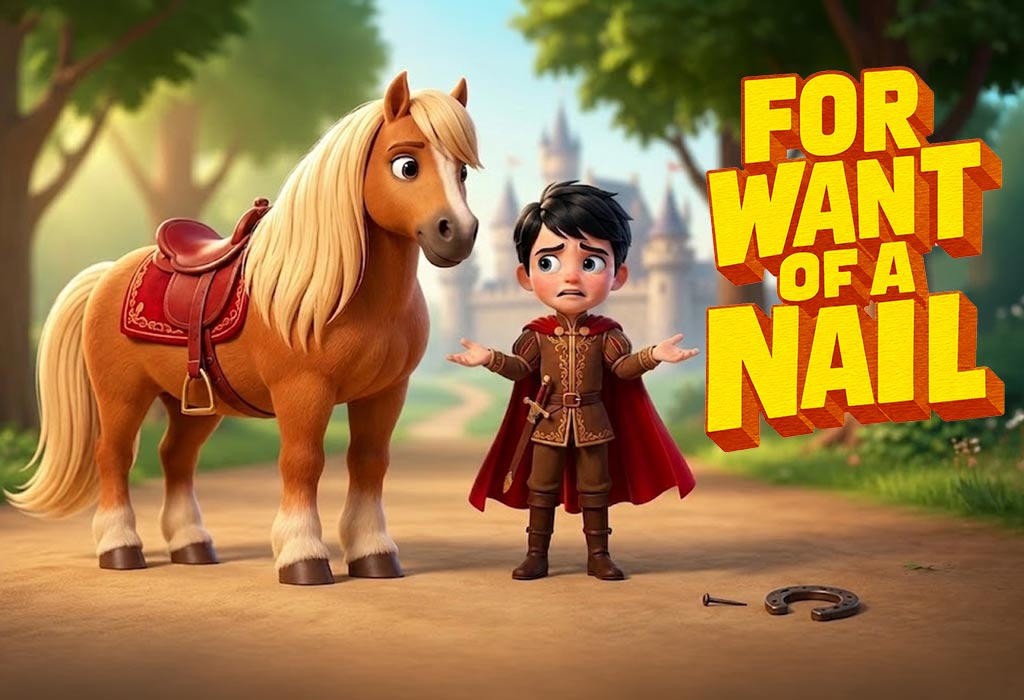
“For Want of a Nail” is a classic nursery rhyme that shows how small things can lead to big consequences. It tells a simple chain of events where the loss of one tiny nail leads to much larger problems, making it both memorable and meaningful. Kids enjoy this rhyme because of its rhythm and repetition, which make it easy to follow and fun to recite. For parents and teachers, it is a great tool to introduce early lessons about cause and effect. It also helps children understand responsibility and attention to detail in a gentle, engaging way. The rhyme supports language development, listening skills, and memory, while encouraging kids to think about how little actions can make a big difference in everyday life.
For Want of a Nail Song Lyrics
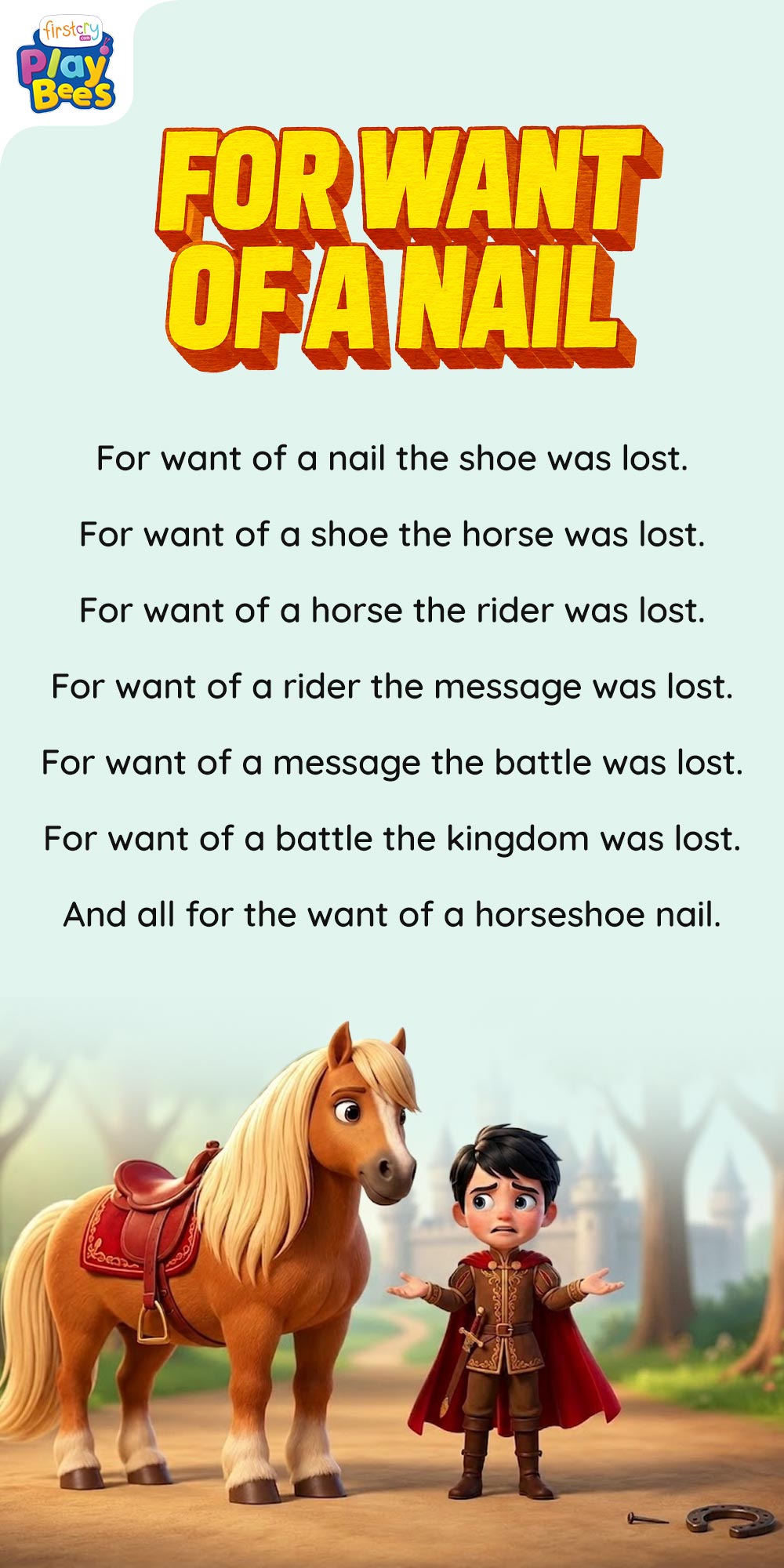
Here are the For Want of a Nail words, a timeless rhyme that highlights how small actions can have big consequences:
For want of a nail the shoe was lost.
For want of a shoe the horse was lost.
For want of a horse the rider was lost.
For want of a rider the message was lost.
For want of a message the battle was lost.
For want of a battle the kingdom was lost.
And all for the want of a horseshoe nail.
Other Versions of For Want of a Nail Song
This well-known rhyme has a few slightly different versions, with minor wording changes but the same meaning.
1. Simplified Version
For want of a nail, the shoe was lost,
For want of a shoe, the horse was lost,
For want of a horse, the rider was lost,
And all for the want of a nail.
2. “War” Version
For want of a nail, the shoe was lost,
For want of a shoe, the horse was lost,
For want of a horse, the rider was lost,
For want of a rider, the war was lost,
And all for the want of a nail.
3. “Message” Version
For want of a nail, the shoe was lost,
For want of a shoe, the horse was lost,
For want of a horse, the rider was lost,
For want of a rider, the message was lost,
And all for the want of a nail.
4. “Country” Version
For want of a nail, the shoe was lost,
For want of a shoe, the horse was lost,
For want of a horse, the rider was lost,
For want of a rider, the country was lost,
And all for the want of a nail.
5. Short Toddler Version
A nail went missing, the shoe fell off,
The horse couldn’t run, the rider got lost,
Big things can fail from something so small,
So take good care of things, one and all!
Gestures – How to Teach For Want of a Nail to Kids
Teaching this rhyme with actions makes it more fun and easier for children to remember, while helping them connect words with movements.
- Tap your finger like hammering to show the “nail” and explain how small things matter.
- Pretend to fix a shoe with your hands when saying “the shoe was lost” to show the connection.
- Act like riding a horse by bouncing slightly to make the story more lively and engaging.
- Shield your eyes and look around for “the rider was lost” to show confusion or searching.
- Make big arm movements like a battle scene to show how the problem grows bigger.
- End by spreading your arms wide for “kingdom was lost” to highlight the final impact.
History & Quick Facts
“For Want of a Nail” is believed to date back to the 13th century and is often linked to old English proverbs. It was first recorded in written form in the late 18th century, though its origins may be much older as part of oral storytelling traditions. The rhyme is not attributed to a single author, which is common for many traditional nursery rhymes. Over time, it became popular as a teaching tool to explain cause and effect and the importance of small details. It has been widely used in schools and homes to convey a simple yet powerful life lesson.
Interesting Facts
- This rhyme is often used to teach children about cause and effect in a simple and memorable way.
- It has appeared in many books, speeches, and even business lessons to explain the importance of small actions.
- The rhyme has been translated into several languages while keeping its original message intact.
- Some versions are used in classrooms to introduce early problem-solving and logical thinking.
- The story is sometimes connected to real historical battles where small mistakes led to big losses.
- Its simple structure and repetition make it easy for children to memorize and recite confidently.
Suitable Age & Learnings
This rhyme is best suited for children aged 4 to 8 years as it combines simple language with an important life lesson. It helps young learners understand how small actions can lead to bigger outcomes while building early learning skills.
- Children learn about cause and effect as the rhyme clearly shows how one small thing leads to another.
- It improves memory skills because the repetitive structure helps kids remember each line easily.
- Kids develop listening and sequencing skills by following the chain of events step by step.
- The rhyme introduces new vocabulary like nail, shoe, rider, and kingdom in a simple context.
- It teaches responsibility by showing how small carelessness can lead to bigger problems.
- Children build storytelling skills by understanding how events connect and unfold.
FAQs
1. What is the main message of For Want of a Nail?
The rhyme teaches that small actions or mistakes can lead to big consequences, highlighting the importance of attention to detail.
2. What is the rhyming scheme of For Want of a Nail?
The rhyme follows a simple repetitive pattern with end rhymes and parallel sentence structure, making it easy for children to learn and remember.
3. Why is this rhyme good for young children?
It helps children understand cause and effect, improves memory, and introduces important life lessons in a simple and engaging way.
“For Want of a Nail” is more than just a nursery rhyme it’s a meaningful lesson wrapped in simple words and rhythm. It helps children see how even the smallest actions can have a big impact, making it both educational and memorable. With its repetitive structure, it becomes easy for kids to learn and enjoy while building essential language skills. Parents and teachers can use it to introduce early concepts like responsibility and logical thinking. Adding gestures and actions makes the learning experience even more fun and interactive. Over time, this timeless rhyme continues to be a valuable tool for early childhood learning. It leaves children with an important message they can carry into everyday life.
Explore Other Rhymes for Kids:
Solomon Grundy Nursery Rhyme With Lyrics
There Was a Crooked Man Nursery Rhyme With Lyrics
This Is the House That Jack Built Nursery Rhyme With Lyrics