Other Versions of Go Tell it On The Mountain Song
This beloved rhyme has a few alternate verses and versions that are commonly sung in different regions and performances.
- Traditional Gospel Version: Includes verses like “While shepherds kept their watching” and “Down in a lowly manger,” which focus on the birth of Jesus.
- Children’s Simplified Version: Shorter versions repeat the chorus more often and reduce complex lines to make it easier for young kids to remember and sing.
- Modern Adaptations: Some versions add claps, rhythms, or slightly changed wording to make it more engaging for preschool learning.
- Choir & Carol Versions: Sung in churches and Christmas programs with harmonies, often including multiple vocal parts.
Gestures – How to Teach Go Tell it On The Mountain to Kids
Teaching this rhyme with actions makes it fun and helps kids remember the words better. Simple gestures also keep children engaged and active while learning.
- Raise both hands high above the head when saying “Go tell it on the mountain” to show the idea of a tall mountain.
- Cup your hands around your mouth like calling out loudly to act out “go tell it” as if you’re sharing big news.
- Point outward in different directions during “over the hills and everywhere” to show spreading the message far and wide.
- Gently rock arms like holding a baby when singing about “Jesus Christ is born” to connect with the story.
- Pretend to look around like a shepherd watching sheep by shading your eyes with your hand.
- Clap softly or tap knees in rhythm to keep kids involved and help them follow the tune easily.
History & Quick Facts
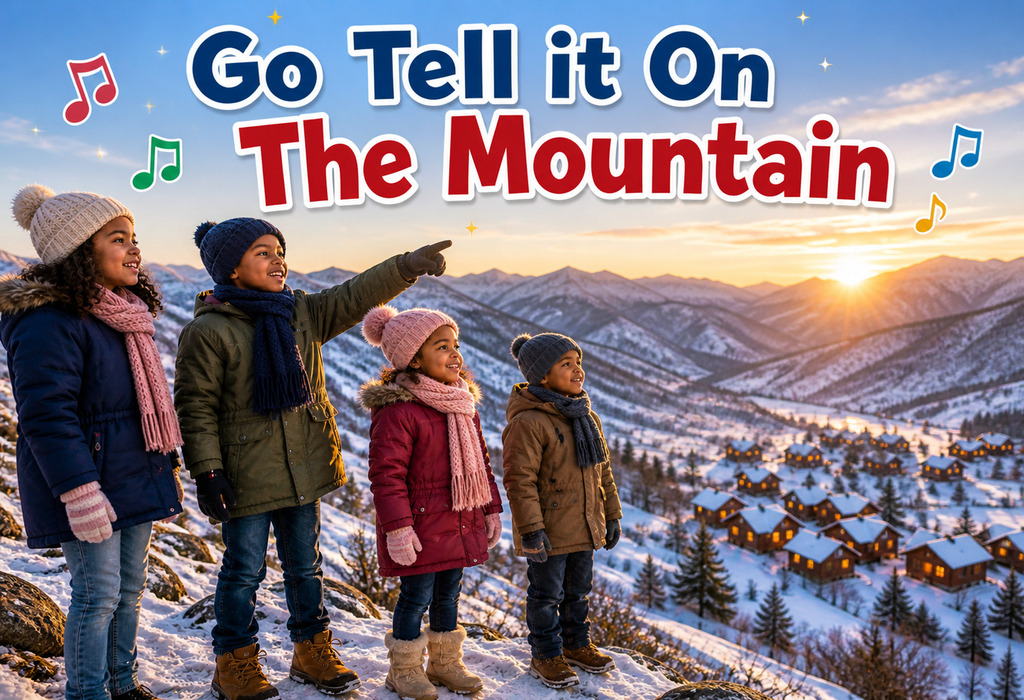
“Go Tell it On The Mountain” is a traditional African-American spiritual song that dates back to the 19th century. It was collected and published by John Wesley Work Jr., an American composer and scholar, in the early 1900s. The song was originally sung by enslaved African Americans and later became popular as a Christmas carol. Over time, it spread through churches, schools, and choirs, becoming a well-known festive and children-friendly song around the world.
Interesting Facts
- This rhyme began as a spiritual song sung by African-American communities and later became a Christmas favorite.
- It is often performed during Christmas celebrations because it shares the joyful news of Jesus’ birth.
- The song has been translated into many languages, making it popular across different cultures.
- Many famous singers and choirs have recorded their own versions of this song.
- The tune is simple and repetitive, which makes it easy for young children to learn and sing along.
- It is commonly taught in schools and used in holiday performances and nativity plays.
Suitable Age & Learnings
This rhyme is best suited for children aged 3 to 8 years as it is simple, rhythmic, and easy to follow. It supports early learning by combining music, movement, and storytelling.
- Listening Skills: Children improve their listening abilities by following the tune and repeating lines.
- Language Development: The rhyme introduces new words like “mountain,” “shepherd,” and “born,” helping expand vocabulary.
- Memory Building: Repetitive lyrics help kids remember words and improve recall skills.
- Cultural Awareness: Kids learn about traditions and stories related to Christmas and global music heritage.
- Confidence Boost: Singing aloud and performing actions helps children feel more confident.
- Motor Skills: Gestures and movements improve coordination and physical activity.
FAQs
1. What is the rhyming scheme of Go Tell it On The Mountain?
The rhyme follows a simple and loose rhyming pattern, mainly focusing on repetition rather than strict rhymes, which makes it easy for children to learn.
2. Is this rhyme only for Christmas?
While it is most popular during Christmas, it can be sung anytime as it carries a joyful and meaningful message.
3. Why is this rhyme good for kids?
It combines music, storytelling, and actions, helping children learn language, rhythm, and confidence in a fun way.
“Go Tell it On The Mountain” is more than just a rhyme—it’s a joyful song with deep cultural roots and a message of sharing happiness. Its simple tune and repetitive lyrics make it perfect for young children to learn and enjoy. Adding gestures and actions makes the learning experience even more engaging and memorable. Over the years, it has remained a favorite in homes, schools, and festive celebrations. It helps children build language, confidence, and cultural understanding in a fun way. Overall, it’s a timeless rhyme that brings music, movement, and meaning together beautifully.
Explore Other Rhymes for Kids:
O Holy Night Nursery Rhyme With Lyrics
Joy to the World Nursery Rhyme With Lyrics
Hark! The Herald Angels Sing Nursery Rhyme With Lyrics