
Table of Contents
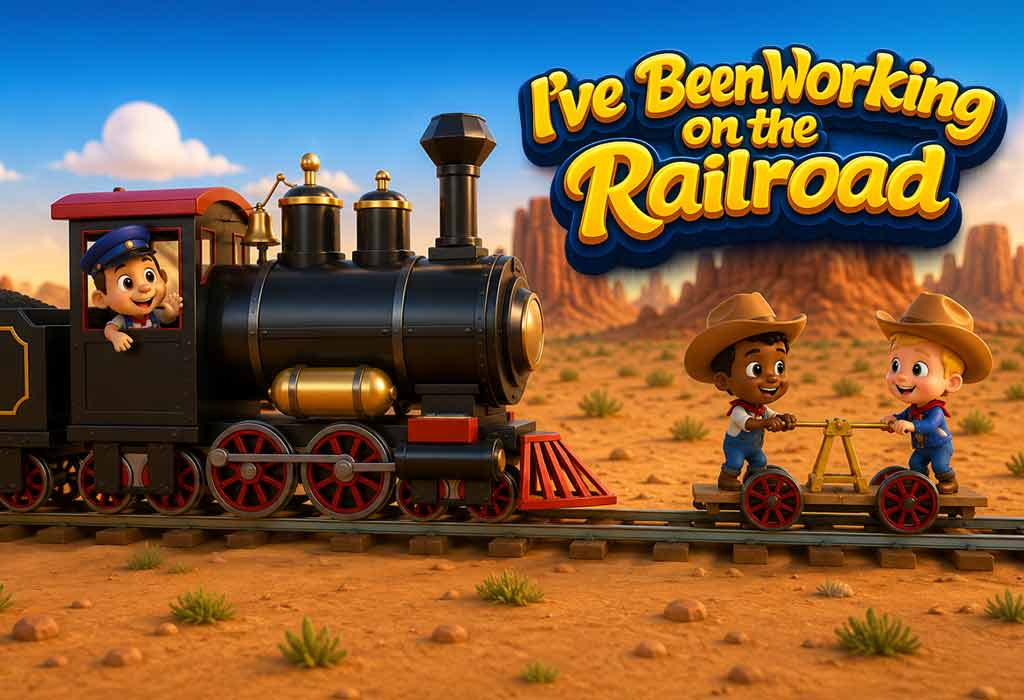
“I’ve Been Working on the Railroad” is a cheerful traditional nursery rhyme that children have enjoyed for many generations. The song talks about railroad workers singing and working together throughout the day, creating a fun and musical storytelling experience for little listeners. Kids enjoy the catchy tune, repetitive lines, and playful rhythm that make it easy to sing along with family and friends. Parents and teachers often use this rhyme during playtime, music sessions, and classroom activities because it keeps children engaged and active. Singing the rhyme also helps children improve memory, listening skills, pronunciation, and rhythm recognition. The simple words and lively melody encourage early language development while introducing kids to teamwork, daily work routines, and classic folk music in a fun and entertaining way.
I’ve Been Working on the Railroad Song Lyrics
Children love singing along to the classic I’ve Been Working on the Railroad words because the tune is lively, repetitive, and easy to remember.
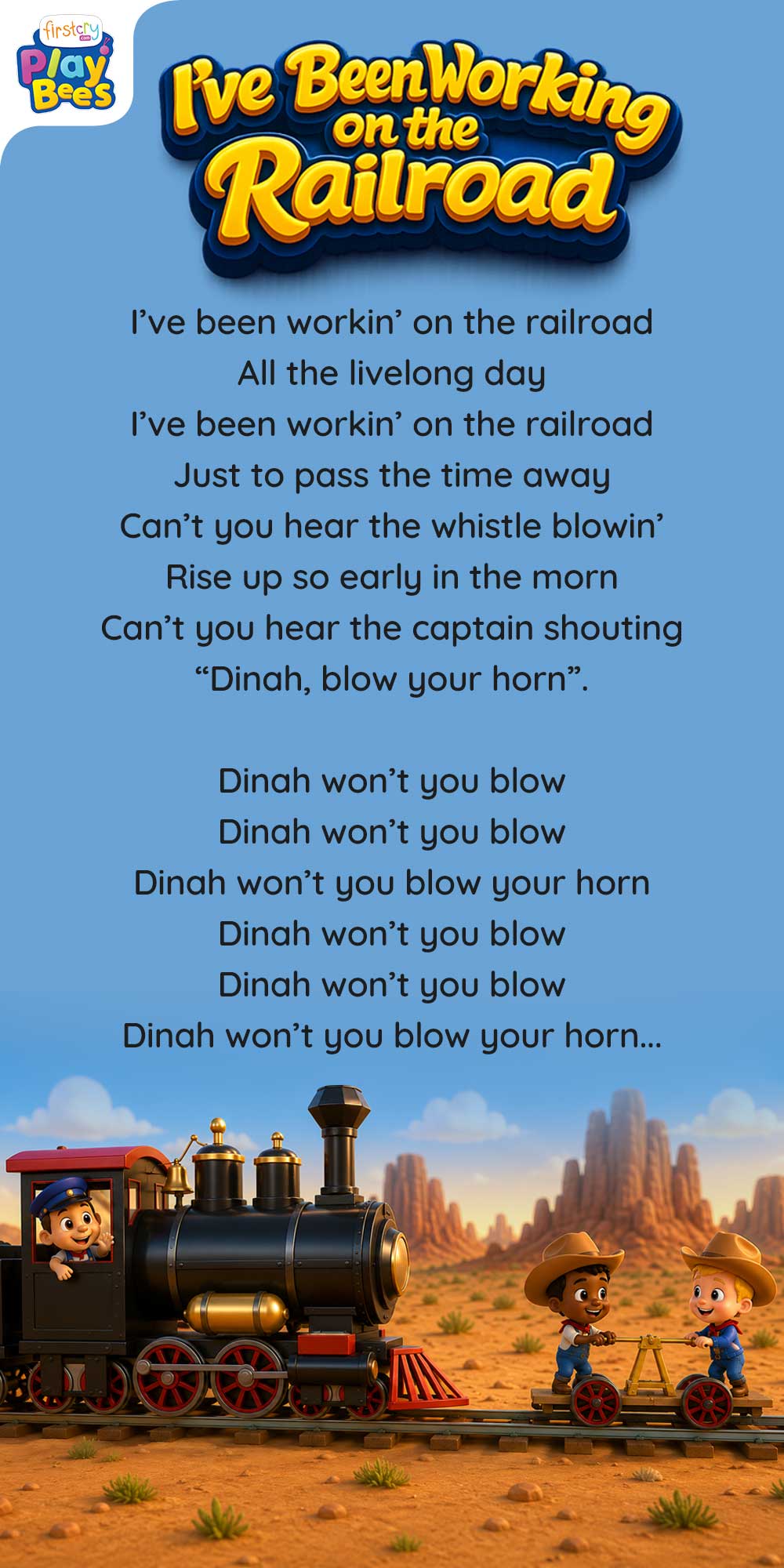
I’ve been workin’ on the railroad
All the livelong day
I’ve been workin’ on the railroad
Just to pass the time away
Can’t you hear the whistle blowin’
Rise up so early in the morn
Can’t you hear the captain shouting
“Dinah, blow your horn”.
Dinah won’t you blow
Dinah won’t you blow
Dinah won’t you blow your horn
Dinah won’t you blow
Dinah won’t you blow
Dinah won’t you blow your horn.
Someone’s in the kitchen with Dinah
Someone’s in the kitchen I know
Someone’s in the kitchen with Dinah
Strummin’ on the old banjo,
Singin’ “Fe Fi Fiddly I Oh,
Fe Fi Fiddly I Oh,
Fe Fi Fiddly I Oh,”
Strummin’ on the old banjo.
Other Versions of I’ve Been Working on the Railroad Song
Many families and schools sing slightly different versions of this classic rhyme to make it more playful and easier for young children to remember.
Version 1
I’ve been working on the railroad,
All the livelong day,
I’ve been working on the railroad,
To earn my daily pay.
Can’t you hear the whistle blowing,
Rise up so early in the morn?
Can’t you hear the captain shouting,
“Dinah, blow your horn!”*
Version 2
Someone’s in the kitchen with Dinah,
Someone’s in the kitchen, I know,
Someone’s in the kitchen with Dinah,
Strumming on the old banjo.
Fee fi fiddle ee i o,
Fee fi fiddle ee i o o o,
Fee fi fiddle ee i o,
Strumming on the old banjo.
Version 3
I’ve been working on the railroad,
All the livelong day,
I’ve been working on the railroad,
Just to pass the time away.
Don’t you hear the whistle blowing,
Calling loud and strong?
Don’t you hear the engine rumbling,
Singing its happy song?
Version 4
Someone’s laughing with Dinah,
Happy as can be,
Someone’s singing with Dinah,
Beneath the old shade tree.
Clap your hands and sing together,
March along the way,
Children love this cheerful railroad song,
Every single day.
Gestures – How to Teach I’ve Been Working on the Railroad to Kids
Teaching this rhyme with actions makes the song more exciting and easier for children to remember. Simple body movements also help improve coordination, listening skills, and active participation during sing along time.
- Pretend to hammer on the railroad by moving both fists up and down slowly while singing the opening lines of the rhyme.
- Place one hand above the eyes like looking into the distance when singing about hearing the whistle blowing.
- Make a train whistle sound and move one arm like a train wheel to create a fun railway action for kids.
- Point upward and stretch the body tall while singing “Rise up so early in the morn” to show waking up in the morning.
- Pretend to call out loudly by cupping hands around the mouth during the captain shouting part of the rhyme.
- End by swaying side to side like a moving train so children can finish the rhyme with cheerful movements and laughter.
History & Quick Facts
“I’ve Been Working on the Railroad” is a traditional American folk song that became popular in the late 1800s. The rhyme is believed to have originated from railroad workers and students who sang it during work and social gatherings. It was first published in 1894 in a song collection called Carmina Princetonia, connected with Princeton University students. The exact writer of the song is unknown, which is common for many old folk rhymes and traditional songs. Over time, the catchy tune and simple lyrics helped the rhyme spread across schools, homes, and children’s music programs around the world. Today, it remains one of the most recognized nursery songs enjoyed by children and families.
Interesting Facts
- The rhyme became famous because its lively tune made it easy for groups of children and adults to sing together.
- Many people believe the song was inspired by the daily lives of railroad workers in early American history.
- The tune has been used in schools, cartoons, movies, and children’s performances for many generations.
- Some versions of the rhyme include different lines or shorter verses to make singing easier for younger children.
- The song has been translated into different languages, helping children around the world enjoy the melody and rhythm.
- Kids often enjoy pretending to be trains while singing the rhyme because the music sounds playful and energetic.
Suitable Age & Learnings
This rhyme is best suited for children aged 2 to 7 years because of its simple words, repetitive tune, and action based learning style. It is widely used in preschools and early classrooms to encourage language development, rhythm practice, and social interaction.
- Children learn rhythm and musical timing by singing along with the repeated beat and melody of the rhyme.
- The song improves listening skills because kids follow the lyrics and actions together during group activities.
- Vocabulary words like railroad, whistle, captain, and morning introduce children to new everyday language concepts.
- Action based singing helps develop motor skills as children move their hands, arms, and body with the tune.
- Singing together teaches teamwork and participation, helping children feel confident in social settings.
- Memory skills improve when children repeatedly sing the lines and remember the sequence of the song.
FAQs
1. What is the rhyming scheme of I’ve Been Working on the Railroad?
The rhyme mainly follows a simple and musical rhyming pattern with repeated ending sounds that make it easy and enjoyable for children to remember and sing.
2. Why do children enjoy I’ve Been Working on the Railroad?
Children enjoy the rhyme because it has a catchy melody, fun train themed actions, and repetitive lines that encourage singing and movement.
3. Is I’ve Been Working on the Railroad good for preschool learning?
Yes, the rhyme is great for preschool learning because it supports language development, listening skills, rhythm practice, and group participation through music and actions.
“I’ve Been Working on the Railroad” continues to be a favorite nursery rhyme for children because of its cheerful tune and engaging lyrics. The song brings music, movement, and storytelling together in a simple way that young learners can easily enjoy. Parents and teachers often use the rhyme to make learning more interactive and entertaining during playtime or classroom sessions. Its fun actions and repetitive rhythm help children build confidence while improving memory and listening skills. The rhyme also introduces little learners to classic folk music and teamwork through group singing activities. With its timeless charm and playful energy, this nursery rhyme remains a wonderful addition to every child’s early learning journey.
Explore Other Rhymes for Kids:
Oh! Susanna Nursery Rhyme With Lyrics
Down by The Station Nursery Rhyme With Lyrics
Engine Engine Number 9 Nursery Rhyme With Lyrics