
Table of Contents
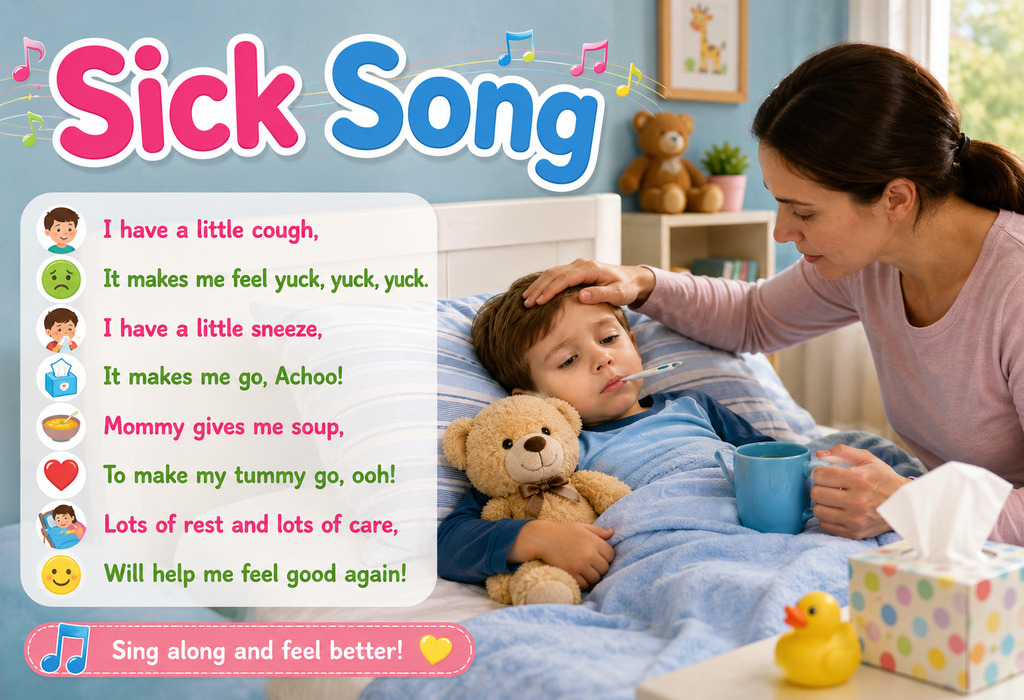
“Sick Song” is a gentle and comforting nursery rhyme that talks about a child who is feeling unwell and receiving care and attention. Young children enjoy this rhyme because of its simple words, soft rhythm, and relatable theme about being sick and getting better. Parents and teachers often use it to help children understand feelings, health, and kindness in an easy way. The rhyme also encourages listening and speaking skills through repetition and musical patterns. Singing along helps children improve memory, pronunciation, and vocabulary while making learning fun and calming. Its soothing tune and easy lyrics make it perfect for bedtime, classroom activities, or quiet learning moments at home with toddlers and preschoolers.
Sick Song Lyrics
These Sick Song words are easy for children to sing along with and enjoy during calm learning time.
Little Baby doesn’t seem right,
She has lost her appetite,
She turned away her favorite toy,
Baby isn’t having much joy
Baby’s temperature is high,
All she does is grumble and cry,
it’s time for baby’s medicine,
Being sick isn’t very fun.
Little Baby here’s a drink,
In your favourite bottle that’s white and pink,
Drink it up you’ll be better soon
Let’s put the TV on ñ look it’s your favorite cartoon!
A blocked nose doesn’t feel the best,
Maybe little baby should have a rest,
Wrap her up and hold her close,
Poor little baby has a very red nose.
Baby’s waking up from her afternoon nap,
Someone’s feeling better, thank goodness for that!
With love and care from her family
Baby’s feeling better and baby’s happy!
Other Versions of Sick Song
Different versions of the rhyme are sometimes sung with small word changes or added actions for children.
1. Daddy Version
“Daddy, daddy I am sick,
Call the doctor quick, quick, quick.
Doctor, doctor shall I die?
No, my child, you shall not die.
What shall I take to make me well?
Take some medicine, it will make you well.”
2. Teacher Version
“Teacher, teacher I am sick,
Call the nurse now very quick.
Nurse, dear nurse, shall I cry?
No, my child, you’ll be fine.
Drink some water, take some rest,
Soon again you’ll feel your best.”
3. Extended Healthy Habits Version
“Mummy, mummy I am sick,
Call the doctor very quick.
Doctor says to rest in bed,
Place a pillow near my head.
Drink warm water, sleep all night,
Soon again I’ll feel alright.”
4. Classroom Action Version
“Clap your hands and tap your feet,
Take your medicine, feel the beat.
Wave goodbye to cough and cold,
Now feel happy, brave, and bold.”
5. Simple Toddler Version
“I am sick and feeling slow,
To the doctor I will go.
Medicine and rest today,
Soon my sickness goes away.”
Gestures – How to Teach Sick Song to Kids
Teaching “Sick Song” with actions makes the rhyme more engaging and easier for children to remember. Simple gestures also help kids connect words with emotions and movements while improving coordination.
- Pretend to hold your head and look tired when singing “I am sick” so children can act out feeling unwell.
- Cup your hands around your mouth during “Call the doctor” to show calling for help loudly.
- Point to an imaginary doctor or walk in place like a doctor arriving quickly.
- Shake your finger gently and smile during “you shall not die” to reassure children in a comforting way.
- Pretend to drink medicine from a spoon or cup when singing about taking medicine.
- End the rhyme with a happy smile and thumbs-up gesture to show feeling healthy again.
History & Quick Facts
“Sick Song” is a traditional nursery rhyme that has been shared orally in homes and schools for many years. The exact author and first publication date are not clearly known, which is common for many old nursery rhymes passed down through generations. The rhyme became popular because it uses simple dialogue between a child and a doctor, making it easy for children to understand and remember. Over time, teachers and parents used the rhyme to comfort children and introduce topics about health, care, and recovery. Today, it remains a popular preschool rhyme in many countries and is often included in nursery rhyme collections, animated videos, and classroom activities.
Interesting Facts
- “Sick Song” is often used in preschool classrooms to teach children about health and caring for others.
- The rhyme is short and repetitive, which helps toddlers memorize the words quickly.
- Many animated nursery rhyme channels have created colorful musical versions of the rhyme online.
- The rhyme has been translated into different languages while keeping its simple meaning and rhythm.
- Children often enjoy acting like doctors and patients while singing the song during pretend play.
- The calm and gentle tune makes the rhyme suitable for quiet learning sessions and bedtime singing.
Suitable Age & Learnings
“Sick Song” is best suited for toddlers and preschoolers between the ages of 2 and 6 years. Its simple language and comforting theme help young children learn emotional expression, listening skills, and basic health-related vocabulary.
- Children learn caring words like “doctor,” “medicine,” and “sick,” which build everyday vocabulary.
- The rhyme helps improve listening and memory skills through repetition and rhythmic singing.
- Kids develop emotional understanding by talking about feeling unwell and getting help.
- Singing the rhyme encourages better pronunciation and speaking confidence in young learners.
- Action-based learning with gestures improves coordination and physical movement skills.
- The rhyme also teaches children that caring adults help them feel safe and better when sick.
FAQs
1. What is the rhyming scheme of Sick Song?
The rhyme mostly follows a simple AABB-style rhyming pattern, making it easy and catchy for children to remember.
2. Why do children enjoy the Sick Song rhyme?
Children enjoy it because the words are simple, the tune is gentle, and the theme is relatable to everyday experiences.
3. Can Sick Song be used in preschool learning activities?
Yes, teachers often use it for singing sessions, role-play activities, vocabulary building, and action-based learning games.
“Sick Song” is a simple and comforting nursery rhyme that children can easily enjoy and remember. Its gentle words and repetitive rhythm make learning fun and calming for young learners. The rhyme introduces children to basic health-related vocabulary while also teaching care and kindness. Parents and teachers can make the experience more engaging by adding actions and role-play activities. Because of its short length and soothing tune, it works well for classrooms, bedtime routines, and quiet learning moments. Overall, “Sick Song” remains a timeless nursery rhyme that supports early childhood learning in a warm and enjoyable way.