
Table of Contents
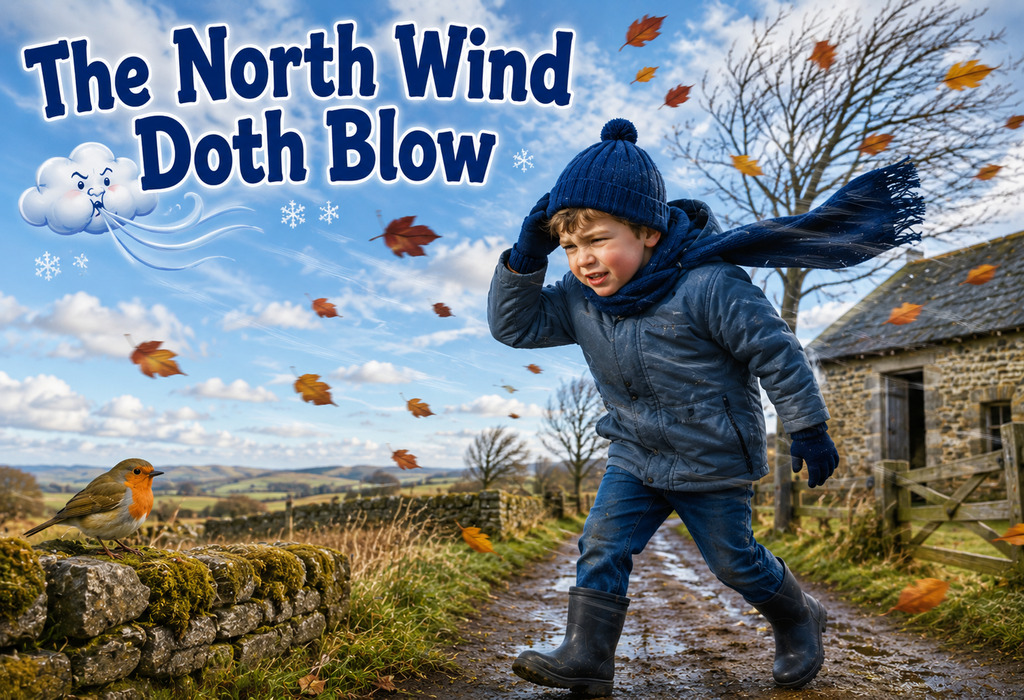
The North Wind Doth Blow is a gentle and classic nursery rhyme that paints a cozy winter picture with snow, birds, and warm clothes. Children enjoy the rhyme because of its soft rhythm, simple words, and easy-to-imagine scenes that make storytelling fun. The rhyme introduces little learners to seasonal weather, nature, and caring actions in a calm and engaging way. Parents and teachers often use it to build listening skills, vocabulary, and memory through singing and repetition. Its short lines are easy for young children to follow, making it perfect for early learning activities at home or in the classroom. With its comforting winter theme and musical flow, this traditional rhyme continues to delight generations of young learners.
The North Wind Doth Blow Song Lyrics
Enjoy singing along with these sweet The North Wind Doth Blow words that bring snowy winter scenes and a little robin to life for children.
The North wind doth blow and we shall have snow,
And what will poor robin do then, poor thing?
He’ll sit in a barn and keep himself warm
and hide his head under his wing, poor thing.
Other Versions of The North Wind Doth Blow Song
Over the years, a few gentle variations of this rhyme have appeared in children’s books and classroom songs.
The north wind doth blow,
And we shall have snow,
And what will the swallows do then, poor things?
Oh, they’ll fly away,
To lands far away,
And hide from the wintery winds, poor things!
Another version slightly changes the wording while keeping the same winter theme and rhythm for children.
Gestures – How to Teach The North Wind Doth Blow to Kids
This rhyme becomes more fun when children act out the weather, birds, and movements while singing. Simple gestures help kids remember the words and stay engaged throughout the rhyme.
- Stretch both arms wide and sway them gently to show the “north wind” blowing strongly.
- Wiggle fingers downward from above to pretend snow is falling from the sky.
- Point to yourself and make a sad face while saying “poor robin” to express sympathy.
- Cup both hands together like a little bird sitting safely inside a warm barn.
- Wrap your arms around yourself to act out “keep himself warm” during winter weather.
- Tuck your head slightly to one side and flap elbows softly like wings hiding the robin’s head.
History & Quick Facts
The North Wind Doth Blow is a traditional English nursery rhyme that dates back several centuries. The exact author is unknown, which is common for many old folk rhymes passed down through oral storytelling. The rhyme was later included in printed nursery rhyme collections during the 18th and 19th centuries, helping it become popular in homes and schools across England. Its simple winter theme, gentle rhythm, and caring message about protecting a small bird made it memorable for children. Over time, the rhyme spread to many countries through books, songs, and educational materials. Today, it remains a beloved classic used in early childhood learning and seasonal activities.
Interesting Facts
- The rhyme is one of the oldest weather-themed nursery rhymes still taught to children today.
- Many teachers use this rhyme during winter classroom activities because it introduces snow and seasonal changes in a simple way.
- The little robin bird in the rhyme is often seen as a symbol of warmth, kindness, and care during winter.
- Different versions of the rhyme exist in various countries, with some replacing the robin with swallows or other birds.
- The tune is usually sung softly and slowly, making it calming and easy for toddlers to follow.
- The rhyme has appeared in nursery rhyme books, children’s music albums, and storytelling programs for generations.
Suitable Age & Learnings
This nursery rhyme is best suited for children between 2 and 6 years old because of its short lines and easy vocabulary. It supports early learning by introducing nature themes, listening skills, and expressive actions through music and repetition.
- Children learn weather-related words such as “wind,” “snow,” and “warm,” helping build seasonal vocabulary.
- The rhyme teaches empathy by showing care and concern for the little robin during cold weather.
- Repeating the lines improves memory and listening skills in young learners.
- Acting out the rhyme with gestures helps develop coordination and motor skills.
- Kids become familiar with rhythm and rhyming sounds, which support early language development.
- The song encourages imagination as children picture snowy weather, birds, and cozy shelters.
FAQs
1. What is the rhyming scheme of The North Wind Doth Blow?
The rhyme mostly follows an AABCCB-style rhyming pattern, giving it a smooth and musical flow that is easy for children to remember.
2. Why is The North Wind Doth Blow popular with young children?
Children enjoy the rhyme because it has simple words, gentle repetition, and easy-to-picture winter scenes involving snow and a small robin bird.
3. What does children learn from The North Wind Doth Blow?
The rhyme helps children learn new vocabulary, rhythm, empathy, weather concepts, and listening skills through singing and actions.
The North Wind Doth Blow is a timeless nursery rhyme that continues to charm children with its soft winter imagery and gentle rhythm. Its simple story about caring for a little robin makes it both comforting and memorable for young learners. Parents and teachers enjoy using the rhyme because it supports vocabulary building, movement activities, and early listening skills in a playful way. The rhyme also introduces children to seasonal weather and nature through easy-to-understand language. Whether sung at bedtime, during classroom circle time, or as part of winter activities, it creates a warm and engaging learning experience. This beloved classic remains a wonderful way to share music, imagination, and learning with children across generations.
Explore Other Rhymes for Kids:
Oh Mr Sun Nursery Rhyme With Lyrics
Winter Wonderland Nursery Rhyme With Lyrics
Little Robin Redbreast Nursery Rhyme With Lyrics