
Table of Contents
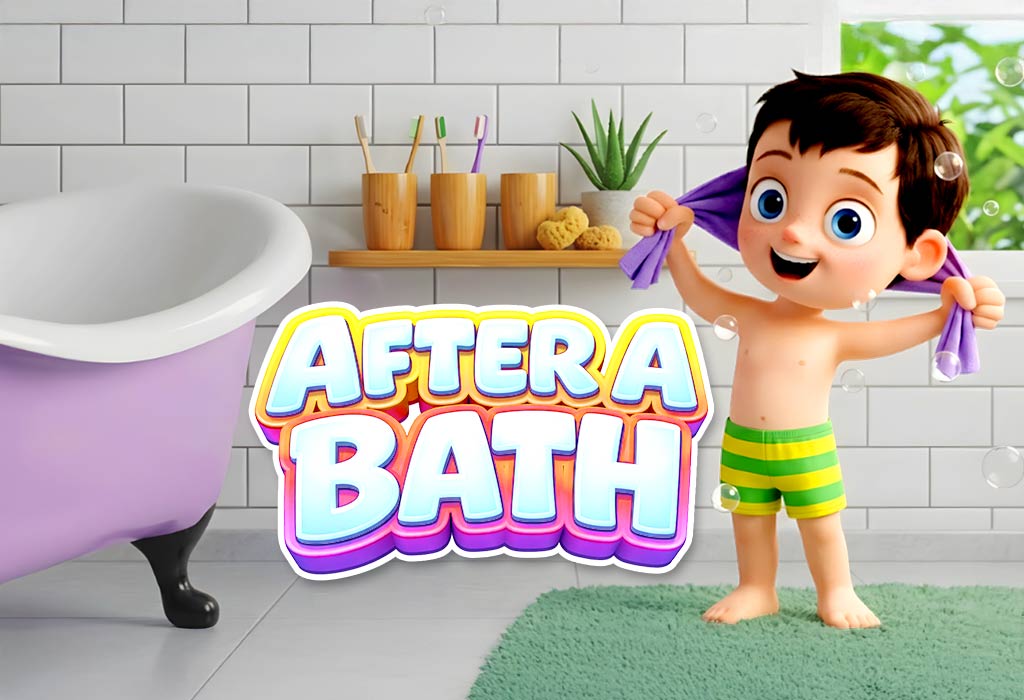
“After A Bath” is a cheerful and playful nursery rhyme about a little child who feels fresh, happy, and proud after bath time. The rhyme captures a simple everyday moment—splashing, washing, and drying off then celebrates the clean and cozy feeling that follows. Young children enjoy it because it is short, catchy, and easy to sing along to. The words are simple and rhythmic, making it perfect for toddlers and preschoolers. Parents also love this rhyme because it gently encourages healthy habits like bathing and staying clean. Singing it during or after bath time can turn daily routines into joyful bonding moments. It also supports early learning by improving listening skills, rhythm recognition, vocabulary, and memory in a fun and natural way.
After A Bath Song Lyrics
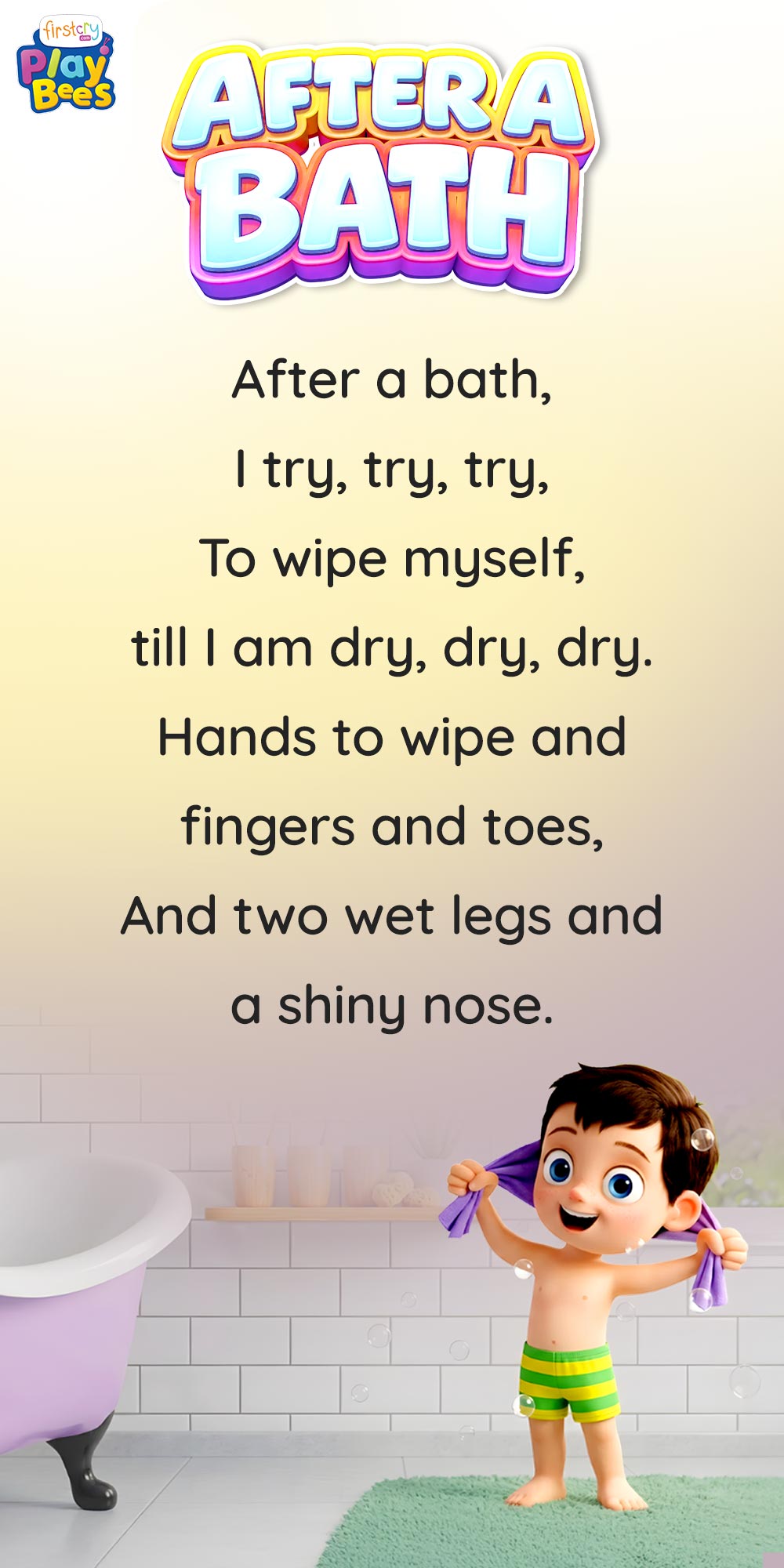
Here are the complete After A Bath words that children can sing along to happily:
After a bath, I try, try, try,
To wipe myself, till I am dry, dry, dry.
Hands to wipe and fingers and toes,
And two wet legs and a shiny nose.
Other Versions of After A Bath Song
Some parents and teachers enjoy singing small variations of this rhyme to make it more playful.
After my bath, I try, try, try,
To wipe myself till I’m dry, dry, dry.
Hands to wipe and fingers and toes,
And two wet legs and a shiny nose.
Just think how much less time I’d take,
If I were a puppy and could shake, shake, shake!
Gestures – How to Teach After A Bath to Kids
Using simple actions while singing makes the rhyme more engaging and easier to remember. These gestures help children connect words with movements and enjoy active learning.
- Pretend to towel dry – Move both hands over your arms and shoulders as if wiping yourself dry when singing “wipe myself till I’m dry.”
- Wiggle fingers and toes – Stretch out hands and feet and wiggle them during “fingers and toes” to help children identify body parts.
- Touch your legs – Gently pat your legs when singing “two wet legs” so kids connect the words with actions.
- Tap your nose – Lightly tap your nose during “a shiny nose” to make the line playful and interactive.
- Pretend to shake like a dog – Stand up and wiggle your whole body during “shake, shake, shake” to bring laughter and energy.
- Smile and clap at the end – Finish with a big smile and clap together to celebrate bath time fun.
History & Quick Facts
“After A Bath” is a short and humorous nursery rhyme believed to have been written by Rose Fyleman, a British poet known for writing poems for children. It was first published in the early 20th century as part of her children’s poetry collections. The rhyme quickly became popular because of its relatable theme—something every child experiences. Over time, it was included in nursery rhyme books and school collections, helping it spread across English-speaking countries. Its playful ending about shaking like a dog has made it especially memorable for generations of children.
Interesting Facts
- The rhyme was originally written as a short children’s poem before becoming widely sung in classrooms and homes.
- Many parents use it during bath time routines to make drying off more enjoyable for toddlers.
- The funny “shake, shake, shake” line is often the favorite part for young children because it encourages movement.
- It is commonly included in preschool curriculum materials that focus on hygiene and daily habits.
- The rhyme has been translated into different languages while keeping the playful idea of shaking like a dog.
- Teachers often use it to teach body-part vocabulary such as hands, fingers, toes, legs, and nose.
Suitable Age & Learnings
“After A Bath” is most suitable for toddlers and preschoolers aged 2 to 5 years. Its short length and repetitive sounds make it easy for young children to understand and remember.
- Healthy Habits Awareness – Children learn that bathing and drying off are important daily routines.
- Body Part Vocabulary – The rhyme introduces words like hands, fingers, toes, legs, and nose in a fun way.
- Rhyming Skills – Repeating sounds like “try, try, try” and “dry, dry, dry” help children recognize rhymes.
- Listening and Memory Skills – The short verses improve recall and attentive listening.
- Motor Skills Development – Adding gestures like shaking and wiping supports gross and fine motor skills.
- Imagination and Humor – Pretending to shake like a dog encourages creativity and playful thinking.
FAQs
1. What is the rhyming scheme of After A Bath?
The rhyme follows an AABBCC pattern, where pairs of lines rhyme together, making it easy and musical for children to remember.
2. Who wrote After A Bath?
The poem is believed to have been written by Rose Fyleman, a children’s poet from the early 1900s.
3. How can I use this rhyme in daily routine?
You can sing it during or after bath time while helping your child dry off, turning a simple routine into a fun bonding activity.
“After A Bath” is a delightful nursery rhyme that turns a simple daily routine into a moment of laughter and learning. Its playful words, catchy rhythm, and humorous ending make it a favorite among toddlers and preschoolers. Parents and teachers appreciate how easily it fits into bath time while supporting early language development. The rhyme gently reinforces hygiene habits without sounding like a lesson. With simple gestures and repetition, children quickly memorize and enjoy performing it. Most importantly, it creates warm memories filled with giggles, wiggles, and happy smiles after every bath.
Explore Other Rhymes for Kids:
This Little Light of Mine Nursery Rhyme With Lyrics
Brush, Brush, Brush Your Teeth Nursery Rhyme With Lyrics
Head, Shoulders, Knees and Toes Nursery Rhyme With Lyrics