Gestures – How to Teach All I Want For Christmas Is My Two Front Teeth to Kids
Teaching this rhyme with actions makes it more fun and helps children remember the words easily. Simple gestures also keep kids engaged and encourage active participation while singing.
- Point to your front teeth while singing “two front teeth” so children can connect the words with the body part.
- Place your hands near your mouth and pretend to smile widely to show how happy the child feels.
- Use a gentle tapping motion on your cheeks to mimic speaking and highlight the funny lisp sound.
- Spread your arms wide when saying “Christmas” to show excitement and festive joy.
- Pretend to write a wish list in the air to help children understand the idea of making a Christmas wish.
- End by waving and smiling at others while saying “Merry Christmas” to encourage friendly interaction.
History & Quick Facts
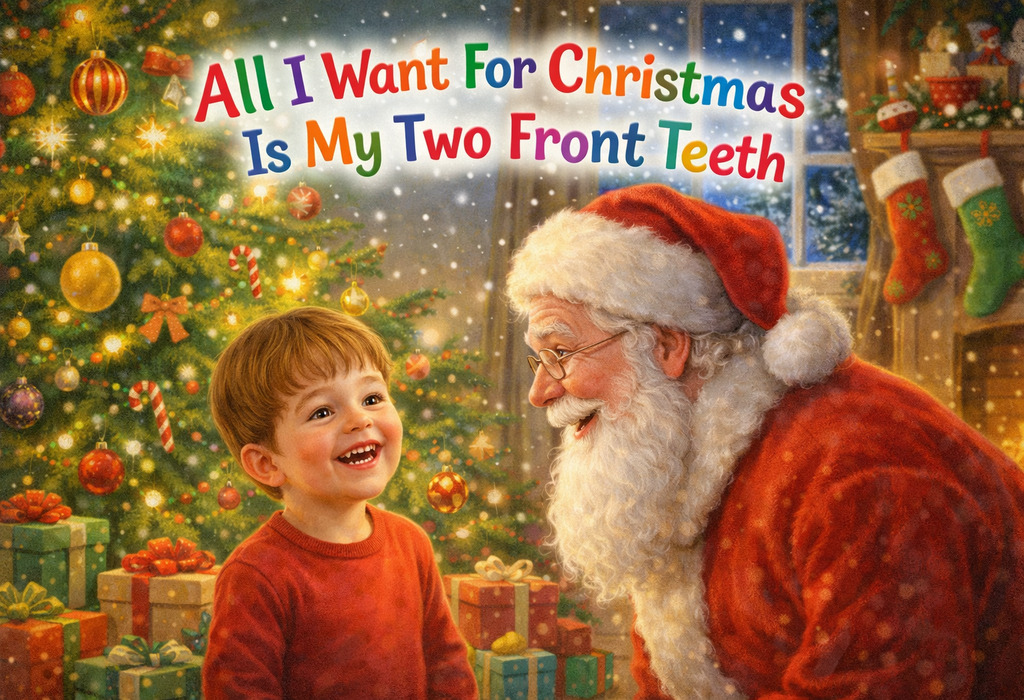
“All I Want for Christmas Is My Two Front Teeth” was written in 1944 by Donald Yetter Gardner, a music teacher from the United States. He got the idea after noticing many of his young students had missing front teeth and spoke with a lisp, which sounded both adorable and funny. The song was first recorded by Spike Jones and His City Slickers in 1947, and it quickly became a holiday favorite. Its playful lyrics and catchy tune helped it gain popularity across radio, television, and school performances. Over time, it became a classic Christmas song enjoyed by children and families around the world.
Interesting Facts
- The song was inspired by real children in a classroom, making it relatable and authentic for young listeners.
- It became a big hit in the late 1940s and has remained popular during Christmas celebrations ever since.
- Many singers and artists have created their own versions of the song, adding different musical styles.
- The humorous lisp in the lyrics is what makes the rhyme especially fun and memorable for kids.
- The rhyme has been featured in holiday shows, cartoons, and school performances around the world.
- It is often sung in different languages, helping children from various cultures enjoy the same festive fun.
Suitable Age & Learnings
This rhyme is best suited for children aged 3 to 7 years, especially those who are learning to speak clearly and enjoy simple songs. It is ideal for preschool and early primary learners as it combines fun, language, and expression.
- Children learn about body parts, especially teeth, by connecting the words with actions and visuals.
- The rhyme helps improve pronunciation and speech clarity through repetition and playful sounds.
- Kids develop listening and memory skills as they follow along with the lyrics and rhythm.
- It introduces festive vocabulary such as “Christmas,” “wish,” and “Merry,” building early language skills.
- The song encourages emotional expression by showing how children can share their wishes and feelings.
- Group singing of the rhyme helps build confidence and social interaction among young learners.
FAQs
1. What is the rhyming scheme of All I Want For Christmas Is My Two Front Teeth?
The rhyme follows a simple and repetitive pattern, mainly using end rhymes like “teeth” and “teeth,” and “say” with “day,” making it easy for children to remember and sing.
2. Why do children enjoy this rhyme so much?
Children enjoy it because it is funny, relatable, and reflects a real-life experience of losing front teeth, along with a catchy and easy tune.
3. Can this rhyme help with speech development?
Yes, the playful repetition and sounds in the rhyme help children practice pronunciation and improve their speaking skills.
“All I Want for Christmas Is My Two Front Teeth” is a delightful and timeless rhyme that brings smiles to children and adults alike. Its simple story, catchy rhythm, and humorous theme make it perfect for young learners. By combining music, actions, and playful language, it supports early learning in an enjoyable way. The rhyme also creates a joyful connection to the festive season, making it a favorite during Christmas celebrations. Whether sung at home or in classrooms, it encourages children to express themselves and have fun. Overall, it is a wonderful blend of learning, laughter, and holiday cheer that children will remember for years.