
Table of Contents
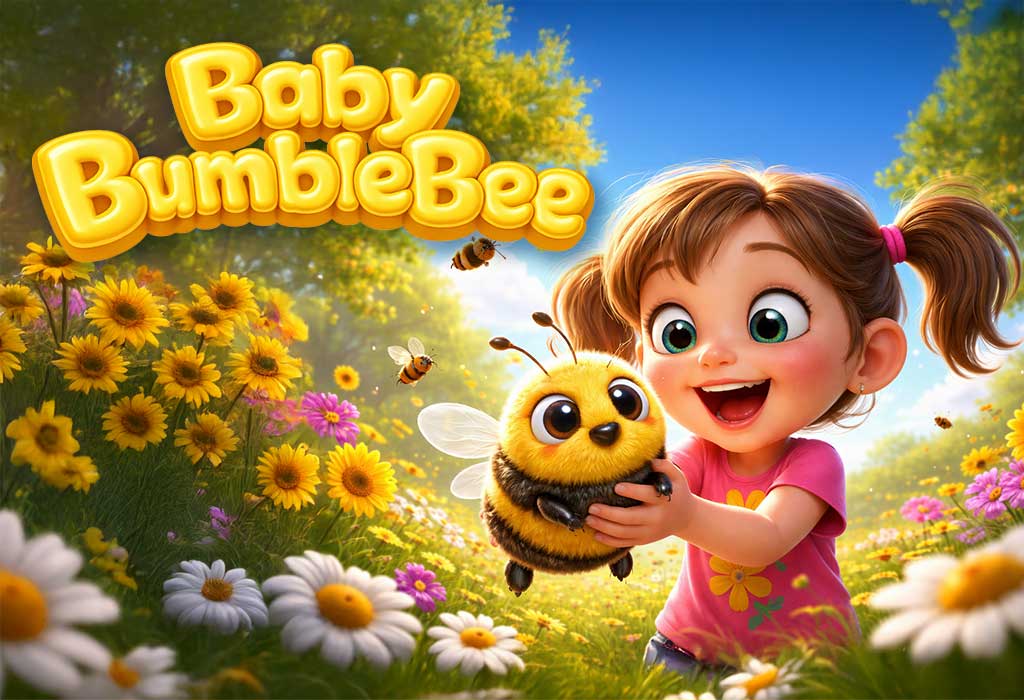
“Baby BumbleBee” is a playful and slightly silly nursery rhyme that children love to sing again and again. The rhyme tells the story of a child catching a baby bumblebee and the funny consequences that follow. Its simple words, catchy tune, and repeating lines make it easy for little ones to remember. Kids especially enjoy the dramatic and giggly parts of the song, which add excitement and fun to group singing time.
For parents and teachers, this rhyme is more than just entertainment. It supports early language development, listening skills, rhythm recognition, and memory. The action-based singing also helps improve coordination and motor skills, making learning joyful and active for young children.
Baby BumbleBee Song Lyrics
Here are the popular Baby BumbleBee words that children love to sing during circle time and playtime.
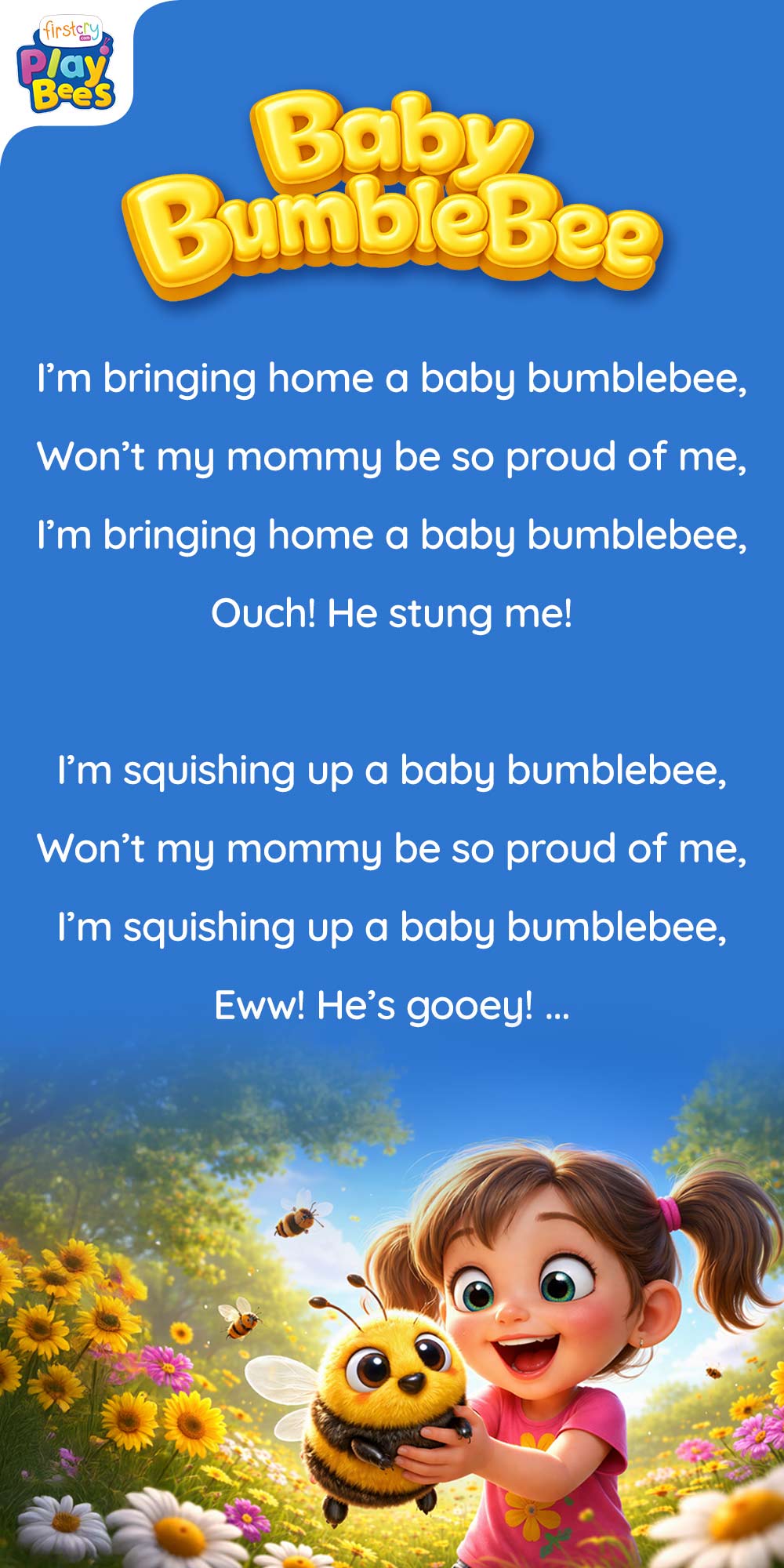
I’m bringing home a baby bumblebee,
Won’t my mommy be so proud of me,
I’m bringing home a baby bumblebee,
Ouch! He stung me!
I’m squishing up a baby bumblebee,
Won’t my mommy be so proud of me,
I’m squishing up a baby bumblebee,
Eww! He’s gooey!
I’m lickin’ up a baby bumble bee
Won’t my Mommy be so proud of me
I’m lickin’ up my baby bumble bee
Mmm! He’s yummy!
Other Versions of Baby BumbleBee Song
Over the years, this playful rhyme has developed several funny and creative variations that children enjoy.
Version 1: “Teacher” Version (Classroom Friendly)
I’m bringing home a baby bumblebee,
Won’t my teacher be so proud of me?
I’m bringing home a baby bumblebee,
Oh no! It stung me!
I’m washing off the baby bumblebee,
Won’t my teacher be so proud of me?
I’m washing off the baby bumblebee,
Now I’m clean as can be!
Version 2: “Daddy” Version (Family Sing-Along)
I’m bringing home a baby bumblebee,
Won’t my daddy be so proud of me?
I’m bringing home a baby bumblebee,
Ouch! It stung me!
I’m letting go my baby bumblebee,
Won’t my daddy be so proud of me?
I’m letting go my baby bumblebee,
Bye-bye, buzzy bee!
Version 3: Gentle “Let It Fly Away” Version
I found myself a baby bumblebee,
Won’t you take a look at me?
I found myself a baby bumblebee,
Buzz! Buzz! Buzz!
I’m letting go my baby bumblebee,
Watch it fly so happily,
I’m letting go my baby bumblebee,
Up into the tree!
Gestures – How to Teach Baby BumbleBee to Kids
Teaching this rhyme with actions makes it more engaging and helps children remember the words easily. Simple hand movements and facial expressions add excitement and encourage participation.
- Pretend to carefully hold a tiny bee in your hands while singing “I’m bringing home a baby bumblebee,” showing excitement on your face.
- On the line “Won’t my mommy be so proud of me?” point to yourself and then gesture proudly with a big smile.
- When singing “Ouch! It stung me!” quickly pull your hand back and pretend to shake it as if it hurts.
- For the “squishing” verse, gently press your palms together and make a funny “eww” face to add drama.
- During “licking up,” pretend to taste something and then act silly by sticking out your tongue.
- At the “POP!” line, clap your hands loudly once to surprise and delight the children.
History & Quick Facts
“Baby BumbleBee” is a traditional American nursery rhyme believed to have originated in the early 20th century. The exact author is unknown, as it was passed down orally through generations. It became popular in schools, camps, and playgrounds because of its catchy rhythm and dramatic actions. The rhyme was often sung during group activities, helping children bond through music and movement. Over time, teachers adapted certain verses to make them more suitable for classrooms, which helped the song remain popular across decades.
Interesting Facts
- The rhyme is especially popular in the United States and is commonly sung in preschools and summer camps.
- Many teachers modify some verses to make the song more child-friendly and less messy.
- The tune is simple and repetitive, which helps young children memorize it quickly.
- The rhyme often includes dramatic expressions like “Ouch!” and “Eww!” which children find very funny.
- It has been translated into different languages while keeping the same playful structure.
- The song is often used during circle time because it combines singing with actions.
Suitable Age & Learnings
“Baby BumbleBee” is most suitable for children aged 2 to 6 years. Its repetitive lines and simple actions make it ideal for preschool and kindergarten learners.
- Children improve listening skills as they follow along with repeated lines and actions.
- The rhyme builds memory skills because kids remember the repeating pattern of each verse.
- It supports vocabulary development with words like “bumblebee,” “proud,” and “sting.”
- Kids develop rhythm awareness by singing along to the steady beat.
- Action movements strengthen fine and gross motor coordination.
- The playful storyline encourages emotional expression through dramatic reactions like “Ouch!” and “Yuck!”
FAQs
1. What is the rhyming scheme of Baby BumbleBee?
The rhyme mainly follows an AABB pattern, where the first two lines rhyme and the next two lines repeat the same rhyme sound.
2. Is Baby BumbleBee suitable for preschool classrooms?
Yes, it is widely used in preschools, and teachers often adjust certain verses to keep them classroom-friendly.
3. What skills does Baby BumbleBee help develop?
It supports language growth, rhythm recognition, memory skills, and coordination through actions and repetition.
“Baby BumbleBee” is a timeless nursery rhyme that brings laughter and learning together in a simple, joyful way. Its catchy rhythm and dramatic lines make it a favorite among young children. Through singing and actions, kids strengthen important early learning skills without even realizing it. Parents and teachers appreciate how easily it fits into circle time, playtime, or family sing-alongs. The playful verses encourage imagination and expressive storytelling. Most importantly, it creates happy memories that children carry with them as they grow.
Explore Other Rhymes for Kids:
Itsy Bitsy Spider Nursery Rhyme With Lyrics
The Ants Go Marching Nursery Rhyme With Lyrics
Five Little Speckled Frogs Nursery Rhyme With Lyrics