
Table of Contents
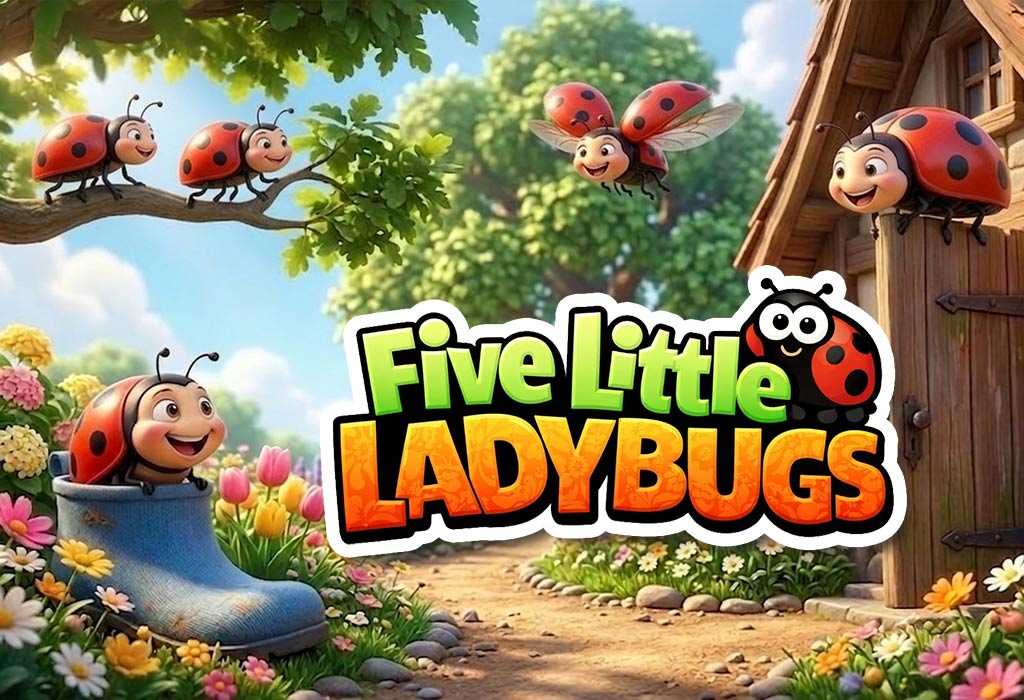
Five Little Ladybugs is a sweet and playful counting rhyme that follows tiny ladybugs as they fly away one by one. With its simple pattern and cheerful theme, children love watching the number change in each verse while imagining bright red ladybugs in the sky.
This rhyme is especially enjoyable for toddlers and preschoolers because it combines rhythm, repetition, and counting in a fun and easy way. As children listen and sing along, they begin to understand early math concepts like subtraction and number order. The predictable structure also helps improve memory and listening skills. Parents and teachers appreciate how naturally it supports early learning while keeping little ones engaged. With gentle actions and a sing-song flow, Five Little Ladybugs turns a simple counting lesson into a delightful musical experience children want to repeat again and again.
Five Little Ladybugs Song Lyrics
Here are the complete Five Little Ladybugs words that children enjoy singing during circle time or playful learning sessions. The rhyme follows a simple counting-down pattern that makes it easy to remember and fun to act out.
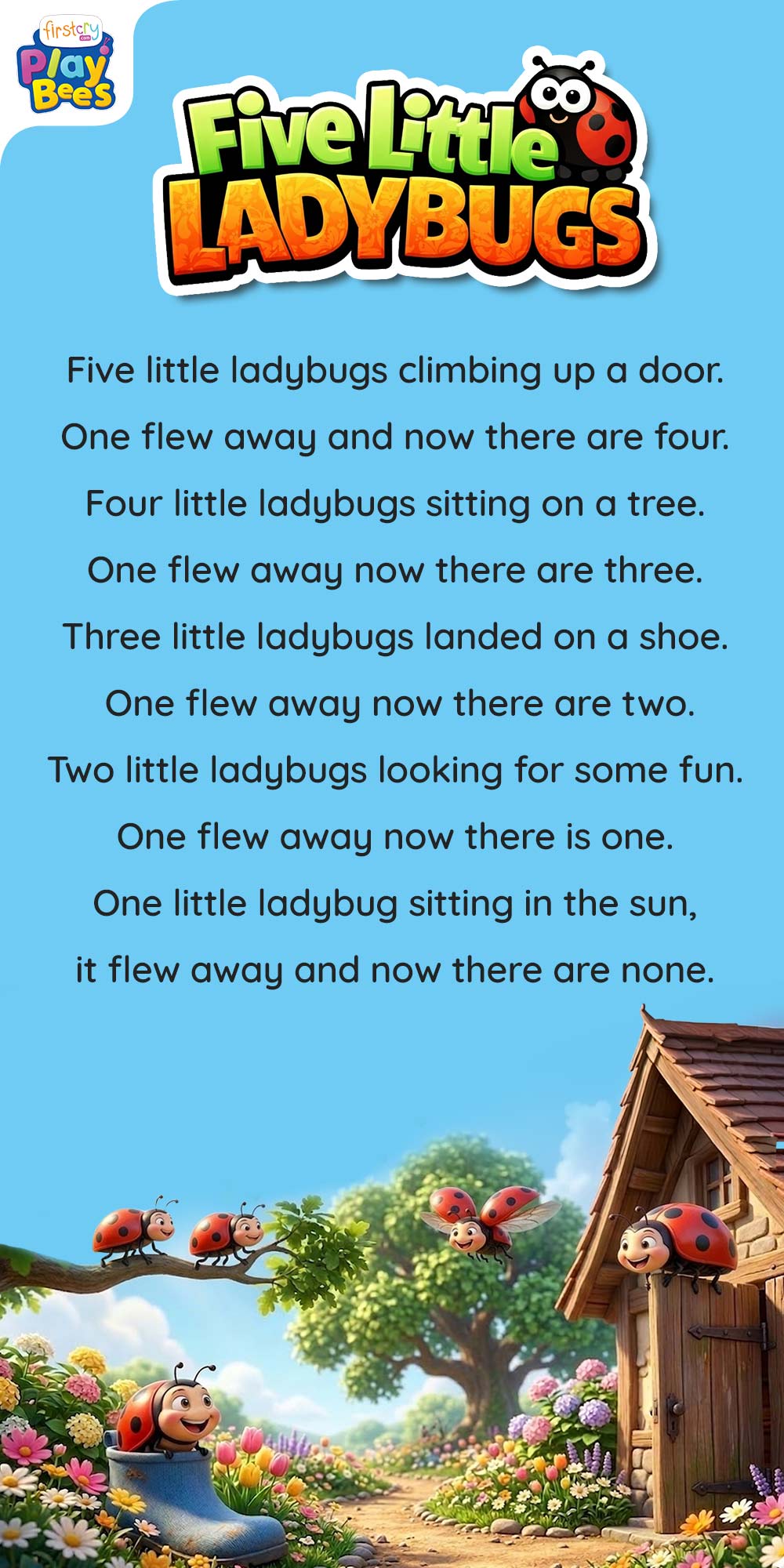
Five little ladybugs climbing up a door.
One flew away and now there are four.
Four little ladybugs sitting on a tree.
One flew away now there are three.
Three little ladybugs landed on a shoe.
One flew away now there are two.
Two little ladybugs looking for some fun.
One flew away now there is one.
One little ladybug sitting in the sun,
it flew away and now there are none.
Other Versions of Five Little Ladybugs Song
Many teachers and parents enjoy adapting this rhyme to make it even more interactive and creative
Version 1: Ladybugs on Leaves
Five little ladybugs sitting on green leaves,
One flew away in the gentle breeze.
Four little ladybugs happy as can be,
One flew away and then there were three.
Three little ladybugs resting in the sun,
One flew away and then there were two.
Two little ladybugs having lots of fun,
One flew away and then there was one.
One little ladybug alone on the tree,
She flew away and then there were none.
Version 2: Ladybugs in the Garden
Five little ladybugs sitting on a flower,
One flew away after just an hour.
Four little ladybugs near a garden gate,
One flew away and then there were three.
Three little ladybugs by a butterfly,
One flew away up into the sky.
Two little ladybugs landing in the sun,
One flew away and then there was one.
One little ladybug having so much fun,
She flew away and then there were none.
Version 3: Counting Back Up (Return Version)
Five little ladybugs climbing up a door,
One flew away and then there were four.
(Continue counting down as usual…)
One little ladybug sitting in the sun,
She flew away and then there were none.
But wait! One ladybug came back to play,
Then another joined her right away.
Soon all five ladybugs were having fun,
Buzzing together in the warm bright sun!
Version 4: With “Buzz, Buzz” Sounds
Five little ladybugs sitting on a tree,
Buzz, buzz, buzz — then there were three!
Three little ladybugs flying near the hive,
Buzz, buzz, buzz — now there are five!
Gestures – How to Teach Five Little Ladybugs to Kids
Adding simple hand movements makes the rhyme more engaging and helps children remember the counting pattern. These easy gestures encourage participation and active learning.
- Show five fingers to represent five ladybugs at the beginning, holding your hand up clearly so children can count along.
- Tap your other hand like a door or tree when mentioning the place in the verse to create a visual connection.
- Fold one finger down each time a ladybug “flies away” to demonstrate subtraction in a clear, physical way.
- Flap your hands gently like wings whenever you say “flew away” to add movement and excitement.
- Count the remaining fingers aloud together after each verse to reinforce number recognition.
- Hide both hands behind your back at the end when there are none left, showing that all the ladybugs are gone.
History & Quick Facts
Five Little Ladybugs is a traditional counting rhyme often used in early childhood classrooms. Like many “Five Little” rhymes, its exact author and first publication date are not clearly recorded, as it likely developed through oral storytelling and teaching traditions. Over time, educators included it in preschool song collections and printable learning sheets to support counting practice. Its popularity grew because of its simple subtraction pattern and easy-to-follow structure, making it a favorite during circle time and early math lessons.
Interesting Facts
- The rhyme follows a classic counting-down structure that helps children understand basic subtraction in a playful way.
- Ladybugs are often used in children’s songs because they are colorful, friendly insects that kids easily recognize.
- Many preschool teachers pair the rhyme with craft activities like paper ladybug cutouts for interactive learning.
- The tune is often sung to a simple, repetitive melody that makes it easy for young children to memorize.
- The rhyme appears in various classroom resource collections and printable PDFs for early learners.
- Some versions are translated into other languages, helping children around the world enjoy the same counting fun.
Suitable Age & Learnings
Five Little Ladybugs is best suited for children aged 2 to 5 years, especially toddlers and preschoolers beginning to learn numbers. Its simple words and repetitive pattern make it ideal for early learners.
- Counting Skills: Children practice counting backward from five to zero in a fun and memorable way.
- Basic Subtraction: Each ladybug flying away introduces the idea of “one less,” building early math understanding.
- Listening Skills: The repeating lines help children focus and anticipate what comes next.
- Memory Development: The predictable pattern supports recall and sequencing skills.
- Vocabulary Growth: Kids learn words like ladybug, flew, tree, sun, and door through repetition.
- Motor Skills: Adding gestures and finger movements strengthens hand-eye coordination.
FAQs
1. What is the rhyming scheme of Five Little Ladybugs?
The rhyme follows an AABB-style pattern in each pair of lines, where “door/four,” “tree/three,” and similar word pairs rhyme clearly.
2. Is Five Little Ladybugs good for teaching math?
Yes, it introduces early subtraction and counting backward in a simple and engaging way for preschoolers.
3. Can this rhyme be used in classroom activities?
Absolutely. Teachers often combine it with crafts, finger play, and visual aids to make counting lessons interactive and fun.
Five Little Ladybugs is a charming and educational rhyme that brings together music, counting, and imagination in a delightful way. Its gentle rhythm and simple subtraction pattern make early math feel easy and enjoyable for young children. With bright imagery and repetitive lines, it quickly becomes a favorite during circle time or at home. Parents and teachers appreciate how naturally it supports learning without feeling like a lesson. Adding gestures and playful actions makes the experience even more meaningful. Most importantly, this sweet rhyme turns numbers into a joyful adventure children love to sing again and again.
Explore Other Rhymes for Kids:
Itsy Bitsy Spider Nursery Rhyme With Lyrics
The Ants Go Marching Nursery Rhyme With Lyrics
Five Little Speckled Frogs Nursery Rhyme With Lyrics