
Table of Contents
Georgie Porgie is a classic nursery rhyme that tells a short, playful story about a cheeky little boy who loves to tease but runs away when faced with others. Children enjoy this rhyme because of its simple words, rhythmic flow, and slightly silly storyline that feels fun rather than serious. The repetition and clear actions make it easy for young kids to remember and join in. For parents and teachers, the rhyme offers gentle early learning benefits by supporting listening skills, language development, and sound recognition. It also introduces children to early storytelling through a beginning, middle, and end in just a few lines. Sung or recited together, Georgie Porgie becomes a lighthearted way to build confidence, vocabulary, and a love for traditional rhymes.
Georgie Porgie Song Lyrics
These Georgie Porgie words are short, rhythmic, and easy for children to follow along as they listen or sing.
Georgie Porgie, Puddin’ and Pie,
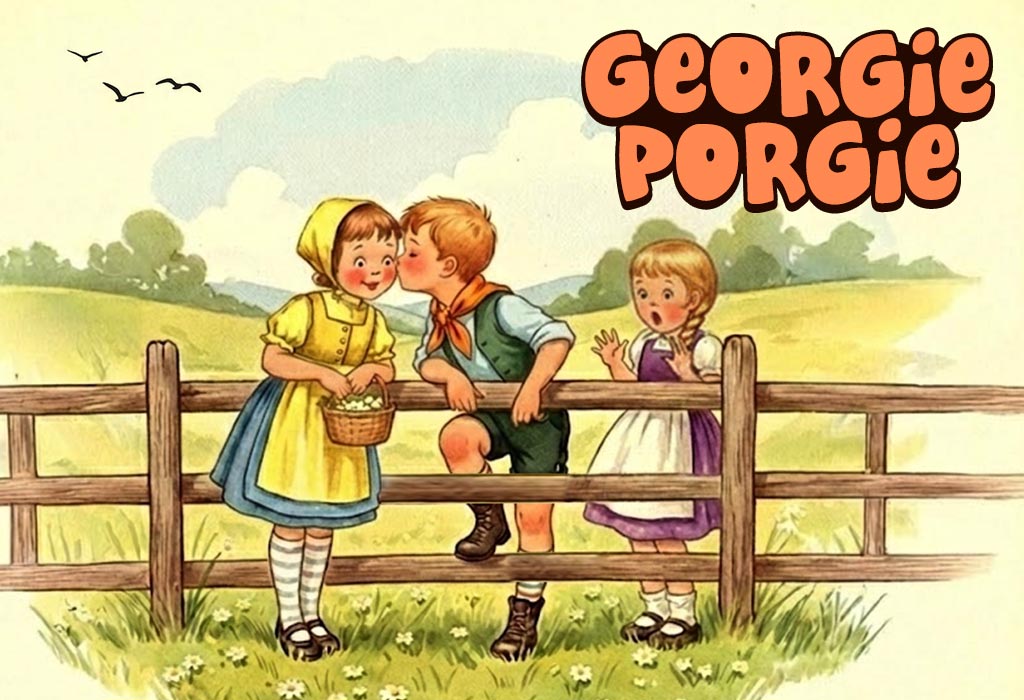
Kissed the girls and made them cry,
When the boys came out to play
Georgie Porgie ran away.
Other Versions of the Georgie Porgie Song
Over the years, this rhyme has appeared in a few gentle variations while keeping the same playful meaning.
Some versions add extra descriptive lines about Georgie’s behavior, while others slightly change the wording to make it softer and more suitable for modern storytelling, especially in children’s books and classroom rhymes.
Version 1
Georgie Porgie, pudding and pie,
Smiled at the girls as they walked by.
When the boys came out to play,
Georgie Porgie ran away.
Version 2
Georgie Porgie, pudding and pie,
Loved to laugh and be quite shy.
When the boys came out to play,
Georgie Porgie ran away.
Version 3
Georgie Porgie, pudding and pie,
Made the girls laugh passing by.
When the boys came out to play,
Georgie Porgie skipped away.
Gestures – How to Teach Georgie Porgie to Kids
Teaching Georgie Porgie with actions helps children stay engaged and understand the story better. Simple movements also make the rhyme more fun and memorable for young learners.
- Point to an imaginary person while saying Georgie Porgie to help children connect the name to a character.
- Pretend to stir a bowl during pudding and pie to add a playful cooking action kids enjoy copying.
- Gently tap cheeks or blow a kiss on kissed the girls to show the action without encouraging real kissing.
- Make a pretend crying face and rub eyes softly for made them cry to express emotions safely.
- Clap hands together on when the boys came out to play to show a change in the scene.
- Turn around or take a small step back on ran away to clearly show the ending action.
History & Quick Facts
Georgie Porgie is an old English nursery rhyme that first appeared in print in the 18th century, most notably in collections like Tommy Thumb’s Pretty Song Book published around 1744. The rhyme is traditionally linked to folklore rather than a confirmed real person, though some historians suggest it may have been inspired by figures from English history. Over time, the rhyme became popular because of its short length, catchy rhythm, and easy storytelling style. It was passed down through oral tradition, making it a familiar and lasting part of early childhood rhymes in English-speaking cultures.
Interesting Facts
- Georgie Porgie is known for being one of the shortest traditional nursery rhymes, making it easy for toddlers to memorize.
- The rhyme has been adapted in many children’s books with softer illustrations and friendlier interpretations.
- It is often recited rather than sung, helping children practice clear speech and rhythm.
- Some modern versions adjust the wording to better suit today’s classroom values.
- The rhyme is commonly used in phonics lessons because of its strong rhyming words.
- Georgie Porgie remains popular across generations due to its simplicity and playful tone.
Suitable Age & Learnings
Georgie Porgie is well suited for children aged 2 to 5 years who are beginning to enjoy short stories and rhythmic language. Its simple structure makes it ideal for early learning at home or in preschool settings.
- Listening skills improve as children follow the rhyme from start to finish.
- Early language development is supported through clear, repeated words.
- Emotional awareness is gently introduced by showing happy and sad reactions.
- Memory skills grow as children recall the short sequence of events.
- Sound recognition develops through repeated rhyming words like pie and cry.
- Social understanding begins with recognizing playful behavior and reactions.
FAQs
1. What is the meaning of the Georgie Porgie rhyme?
It tells a playful story about a teasing character and how others react, in a simple and child-friendly way.
2. What is the rhyming scheme of Georgie Porgie?
The rhyme follows an AABB pattern, with pie rhyming with cry and play rhyming with away.
Georgie Porgie remains a timeless nursery rhyme that continues to charm young children with its rhythm and simplicity. Its short verses make it easy for little ones to listen, remember, and repeat with confidence. When paired with actions, the rhyme becomes even more engaging and supports active learning. Parents and teachers appreciate how it introduces early storytelling and sound patterns without feeling overwhelming. As part of a daily rhyme routine, Georgie Porgie helps build language skills in a fun and relaxed way. Sharing this classic rhyme also connects children to traditional stories that have been enjoyed for generations.
Explore Other Rhymes for Kids:
Skidamarink Nursery Rhyme With Lyrics
This Old Man Nursery Rhyme With Lyrics
Jack Be Nimble Nursery Rhyme With Lyrics