
Table of Contents
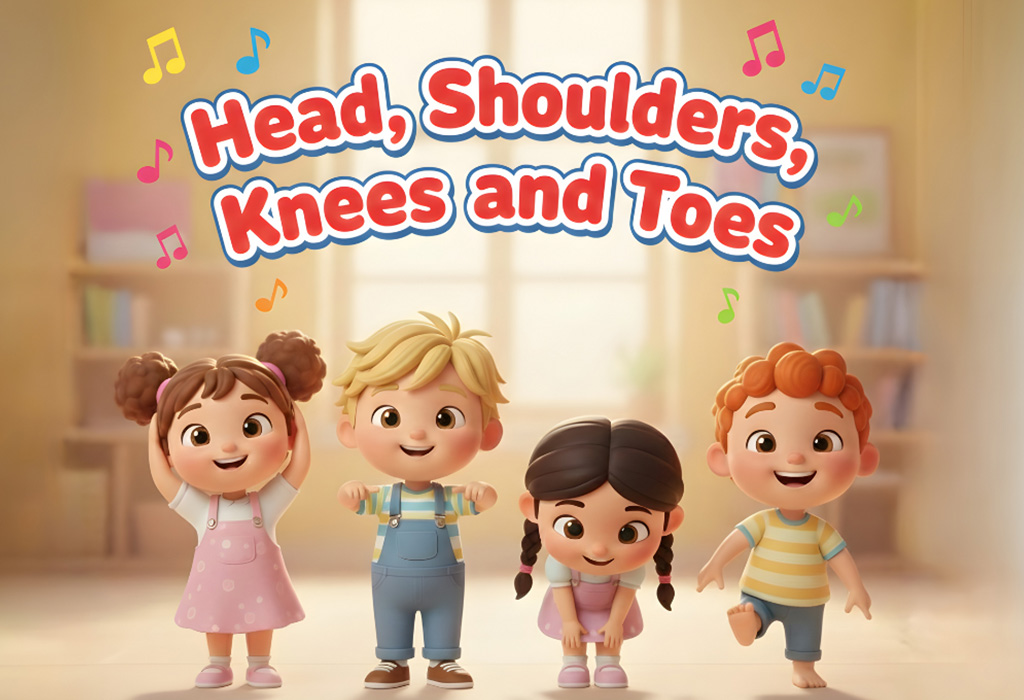
Kids love Head, Shoulders, Knees and Toes because it turns simple movement into a joyful learning experience. This playful rhyme helps little ones recognise body parts, follow actions, and boost coordination—all while having fun singing along. With its lively rhythm and repeated actions, it keeps children engaged and supports early language development in a delightful, memorable way.
Head, Shoulders, Knees and Toes Song Lyrics
A fun and energetic rhyme that teaches children body parts through simple, repetitive Head, Shoulders, Knees and Toes words.
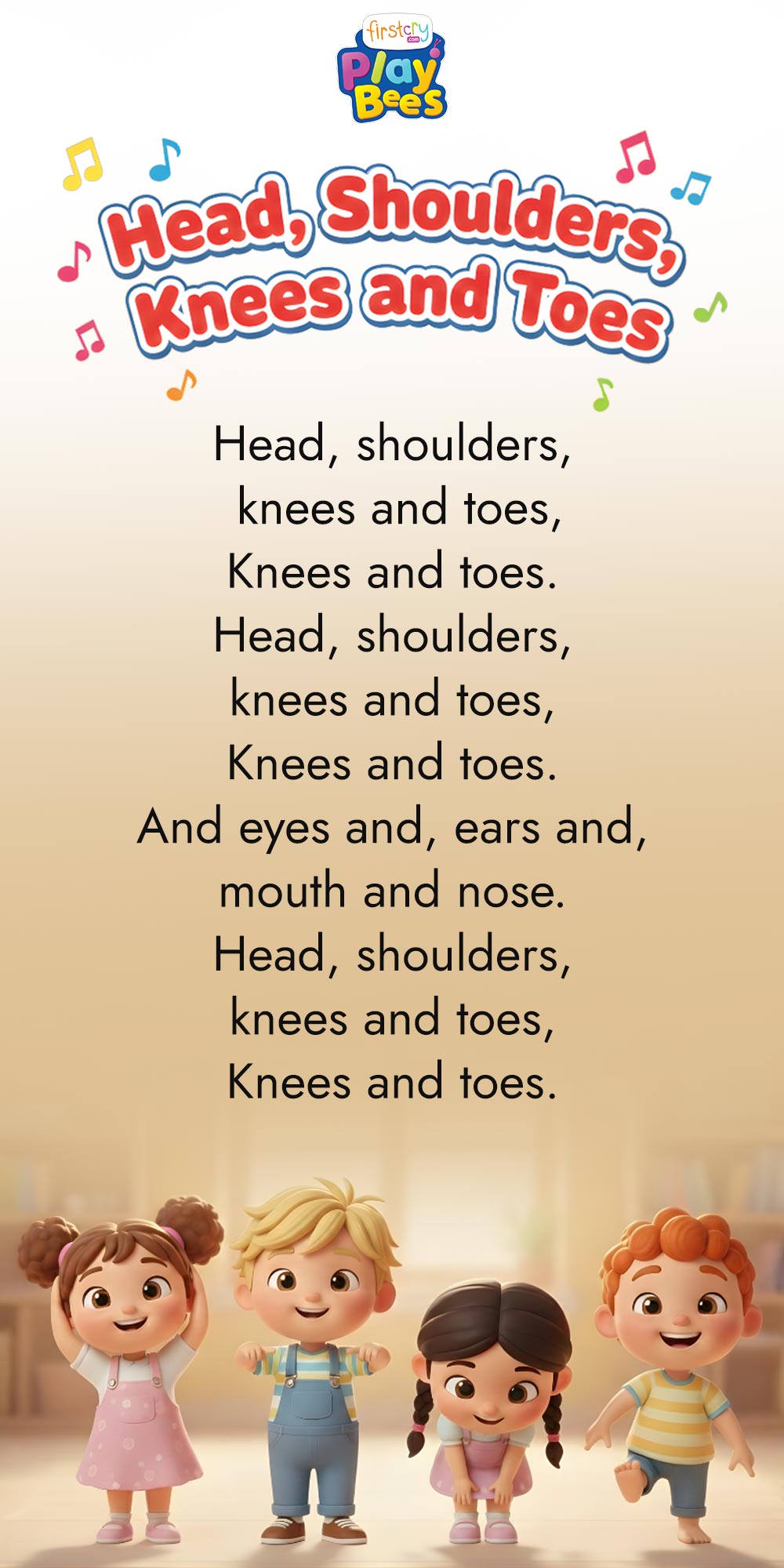
Head, shoulders, knees and toes,
Knees and toes.
Head, shoulders, knees and toes,
Knees and toes.
And eyes and, ears and, mouth and nose.
Head, shoulders, knees and toes,
Knees and toes.
Other Versions of the Head, Shoulders, Knees and Toes Song
Many playful variations of the classic rhyme exist, giving kids a chance to enjoy new actions and rhythms. These alternate versions often replace body parts or add fun twists to keep the activity exciting.
Version 1 – Fast and Slow Version
Head, shoulders, knees and toes (slow),
Knees and toes (slow),
Head, shoulders, knees and toes (fast!),
Knees and toes (fast!).
Slow it down and speed it up—
Here we go, now don’t you stop!
Head, shoulders, knees and toes,
Knees and toes!
Version 2 – Silent Parts Version
Head (tap), shoulders (tap), knees (tap), toes (tap),
Watch us move as the rhythm goes!
Eyes and ears and mouth and nose—
But shhh… no words, just actions show!
Head (tap), shoulders (tap), knees (tap), toes (tap),
Follow along wherever it goes!
Version 3 – Add More Body Parts Version
Head, shoulders, tummy and toes,
Tummy and toes!
Head, shoulders, tummy and toes,
Tummy and toes!
And eyes and ears and mouth and nose—
Head, shoulders, tummy and toes,
Tummy and toes!
Gestures – How to Teach Head, Shoulders, Knees and Toes to Kids
This rhyme becomes even more fun when paired with simple actions. These steps help children learn the song easily through movement and repetition.
- Touch your head gently when saying “Head.”
- Bring your hands to your shoulders for the next line.
- Bend down and tap your knees during “knees.”
- Touch your toes by bending a little further.
- Point to your eyes, ears, mouth, and nose one by one.
- Repeat the actions faster or slower to make the activity more engaging.
History & Quick Facts
Head, Shoulders, Knees and Toes is believed to have originated in the early to mid-20th century as an action rhyme designed for young children. While its exact author is unknown, the song quickly became popular in preschools and kindergartens due to its catchy tune and educational value. Over the years, it has been adapted in multiple languages and cultures, often used by teachers to help children learn body parts while staying physically active. Its repetitive structure and memorable melody helped it spread widely across classrooms around the world.
Interesting Facts
- The tune is often adapted from traditional folk melodies used in children’s action songs.
- It is commonly performed at different speeds—slow, medium, and fast—to build motor coordination.
- The rhyme is translated into many languages, making it a global preschool favourite.
- Teachers often use it as a warm-up activity in classrooms.
- Some versions remove words one by one to make the gesture-only game more fun.
- The rhyme is widely featured in early learning books, videos, and children’s music albums.
Suitable Age & Learnings
This rhyme is ideal for toddlers and preschoolers, generally ages 1.5 to 5 years. It is simple, interactive, and encourages children to learn through movement and repetition.
Key Learnings from the Rhyme
- Body awareness: Kids learn the names and locations of basic body parts.
- Gross motor skills: Bending, tapping, and moving help improve coordination.
- Listening skills: Children follow verbal cues to match actions with words.
- Vocabulary development: Repetition strengthens early language learning.
- Memory building: The sequence of actions helps boost recall ability.
- Rhythm and timing: Kids enjoy matching their actions to the beat of the song.
FAQs
1. What is the rhyming scheme of Head, Shoulders, Knees and Toes?
The rhyme follows a repetitive and rhythmic pattern rather than a strict rhyming scheme, making it easy for children to chant and memorise through repetition.
2. How can parents make the rhyme more engaging?
Parents can vary the speed, add new body parts, or play the silent version to make the activity more fun and challenging.
Head, Shoulders, Knees and Toes remains a beloved classic because it transforms simple learning into joyful movement. Its repetitive words and lively actions help children stay active while absorbing early vocabulary effortlessly. Whether sung slowly, quickly, or silently, it creates happy moments of bonding and play. This timeless rhyme continues to support early learning in a fun, energetic, and meaningful way.
Explore Other Rhymes for Kids:
Jack Be Nimble Rhyme With Lyrics
London Bridge Is Falling Down With Lyrics
Twinkle-Twinkle Little Star Rhyme With Lyrics