

Table of Contents
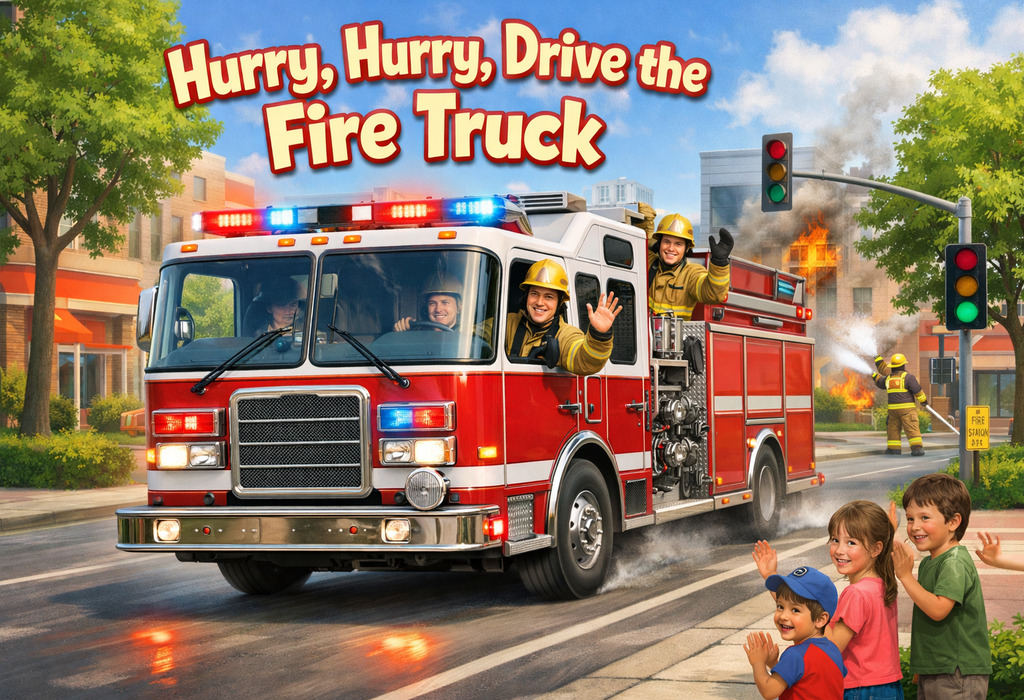
“Hurry, Hurry, Drive the Fire Truck” is a lively and action-filled nursery rhyme that introduces children to the exciting world of firefighters and emergency vehicles. With its repetitive lines and energetic rhythm, the rhyme captures kids’ attention and keeps them engaged from start to finish. Children enjoy pretending to drive a fire truck, making siren sounds, and acting out rescue scenes while singing along. This playful interaction makes learning fun and memorable. The rhyme also supports early development by improving listening skills, encouraging imaginative play, and building basic vocabulary related to community helpers. Its simple words and catchy tune make it easy for toddlers and preschoolers to follow, repeat, and enjoy both at home and in classrooms.
Hurry, Hurry, Drive the Fire Truck Song Lyrics
Sing along with these fun and engaging Hurry, Hurry, Drive the Fire Truck words that kids love to act out and enjoy.
Hurry, hurry, drive the fire truck
Hurry, hurry, drive the fire truck
Hurry, hurry, drive the fire truck
Ding, ding, ding, ding, ding!
Hurry, hurry, turn the corner
Hurry, hurry, turn the corner
Hurry, hurry, turn the corner
Ding, ding, ding, ding, ding!
Hurry, hurry, climb the ladder
Hurry, hurry, climb the ladder
Hurry, hurry, climb the ladder
Ding, ding, ding, ding, ding!
Hurry, hurry, squirt the water
Hurry, hurry, squirt the water
Hurry, hurry, squirt the water
Ding, ding, ding, ding, ding!
Slowly, slowly, back to the station
Slowly, slowly, back to the station
Slowly, slowly, back to the station
Ding, ding, ding, ding, ding!
Other Versions of Hurry, Hurry, Drive the Fire Truck Song
This rhyme is often adapted with small variations to keep it fresh and engaging for children.
Hurry, hurry, drive the fire truck,
Hurry, hurry, drive the fire truck,
Hurry, hurry, drive the fire truck,
Wee-woo, wee-woo, wee-woo!
Hurry, hurry, ring the bell,
Hurry, hurry, ring the bell,
Hurry, hurry, ring the bell,
Ding, ding, ding, ding, ding!
Hurry, hurry, spray the water,
Hurry, hurry, spray the water,
Hurry, hurry, spray the water,
Whoosh, whoosh, whoosh, whoosh, whoosh!
Hurry, hurry, climb the ladder,
Hurry, hurry, climb the ladder,
Hurry, hurry, climb the ladder,
Up, up, up, up, up!
Hurry, hurry, help the kitten,
Hurry, hurry, help the kitten,
Hurry, hurry, help the kitten,
Safe, safe, safe, safe, safe!
Gestures – How to Teach Hurry, Hurry, Drive the Fire Truck to Kids
Using actions while singing makes this rhyme more exciting and helps children learn faster through movement and play.
- Pretend to hold a steering wheel and move your hands left and right as if driving a fire truck.
- Tap your palms together or pretend to ring a bell when singing “ding, ding, ding” sounds.
- Stretch your arms forward and make spraying motions to show water coming out of the hose.
- Use your hands to mimic climbing upward like going up a ladder step by step.
- Wave your arms outward to act like rescuing or helping people in need.
- End by clapping happily or giving a thumbs up to show that everyone is safe.
History & Quick Facts
“Hurry, Hurry, Drive the Fire Truck” is a modern action rhyme often used in preschools and early learning settings rather than a traditional folk nursery rhyme. Its exact author and origin are not clearly documented, but it gained popularity through educational platforms, children’s music collections, and online nursery rhyme libraries. The rhyme became widely used because it combines role play with music, helping children learn about firefighters and emergency services in a fun and simple way. Over time, teachers and caregivers have adapted it with gestures and new verses, making it a flexible and interactive learning tool.
Interesting Facts
- This rhyme is popular in classrooms because it combines singing with pretend play about firefighters.
- The sound effects like “ding” and “whoosh” help children learn expressive and fun vocabulary.
- Many versions of the rhyme are customized by teachers to include new rescue scenarios.
- It introduces children to community helpers and teaches the importance of helping others.
- The rhyme is often paired with role play activities using toy fire trucks and props.
- It is widely shared through videos and learning websites, making it accessible to children worldwide.
Suitable Age & Learnings
This rhyme is best suited for children aged 2 to 6 years, as it uses simple words and actions that are easy to follow. It supports early childhood development through music, movement, and imaginative play.
- Children learn action words like “drive,” “spray,” and “climb,” which build early vocabulary.
- The repetitive structure helps improve memory and listening skills in young learners.
- Role playing as firefighters encourages creativity and imaginative thinking.
- Sound effects in the rhyme support language development and expression.
- Group singing helps children build social and participation skills.
- The rhyme introduces the concept of helping others and community roles in a simple way.
FAQs
1. What is the rhyming scheme of Hurry, Hurry, Drive the Fire Truck?
The rhyme uses repetition and rhythm rather than a strict rhyming pattern, making it easy for young children to follow and remember.
2. Why do kids enjoy this rhyme so much?
Kids love the actions, sound effects, and role play elements that make them feel like they are part of a real rescue mission.
3. How can parents teach this rhyme at home?
Parents can use simple gestures, toys, and sound effects to make the rhyme interactive and engaging for children.
“Hurry, Hurry, Drive the Fire Truck” is a delightful rhyme that blends fun, movement, and learning in a way young children truly enjoy. Its simple structure and energetic actions make it easy for kids to participate and stay engaged. Through playful singing, children learn new words, develop coordination, and explore imaginative scenarios. The rhyme also introduces them to the important role of firefighters and helping others. Whether used at home or in classrooms, it creates joyful learning moments. With its flexibility and interactive nature, it remains a favorite among both children and educators.