
Table of Contents
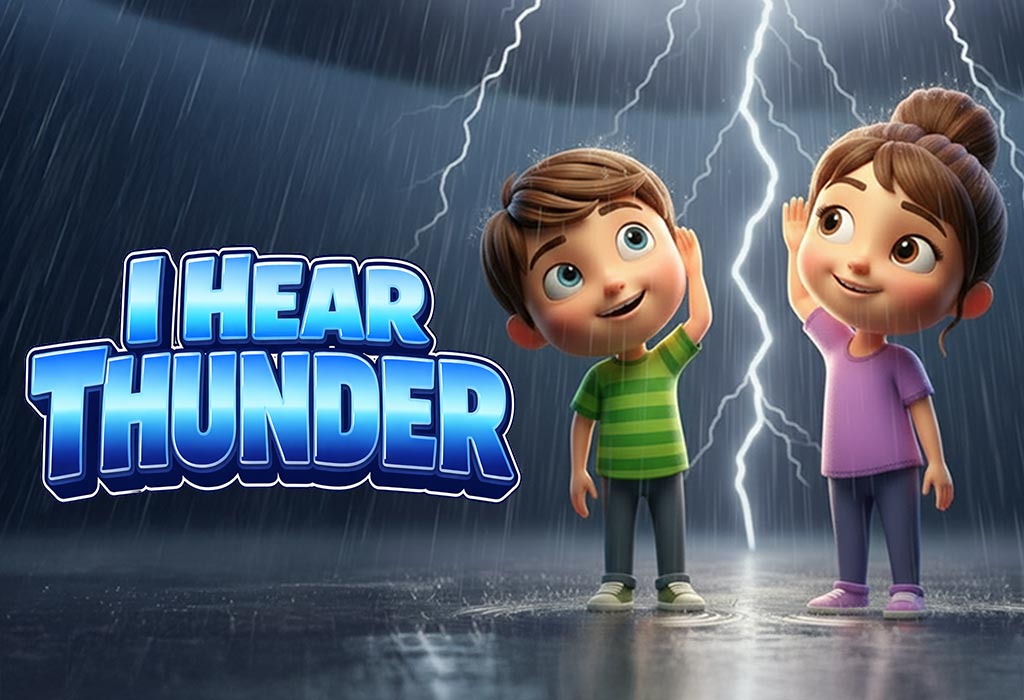
“I Hear Thunder” is a cheerful and interactive nursery rhyme that brings the sounds of rainy weather into a fun singing experience for children. The rhyme describes hearing thunder and rain, then happily running indoors to stay warm and dry. Its simple lines, gentle repetition, and playful actions make it easy for little ones to follow and remember.
Children enjoy pretending to hear thunder, making rain sounds, and acting out the movements while singing along. This rhyme supports early learning by building listening skills, improving memory, and introducing basic weather vocabulary. It also encourages imagination and group participation, making it a favorite during circle time at home or in preschool classrooms.
I Hear Thunder Song Lyrics
Many parents look for the correct I hear thunder words to sing along confidently with their little ones. Below are the commonly sung lyrics of this popular weather rhyme.
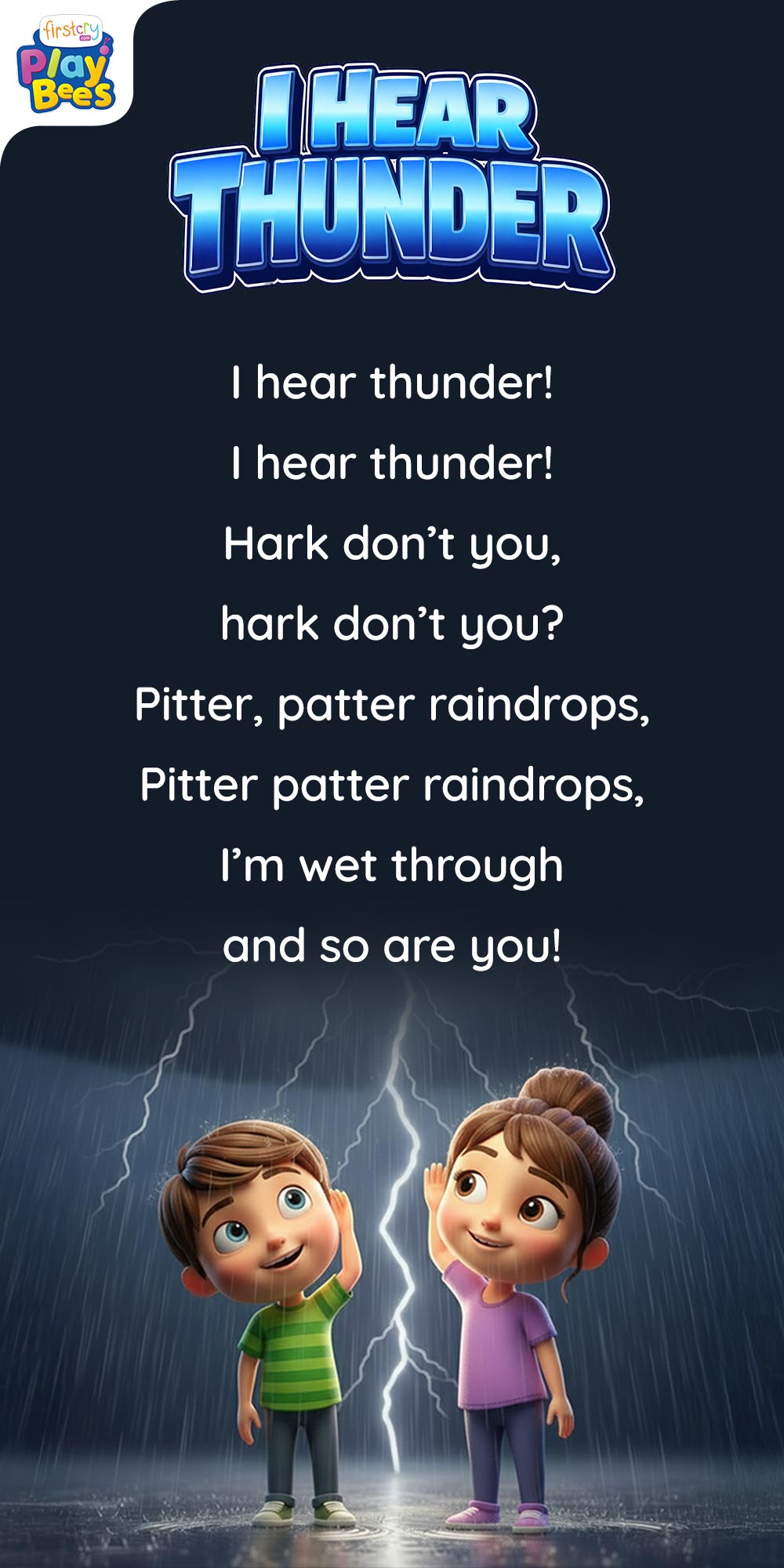
I hear thunder!
I hear thunder!
Hark don’t you,
hark don’t you?
Pitter, patter raindrops,
Pitter patter raindrops,
I’m wet through
and so are you!
Other Versions of I Hear Thunder Song
This simple rhyme has a few playful variations that are sung in different classrooms and regions.
Version 1 (Indoor Ending Variation):
I hear thunder, I hear thunder,
Hark! don’t you? Hark! don’t you?
Pitter patter raindrops,
Pitter patter raindrops,
Run inside,
Run and hide!
Version 2 (Stay Dry Version):
I hear thunder, I hear thunder,
Oh so loud! Oh so loud!
Pitter patter raindrops,
Falling from the dark cloud,
Let’s stay dry,
You and I!
Gestures – How to Teach I Hear Thunder to Kids
Adding actions makes this rhyme even more exciting and helps children remember the words easily. Simple hand and body movements can turn the song into a fun learning activity.
- Cup your ears: When singing “I hear thunder,” ask children to cup their hands around their ears as if they are listening carefully.
- Point outward: On “Hark! don’t you?” encourage kids to point to a friend or around the room as if asking others to listen too.
- Tap fingers downward: During “Pitter patter raindrops,” children can wiggle and tap their fingers downward to show falling rain.
- Pat shoulders lightly: To show rain falling on them, kids can gently tap their shoulders or head like raindrops.
- Hug themselves: On “I’m wet through,” children can wrap their arms around themselves as if feeling cold and wet.
- Pretend to run: For ending lines like “Run inside,” have children march or jog gently in place to act out going indoors.
History & Quick Facts
“I Hear Thunder” is a traditional nursery rhyme of English origin. Like many folk rhymes, its exact author and first publication date are unknown, as it was passed down orally through generations. The rhyme is often sung to the tune of the French melody “Frère Jacques,” which made it easy to remember and spread across schools and homes. Over time, teachers adopted it for weather-themed lessons, helping it become popular in early childhood classrooms worldwide.
Interesting Facts
- The rhyme is commonly sung to the same tune as “Frère Jacques,” which makes it easy for children to learn quickly.
- It is often used during weather lessons to teach children about rain and thunder in a simple way.
- The phrase “pitter patter” is an example of sound words that imitate the noise of raindrops.
- Many schools add actions and movements, turning it into an action song rather than just a rhyme.
- The song is sung in different countries with small word changes depending on local teaching styles.
- Because it is short and repetitive, it is especially popular with preschool-aged children.
Suitable Age & Learnings
“I Hear Thunder” is best suited for children aged 2 to 6 years, especially toddlers and preschoolers. Its short lines and repeated phrases make it perfect for early learners who are building language skills.
- Listening Skills: Children learn to pay attention to sounds and words while following the rhythm of the song.
- Weather Vocabulary: Kids become familiar with words like thunder, raindrops, and wet.
- Memory Development: Repetition in the rhyme helps strengthen recall and sequencing skills.
- Sound Awareness: Words like “pitter patter” introduce children to sound imitation and phonemic awareness.
- Motor Skills: Actions and gestures improve coordination and body control.
- Social Interaction: Singing together encourages participation, turn-taking, and confidence in groups.
FAQs
1. What is the rhyming scheme of I hear thunder?
The rhyme follows a simple AABBCC pattern, where pairs of lines rhyme together, making it easy for young children to remember.
2. Is I hear thunder sung to a specific tune?
Yes, it is commonly sung to the tune of “Frère Jacques,” which helps children quickly pick up the melody.
3. Why is this rhyme good for preschoolers?
It uses repetition, simple vocabulary, and actions, which support early language, listening, and coordination skills.
“I Hear Thunder” is a delightful nursery rhyme that turns a rainy day into a joyful singing moment. With its simple words, catchy tune, and playful gestures, it captures children’s attention while supporting important early learning skills. Parents and teachers appreciate how easily it fits into weather lessons and circle time activities. The rhyme encourages listening, movement, and imagination all at once. Its timeless melody and cheerful actions make it a favorite across generations. Singing it together creates warm memories while helping little ones grow and learn through music.
Explore Other Rhymes for Kids:
Oh Mr Sun Nursery Rhyme With Lyrics
Itsy Bitsy Spider Nursery Rhyme With Lyrics
Rain Rain Go Away Nursery Rhyme With Lyrics