
Table of Contents
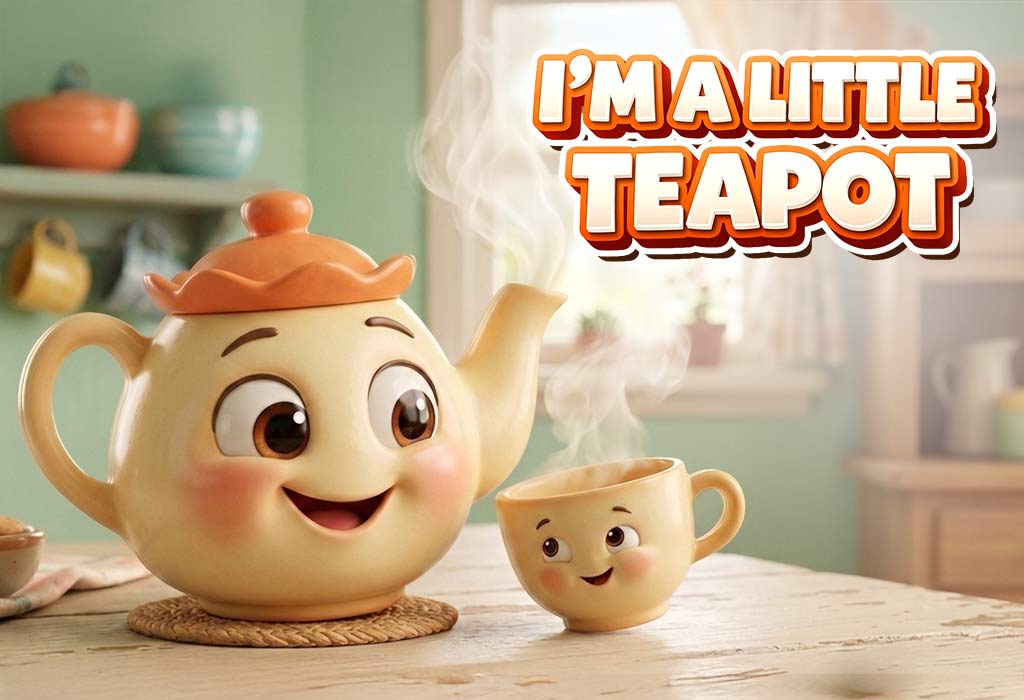
“I’m a Little Teapot” is a cheerful and playful nursery rhyme about a tiny teapot proudly showing off its handle and spout. Through simple words and fun actions, children pretend to be a teapot as they bend, stretch, and “pour” like one. Kids enjoy this rhyme because it encourages movement, imagination, and giggles all at once. The short lines and catchy rhythm make it easy to remember and sing along. For parents and teachers, this rhyme is more than just fun, it supports early learning by improving listening skills, coordination, and vocabulary. It also helps children follow instructions while building confidence through action-based play. Simple, sweet, and interactive, this classic rhyme continues to be a favorite in homes and classrooms.
I’m a Little Teapot Song Lyrics
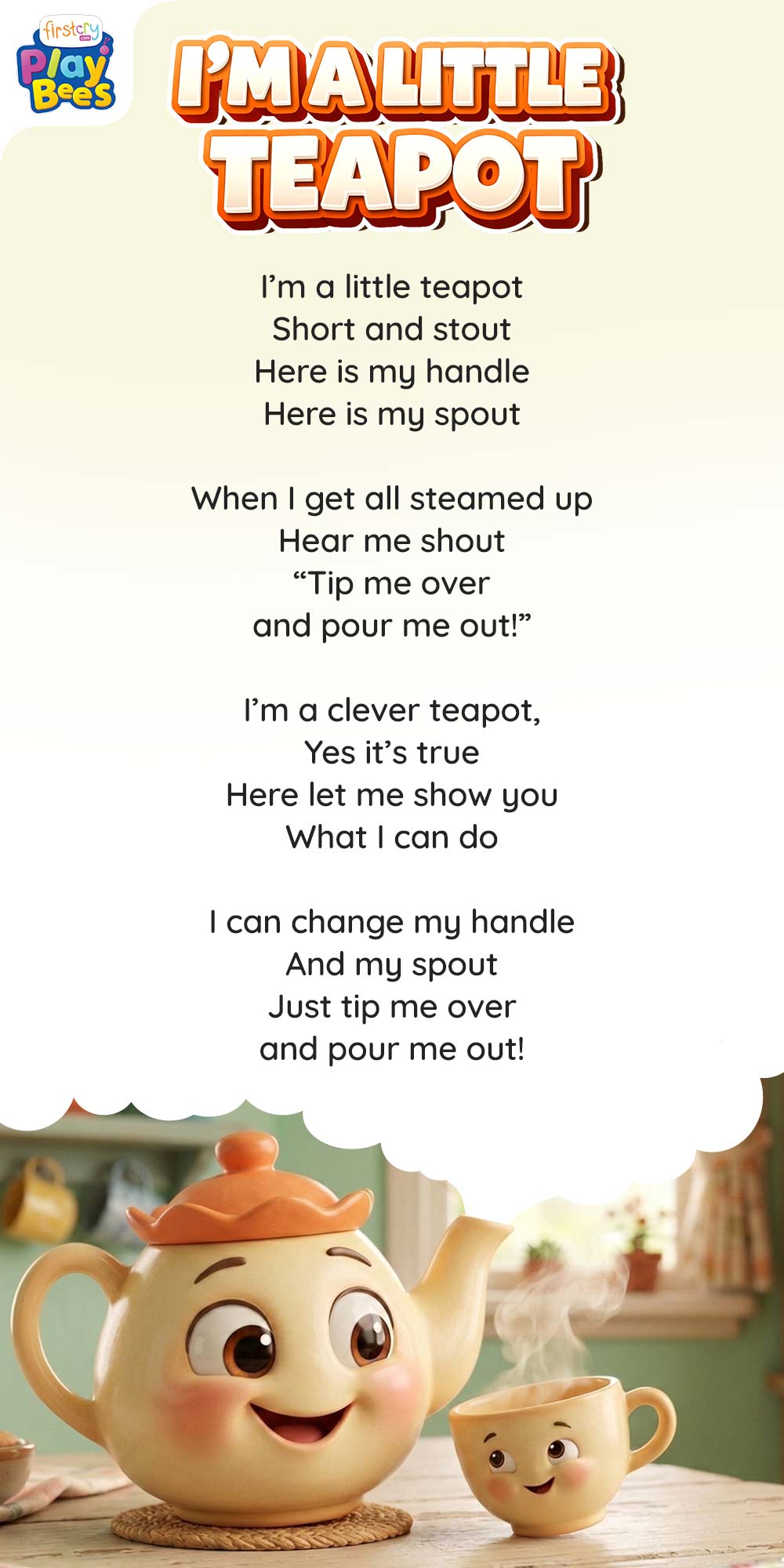
Here are the I’m a Little Teapot words that children love to sing along with during circle time and playtime:
I’m a little teapot
Short and stout
Here is my handle
Here is my spout
When I get all steamed up
Hear me shout
“Tip me over
and pour me out!”
I’m a clever teapot,
Yes it’s true
Here let me show you
What I can do
I can change my handle
And my spout
Just tip me over
and pour me out!
Other Versions of I’m a Little Teapot Song
Over the years, playful variations of this rhyme have appeared to add extra fun and creativity for children.
1. The “Switch and Pour”
In this version, children switch their arms after the first pour to create a new handle and spout on the opposite side.
I’m a little teapot, short and stout,
Here is my handle, here is my spout.
When I get all steamed up, hear me shout,
“Tip me over and pour me out!”
(Switch arms here)
Here’s my other handle, here’s my other spout,
Tip me over and pour me out!
2. The “Cracked Teapot” Silly
This version adds humor by pretending the teapot has a tiny crack, which makes children laugh.
I’m a little teapot, short and stout,
Here is my handle, here is my spout.
When I get all steamed up, hear me shout,
“Tip me over and pour me out!”
Oh dear me, I have a crack,
The tea is dripping down my back!
3. The “Colorful Teapot” Classroom
Teachers sometimes personalize the rhyme by adding colors or costumes to encourage creativity.
I’m a little teapot dressed in red,
With a shiny blue lid on my head.
When I get all steamed up, hear me shout,
“Tip me over and pour me out!”
Gestures – How to Teach I’m a Little Teapot to Kids
This rhyme becomes extra exciting when children act it out while singing. Simple body movements help kids understand the meaning of the words and stay engaged.
- Stand straight and small: Ask children to stand upright with feet together to show they are a “short and stout” little teapot.
- Make the handle: Have them place one hand on their hip with the elbow sticking out to form the teapot’s handle.
- Create the spout: Ask them to lift the other arm out to the side and bend it slightly downward to shape the spout.
- Act steamed up: Encourage kids to puff their cheeks or pretend steam is rising when singing “When I get all steamed up.”
- Shout with excitement: Let children happily say or pretend-shout the line “Tip me over and pour me out!”
- Tip and pour: Finally, have them bend sideways toward the “spout” arm as if pouring tea, keeping movements slow and balanced.
History & Quick Facts
“I’m a Little Teapot” was written in 1939 by George Harold Sanders and Clarence Z. Kelley. It was originally created as part of a dance routine for young children attending the Willowbrook School of Dance in the United States. The simple lyrics were designed to match easy hand movements, making it perfect for preschool performances. The rhyme quickly became popular in classrooms and homes because of its catchy tune and interactive actions. Over time, it was included in children’s songbooks and recordings, helping it spread worldwide. Today, it remains one of the most loved action rhymes for early learners.
Interesting Facts
- The rhyme was first written to help small children perform a simple dance routine during recitals.
- It became widely known after being included in children’s music collections and school programs.
- The song is often translated into different languages so children around the world can enjoy it.
- The tune is easy and repetitive, which makes it simple for toddlers to memorize quickly.
- Many cartoons and children’s TV shows have featured this rhyme in playful scenes.
- The teapot actions make it one of the earliest action songs taught in preschools.
Suitable Age & Learnings
“I’m a Little Teapot” is best suited for children aged 2 to 6 years, especially toddlers and preschoolers. Its short lines and action-based format make it easy for young learners to understand and enjoy.
- Listening Skills: Children learn to pay attention to words and follow along with rhythm and instructions.
- Motor Coordination: The bending and arm movements help improve balance and body control.
- Vocabulary Building: Kids learn new words like handle, spout, steamed, and pour.
- Memory Development: Repeating the rhyme strengthens recall and sequencing skills.
- Imaginative Play: Pretending to be a teapot encourages creative thinking and role play.
- Confidence Boosting: Performing the actions in front of others builds self-expression and confidence.
FAQs
1. What is the rhyming scheme of I’m a Little Teapot?
The rhyme follows a simple AABB pattern, where “stout” rhymes with “spout” and “shout” rhymes with “out,” making it easy for children to recognize sound patterns.
2. Why is this rhyme so popular in preschools?
It combines singing with physical movement, which helps young children stay engaged while learning.
3. Can toddlers learn this rhyme easily?
Yes, toddlers can quickly pick it up because the lyrics are short, repetitive, and supported by clear actions.
“I’m a Little Teapot” is more than just a playful nursery rhyme—it is a joyful learning experience wrapped in music and movement. Its simple words and charming actions make it easy for even the youngest children to join in. Through singing and pretending, kids develop coordination, memory, and language skills without even realizing they are learning. Parents and teachers love it because it turns everyday moments into fun teaching opportunities. Whether sung at home, in classrooms, or during performances, the rhyme continues to bring smiles to little faces. With every cheerful “tip me over,” children build confidence, creativity, and happy memories that last for years.
Explore Other Rhymes for Kids:
Patty Cake Song Nursery Rhyme With Lyrics
Head, Shoulders, Knees and Toes Nursery Rhyme With Lyrics
Teddy Bear, Teddy Bear, Turn Around Nursery Rhyme With Lyrics