
Table of Contents
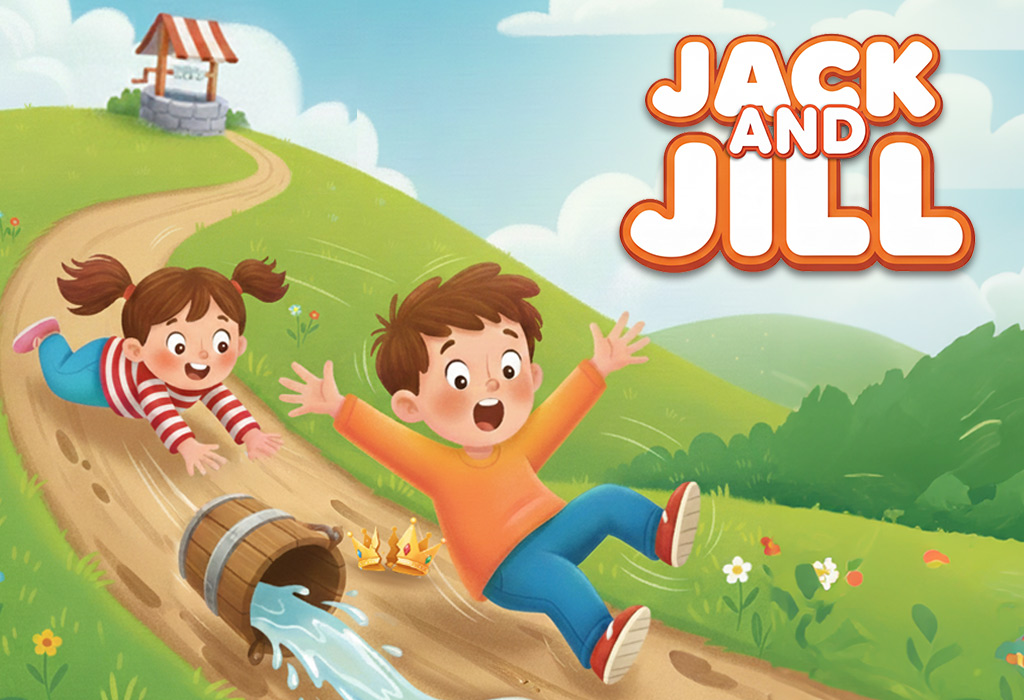
“Jack and Jill” is a classic nursery rhyme that tells the story of two cheerful children on a playful trip up a hill. The simple storyline, catchy rhythm, and relatable characters of the song capture children’s attention, making it a favourite among young learners. It is a great nursery rhyme for children, which helps them build early listening and memory skills. This rhyme also introduces early learning concepts, such as sequencing, cause-and-effect understanding, and vocabulary development in a way that feels playful rather than instructional. We bet you, too, remember bits and pieces of the story.
Jack and Jill Song Lyrics
These Jack and Jill words tell a simple, rhythmic story about a short adventure up a hill that’s easy for children to sing and act out.
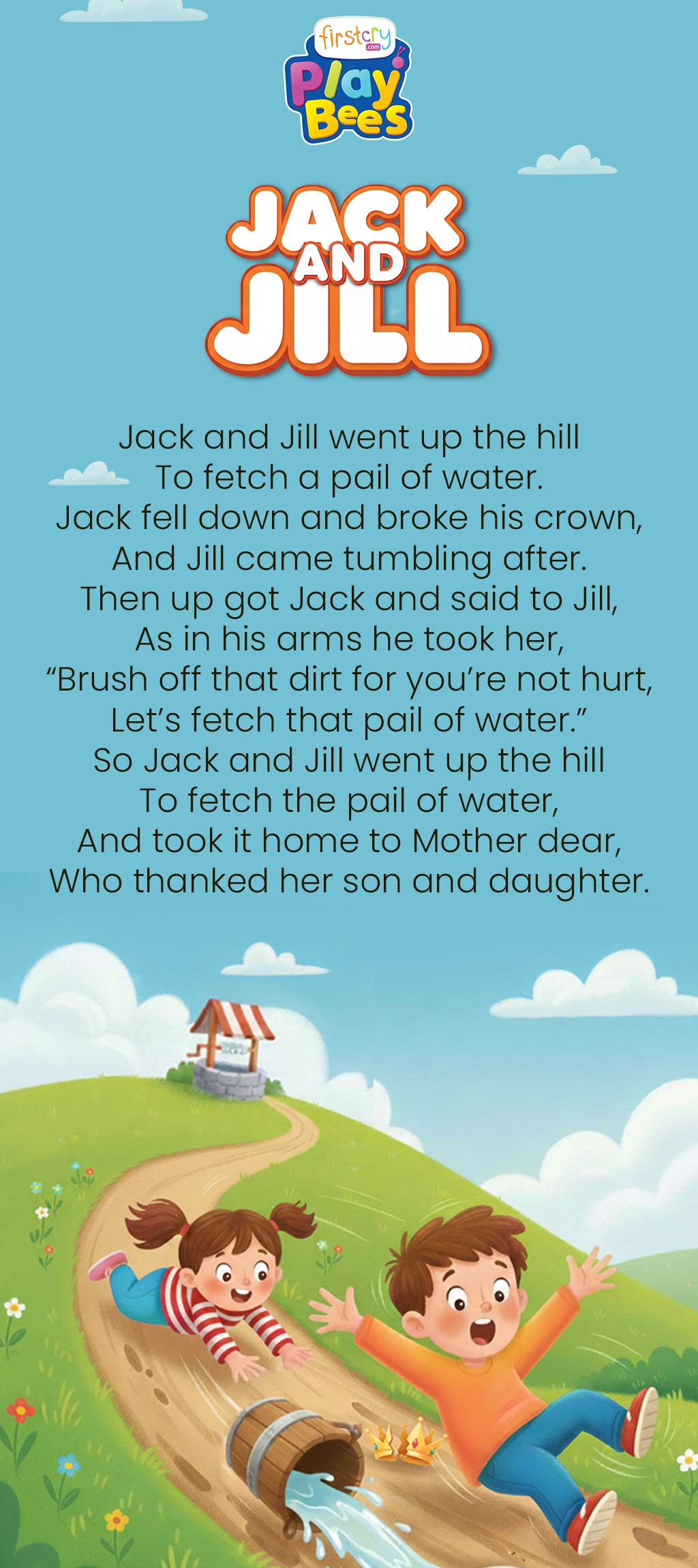
Jack and Jill went up the hill
To fetch a pail of water.
Jack fell down and broke his crown,
And Jill came tumbling after.
Then up got Jack and said to Jill,
As in his arms he took her,
“Brush off that dirt for you’re not hurt,
Let’s fetch that pail of water.”
So Jack and Jill went up the hill
To fetch the pail of water,
And took it home to Mother dear,
Who thanked her son and daughter.
Other Versions of the Jack and Jill Song
Several traditional versions of this rhyme have been passed down through generations, offering small lyrical twists that make the rhyme even more fun for kids. Here are a couple of well-known alternate versions:
Version 1
Then Jill came in
And she did grin
To see Jack’s paper plaster;
Her mother vexed
Did whip her next
For causing Jack’s disaster.
Version 2
When Jill came tumbling after,
The children laughed with fun and joy,
At Jack and Jill’s adventure.
Gestures – How to Teach Jack and Jill to Kids
This rhyme becomes even more fun when paired with simple movements that help kids remember the story and stay engaged. These easy actions turn the rhyme into an interactive playtime activity.
- Pretend to climb a hill by moving your hands upward when saying “went up the hill.”
- Make a scooping motion as though lifting a bucket during “to fetch a pail of water.”
- Imitate slipping or stumbling when singing “Jack fell down.”
- Roll your hands gently to show “Jill came tumbling after.”
- Tap the top of your head lightly when saying “broke his crown.”
- Pretend to walk quickly or trot in place for “home did trot.”
History & Quick Facts
“Jack and Jill” is believed to have originated in England in the 18th century, although its exact author remains unknown. The rhyme first appeared in print around 1765 in Mother Goose’s Melody, a well-known collection of children’s verses. Over time, the poem spread quickly through oral tradition, gaining popularity due to its simple rhythm and memorable storyline. Its enduring appeal has made it a staple in nurseries and classrooms across the world.
Interesting Facts
- The rhyme was first published in Mother Goose’s Melody.
- Some historians believe the rhyme may have earlier Scandinavian roots.
- It is one of the most widely sung nursery rhymes worldwide.
- The tune has been adapted into songs, games, and storybooks.
- Many cultures have translated Jack and Jill into local languages.
- The rhyme is often used to teach sequencing and cause-and-effect in early learning.
Suitable Age & Learnings
This rhyme is best suited for children aged 2 to 6 years, offering simple words and actions that younger kids can enjoy and older toddlers can easily memorise. It supports early learning through storytelling, rhythm, and physical activity.
Key Learnings for Kids:
- Children learn story order and sequencing by following what happens first, next, and last in the rhyme.
- They develop early vocabulary skills as they hear and repeat new words like “pail,” “crown,” and “vinegar.”
- Kids strengthen motor skills by performing simple gestures that match the actions in the rhyme.
- Their listening and memory skills improve as they repeat the rhyme and recall its events.
- Children understand basic cause-and-effect when they see that Jack falls because he is climbing and carrying water.
- They build phonemic awareness by listening to the rhymes’ repeating sounds and patterns.
FAQs
1. What is the rhyming scheme of Jack and Jill?
The rhyme follows an AABCCB pattern in the first stanza, creating a smooth, catchy flow for children.
2. Can this rhyme be used to teach sequencing?
Absolutely. Jack going up the hill, falling, and then returning home help children understand events in order.
With a cheerful tone and unforgettable rhythm, “Jack and Jill” continues to charm young learners. When paired with gestures, storytelling, and repetition, it becomes a joyful learning activity for early learners. Parents and teachers can use the Jack and Jill rhyme to teach new words to kids, strengthen their memory, and spark imaginative thinking. Sure, this classic and evergreen rhyme remains a beloved favourite for generations to come.
Explore Other Rhymes for Kids:
Down by the Bay Nursery Rhyme With Lyrics
Johny Johny, Yes Papa Nursery Rhyme With Lyrics
The Wheels on the Bus Nursery Rhyme With Lyrics