
Table of Contents
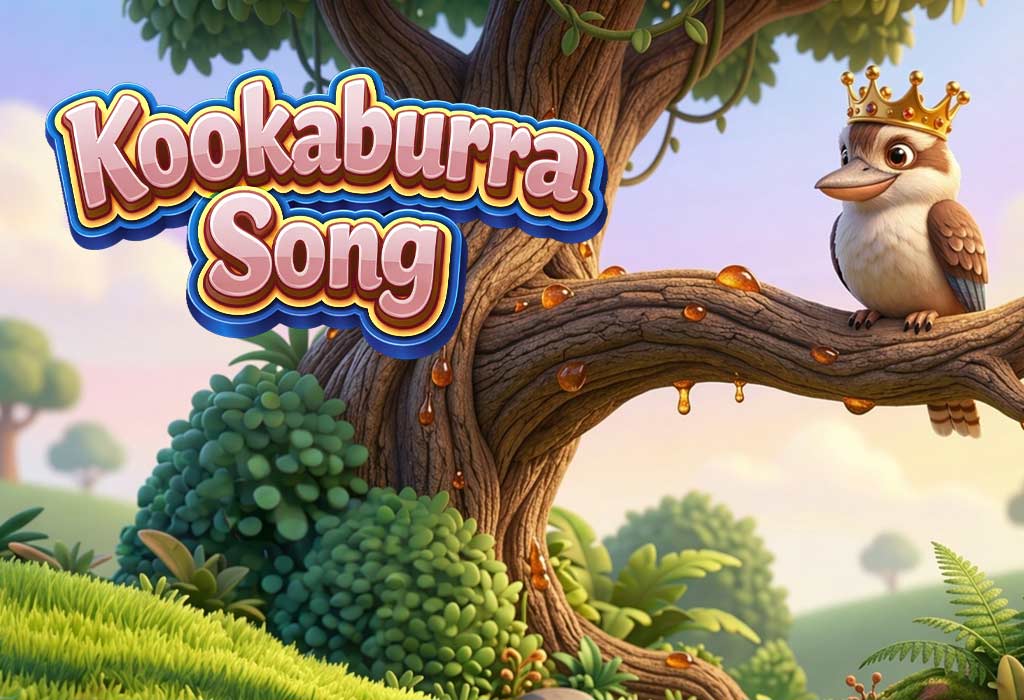
The Kookaburra Song is a cheerful and playful nursery rhyme that brings the sounds of nature to life through music. It is about a happy kookaburra bird sitting in an old gum tree and laughing in its own unique way. Kids enjoy this rhyme because of its catchy tune, repetitive words, and fun animal sounds that make singing along exciting. It also encourages imagination as children picture the bird and its surroundings. This rhyme supports early learning by improving listening skills, rhythm, and pronunciation. It is simple to remember and perfect for group singing, making it a favorite in classrooms and homes. Parents and teachers love it because it combines fun with gentle learning in an engaging way.
Kookaburra Song Lyrics
Here are the popular Kookaburra Song words that children love to sing and repeat together.
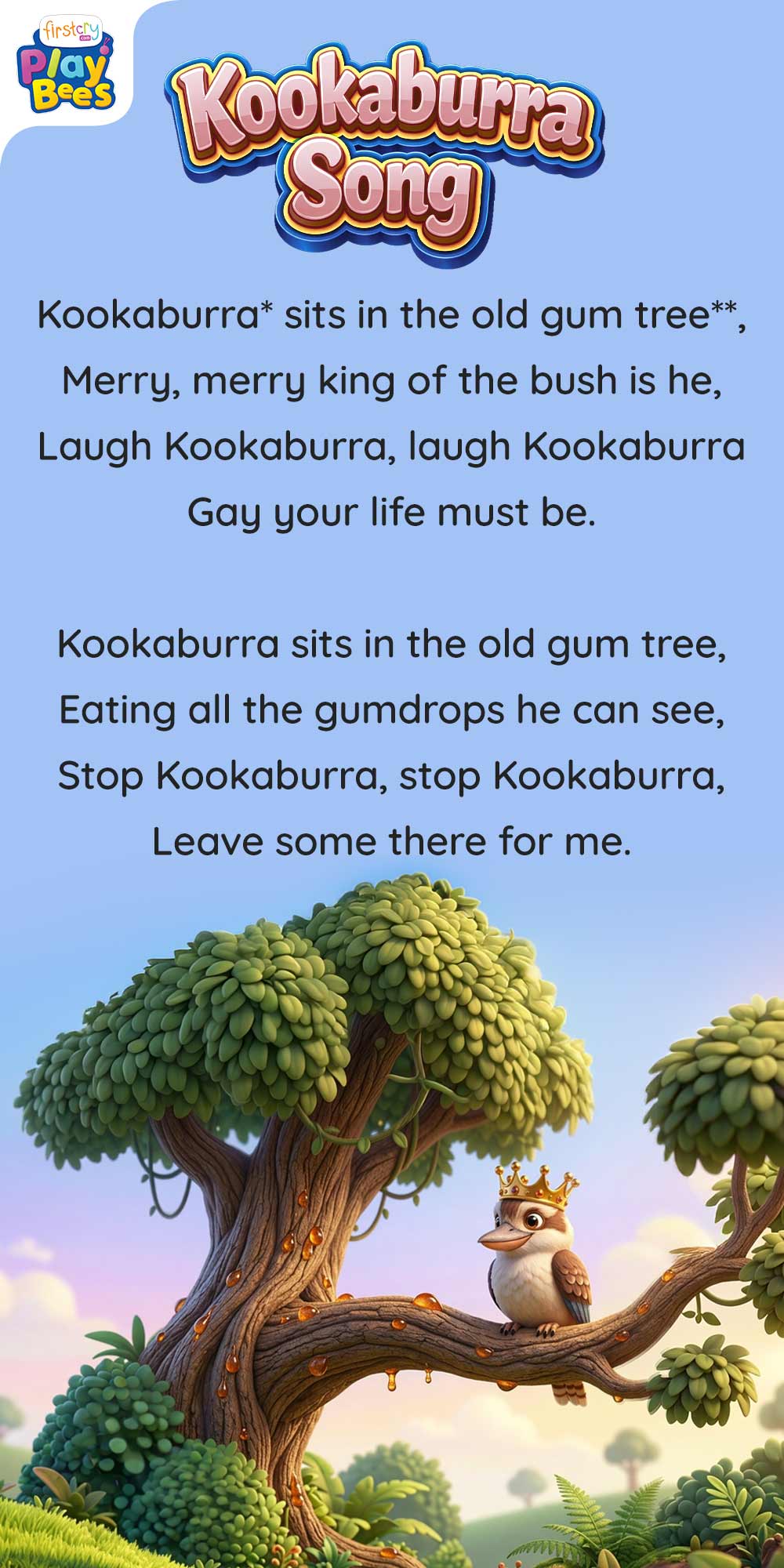
Kookaburra* sits in the old gum tree**,
Merry, merry king of the bush is he,
Laugh Kookaburra, laugh Kookaburra
Gay your life must be.
Kookaburra sits in the old gum tree,
Eating all the gumdrops he can see,
Stop Kookaburra, stop Kookaburra,
Leave some there for me.
Other Versions of Kookaburra Song
The Kookaburra Song is often extended with additional playful verses that children love to sing along with the original tune.
1. Kookaburra Eats All the Gumdrops
Kookaburra sits in the old gum tree,
Eating all the gumdrops he can see,
Stop, Kookaburra, stop, Kookaburra,
Leave some there for me.
2. Kookaburra Eats All the Monkeys
Kookaburra sits in the old gum tree,
Eating all the monkeys he can see,
Stop, Kookaburra, stop, Kookaburra,
That’s not right, you see.
3. Kookaburra Counts the Animals
Kookaburra sits in the old gum tree,
Counting all the animals he can see,
One, Kookaburra, two, Kookaburra,
Three, four, five are we.
Gestures – How to Teach Kookaburra Song to Kids
Teaching the Kookaburra Song with actions makes it more fun and helps children remember the words easily. Simple, playful gestures keep kids engaged and encourage active participation.
- Pretend to be a bird: Ask children to flap their arms like wings to show the kookaburra sitting happily in the tree.
- Point upwards for the tree: Children can point their fingers up to imagine a tall gum tree where the bird is sitting.
- Smile and laugh: Encourage kids to laugh out loud with “ha ha ha” actions to match the kookaburra’s cheerful sound.
- Clap rhythmically: Let children clap their hands gently in rhythm to build timing and musical awareness.
- Act like a king: Kids can place their hands like a crown on their head to represent the “king of the bush.”
- Sway side to side: Ask children to sway their bodies slowly to make the activity feel like a fun group song.
History & Quick Facts
The Kookaburra Song, also known as “Kookaburra Sits in the Old Gum Tree,” was written by Marion Sinclair, an Australian music teacher, in 1932. It was originally created for a Girl Guides competition, where it won first prize. The song was later published and quickly became popular across Australia because of its catchy tune and connection to the native kookaburra bird. Over time, it spread to schools and children’s groups around the world, making it a well-loved nursery rhyme for generations.
Interesting Facts
- The song was written by Marion Sinclair in just a short time for a children’s competition, making it a simple yet creative masterpiece.
- It is inspired by the kookaburra bird, which is famous for its loud, laughter-like call in Australia.
- The tune is easy and repetitive, which helps young children learn and remember it quickly.
- The rhyme has been translated and sung in many countries, making it popular worldwide.
- It is often used in classrooms and camps to teach rhythm, actions, and group singing.
- The song has even appeared in music discussions and pop culture because of its unique melody.
Suitable Age & Learnings
The Kookaburra Song is best suited for children aged 3 to 8 years, as it is simple, repetitive, and fun to act out. It supports early learning by combining music, movement, and imagination.
- Language development: Children learn new words like “kookaburra,” “gum tree,” and “bush,” improving their vocabulary.
- Listening skills: Kids practice listening carefully to rhythm and lyrics, which builds attention and focus.
- Memory building: Repeating lines helps children remember sequences and strengthens their memory.
- Motor skills: Actions like clapping and swaying improve coordination and body movement.
- Social skills: Singing together in groups teaches sharing, teamwork, and confidence.
- Creativity and imagination: Pretending to be a bird or acting out scenes encourages imaginative thinking.
FAQs
1. What is the rhyming scheme of Kookaburra Song?
The song follows a simple and repetitive rhyming pattern, mainly using AABB style, which makes it easy for children to learn and sing.
2. Why is the Kookaburra Song popular among kids?
It is popular because of its catchy tune, simple lyrics, and fun actions that make learning enjoyable for young children.
3. Can the Kookaburra Song be used for classroom learning?
Yes, teachers often use it to teach rhythm, group singing, and basic vocabulary in an engaging way.
The Kookaburra Song is a timeless and cheerful rhyme that continues to delight children around the world. Its simple lyrics and playful tune make it easy for young learners to enjoy and remember. By adding gestures and actions, the song becomes even more interactive and engaging. It also helps children develop important skills like listening, coordination, and confidence. Parents and teachers can use this rhyme as a fun learning tool both at home and in classrooms. Overall, it is a wonderful way to combine music, movement, and early education in a joyful experience.
Explore Other Rhymes for Kids:
Two Little Dickie Birds Nursery Rhyme With Lyrics
Sing a Song of Sixpence Nursery Rhyme With Lyrics
Once I Saw A Little Bird Nursery Rhyme With Lyrics