
Table of Contents
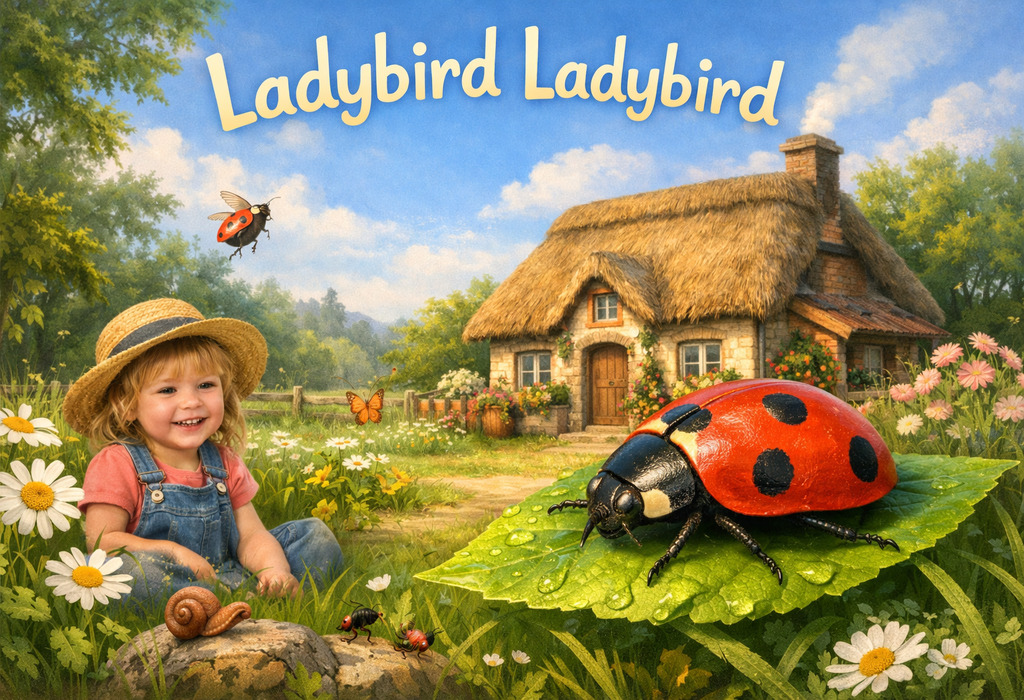
“Ladybird, Ladybird” is a classic nursery rhyme about a small ladybird being asked to fly home safely to its children. The rhyme carries a gentle but slightly emotional message, which sparks curiosity and imagination in young minds. Kids enjoy it because of its simple words, rhythmic flow, and the imagery of a tiny insect flying home. It also introduces children to nature and the idea of care and protection. For early learners, this rhyme helps build listening skills, improves memory, and introduces new vocabulary in a fun way. Its repetitive pattern makes it easy to remember, while the storytelling element keeps children engaged and interested during learning time.
Ladybird Ladybird Song Lyrics
Here are the Ladybird Ladybird words that children love to sing and remember:
Lady-bird, Lady-bird, fly away home
the field mouse is gone to her nest
the daisies have shut up their sleepy red eyes
and the birds and the bees are at rest
Lady-bird, Lady-bird, fly away home
the glow worm is lighting her lamp
the dew’s falling fast, and your fine speckled wings
will flag with the close clinging damp
Lady-bird, Lady-bird, fly away home
the fairy bells tinkle afar
make haste or they’ll catch you and harness you fast
with a cobweb to Oberon’s star.
Other Versions of Ladybird Ladybird Song
There are a few slightly different versions of this rhyme that vary in wording and tone.
Ladybird, ladybird, fly away home,
Your house is on fire and your children all gone,
Except little Nan, who sits in a pan,
Weaving gold laces as fast as she can.
Gestures – How to Teach Ladybird Ladybird to Kids
Teaching this rhyme with actions makes it more fun and helps children remember better while staying engaged.
- Cup your hands together like holding a small insect and gently open them to show the “ladybird.”
- Move your hand in the air like flying when saying “fly away home.”
- Use both hands to mimic flames rising when saying “your house is on fire.”
- Pretend to look around worriedly with your hands over your eyes for “your children are gone.”
- Hold up one finger to show “all except one” clearly to kids.
- Pretend to hide under something by bending slightly to act out “crept under the warming pan.”
History & Quick Facts
“Ladybird, Ladybird” is an old English nursery rhyme believed to date back to the 18th century. It was first recorded in printed collections of nursery rhymes in England, though its exact author is unknown. The rhyme may have roots in farming traditions, where ladybirds were seen as helpful insects that protected crops. Some historians also believe the rhyme could be linked to warnings during times when fields were burned, encouraging insects to escape. Over time, it became popular as a children’s rhyme due to its rhythm and simple storytelling.
Interesting Facts
- This rhyme is believed to have originated in England and has been passed down through generations.
- Ladybirds are considered lucky insects in many cultures, which adds a positive association for children.
- The rhyme has been translated into multiple languages and is known worldwide.
- Some versions of the rhyme are softer, while others have a slightly serious tone about danger.
- It is often used in preschool settings to introduce children to insects and nature.
- The tune is simple and adaptable, allowing teachers and parents to sing it in different melodies.
Suitable Age & Learnings
This rhyme is best suited for children aged 2 to 5 years, as it is simple, short, and easy to understand. It supports early learning through rhythm, storytelling, and imaginative thinking.
- Vocabulary building: Children learn new words like “ladybird,” “fire,” and “home” in a simple context.
- Listening skills: The rhyme encourages kids to listen carefully and follow along with the story.
- Memory development: Repetition helps children remember lines and improve recall.
- Emotional understanding: Kids begin to understand ideas like safety, care, and concern.
- Nature awareness: The rhyme introduces children to insects and their environment.
- Language rhythm: It helps children recognize rhyming patterns and sentence flow.
FAQs
1. What is the rhyming scheme of Ladybird Ladybird?
The rhyme follows an AABB pattern, where pairs of lines rhyme together.
2. Is Ladybird Ladybird a happy or sad rhyme?
It has a slightly serious tone but is generally presented in a gentle, child-friendly way.
3. Why is the ladybird important in the rhyme?
The ladybird represents a small, caring creature, helping children connect with nature and emotions.
“Ladybird, Ladybird” is a timeless nursery rhyme that continues to charm children and parents alike. Its simple story, rhythmic lines, and connection to nature make it both engaging and meaningful. While it carries a slightly serious message, it is often taught in a gentle and playful way. The rhyme supports early learning by building vocabulary, memory, and listening skills. Adding actions and gestures makes it even more enjoyable for young learners. Overall, it is a wonderful blend of storytelling and education that helps children grow while having fun.