
Table of Contents
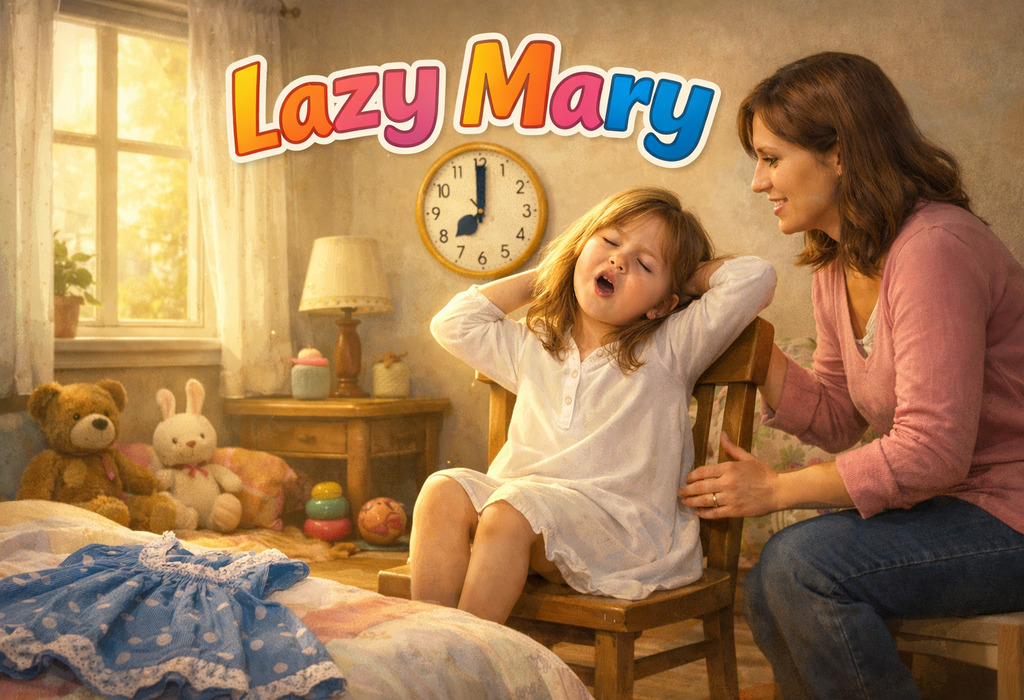
A cheerful and repetitive rhyme like “Lazy Mary” brings a playful rhythm that young children instantly enjoy. The song revolves around Mary, who doesn’t want to get up, while others try to wake her in fun and creative ways. Kids love its catchy tune, simple words, and interactive nature, making it easy to sing along and act out. For parents and educators, it offers a great opportunity to introduce early concepts like daily routines, actions, and listening skills. The repetition helps improve memory, while the call-and-response style builds language confidence. Overall, this rhyme combines fun with learning, encouraging children to move, think, and engage joyfully.
Lazy Mary Song Lyrics
Enjoy singing along with these classic Lazy Mary words that children love for their rhythm and playful actions.
Lazy Mary will you get up,
Will you get up, will you get up.
Lazy Mary will you get up,
Will you get up today.
No, no mother I wont get up,
I wont get up, I wont get up.
No, no mother I wont get up,
I wont get up today.
Oh, dear Mary, you must get up,
You must get up, you must get up.
Oh, dear Mary, you must get up,
You must get up today.
Yes dear mother, I will get up,
I will get up, I will get up.
Yes dear mother I will get up,
I will get up today.
Other Versions of Lazy Mary Song
Different regions sing this rhyme with small changes in words or actions to make it more fun.
1. Alternate Versions of Lazy Mary
Lazy Mary, will you get up,
Will you get up, will you get up?
Lazy Mary, will you get up,
Will you get up today?
No, no, Teacher, I won’t get up,
I won’t get up, I won’t get up,
No, no, Teacher, I won’t get up,
I won’t get up today.
Then you shall have some cake and milk,
Cake and milk, cake and milk,
Then you shall have some cake and milk,
So get up right away.
Yes, yes, Teacher, I will get up,
I will get up, I will get up,
Yes, yes, Teacher, I will get up,
I will get up today.
2. Another Fun Version
Lazy Mary, will you get up,
Will you get up, will you get up?
Lazy Mary, will you get up,
Will you get up today?
No, no, Father, I won’t get up,
I won’t get up, I won’t get up,
No, no, Father, I won’t get up,
I won’t get up today.
Then you shall have some chocolate cake,
Chocolate cake, chocolate cake,
Then you shall have some chocolate cake,
So get up right away.
Yes, yes, Father, I will get up,
I will get up, I will get up,
Yes, yes, Father, I will get up,
I will get up today.
Gestures – How to Teach Lazy Mary to Kids
Adding simple actions makes the rhyme more engaging and helps children remember the sequence better.
- Pretend to sleep by placing hands together near the cheek when singing “Lazy Mary,” so kids understand the idea of resting.
- Shake your head gently during “No, no, Mother” to show refusal and help children connect words with actions.
- Use a calling gesture by cupping your hands around your mouth when asking Mary to get up.
- Pretend to hold and sip a cup during “cup of tea” to make the reward part fun and visual.
- Nod your head happily during “Yes, yes, Mother” to show agreement and positive response.
- Stand up or jump lightly at the end to act out Mary finally getting up, making the rhyme lively and interactive.
History & Quick Facts
“Lazy Mary” is a traditional English nursery rhyme with roots in folk songs that were passed down orally over generations. Like many classic rhymes, its exact author is unknown, but it is believed to have originated in England during the 18th or 19th century. The rhyme became popular because of its simple conversational style and easy melody, making it perfect for group singing. Over time, it spread to schools and homes worldwide, becoming a favorite activity rhyme for young children.
Interesting Facts
- The rhyme uses a call-and-response pattern, which makes it perfect for group singing and classroom activities.
- It is often used as an action rhyme, encouraging children to move and participate actively.
- The character “Mary” is symbolic and not based on a specific real person.
- The song has been adapted into many cultures with small word changes to suit local preferences.
- Its repetitive structure helps children quickly memorize and enjoy the rhyme.
- Teachers often use this rhyme to teach daily routines like waking up and responding positively.
Suitable Age & Learnings
This rhyme is ideal for children aged 2 to 6 years, as it is simple, repetitive, and easy to follow. It supports early learning by combining music, actions, and basic conversational patterns.
- Listening skills: Children learn to listen carefully to questions and responses within the rhyme.
- Language development: The repeated phrases help build vocabulary and sentence structure naturally.
- Memory improvement: Repetition strengthens recall and helps children remember sequences.
- Social interaction: Singing in groups encourages participation and cooperation with others.
- Understanding routines: The theme introduces the idea of waking up and daily habits in a fun way.
- Expression through actions: Gestures help children express emotions like refusal and agreement physically.
FAQs
1. What is the rhyming scheme of Lazy Mary?
The rhyme follows a simple and repetitive pattern with matching end sounds, making it easy for children to recognize and remember.
2. Why is Lazy Mary popular among kids?
Its catchy tune, simple words, and interactive actions make it fun and engaging for young learners.
3. Can this rhyme be used in classrooms?
Yes, it is widely used in classrooms to encourage group participation, listening skills, and movement-based learning.
Songs like “Lazy Mary” create a joyful learning experience that blends music, movement, and storytelling. Its playful theme keeps children entertained while gently introducing them to everyday routines and responses. The simple lyrics and repetition make it easy for even very young learners to join in confidently. Parents and teachers can use gestures and variations to keep the activity fresh and exciting. Over time, children not only memorize the rhyme but also build important language and social skills. This timeless nursery rhyme continues to bring smiles, laughter, and meaningful learning moments to little ones everywhere.