
Table of Contents
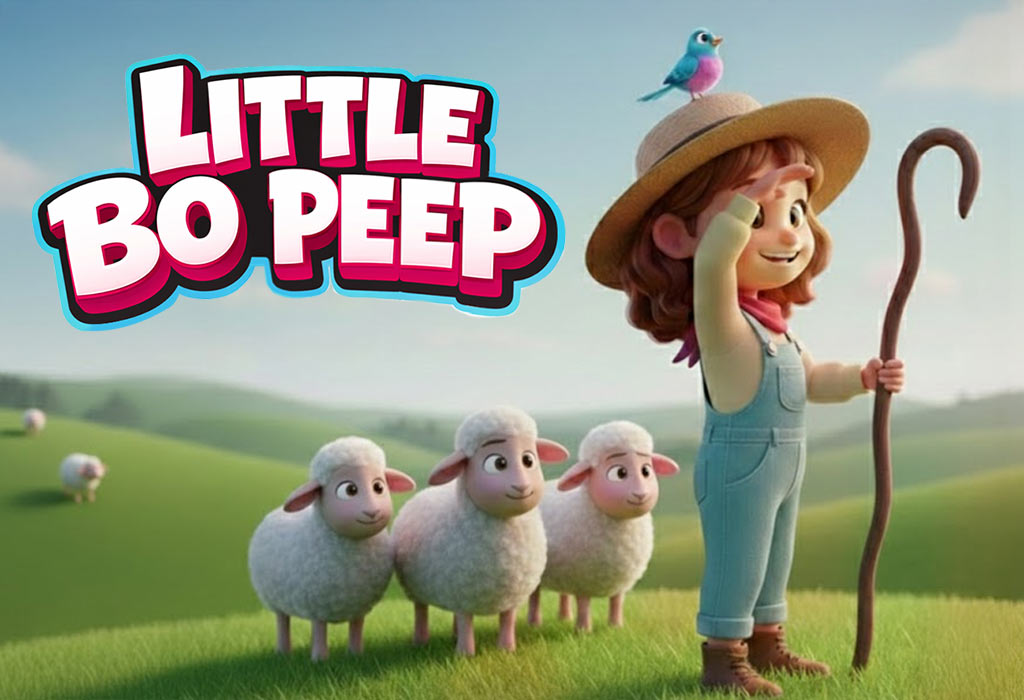
“Little Bo Peep” is a classic nursery rhyme about a young shepherdess who loses her sheep and patiently waits for them to return. The story is simple and comforting, making it easy for young children to understand and enjoy. Kids love the gentle rhythm and the imaginative idea of sheep wandering off and coming back home. The rhyme has a soothing flow that makes it perfect for singing and repeating together. For early learners, it helps improve listening skills, memory, and vocabulary. It also introduces soft lessons about responsibility and patience in a way children can relate to. Parents and teachers often use this rhyme during story time or circle time to make learning fun and interactive.
Little Bo Peep Song Lyrics
The following Little Bo Peep words are widely sung and loved by children:
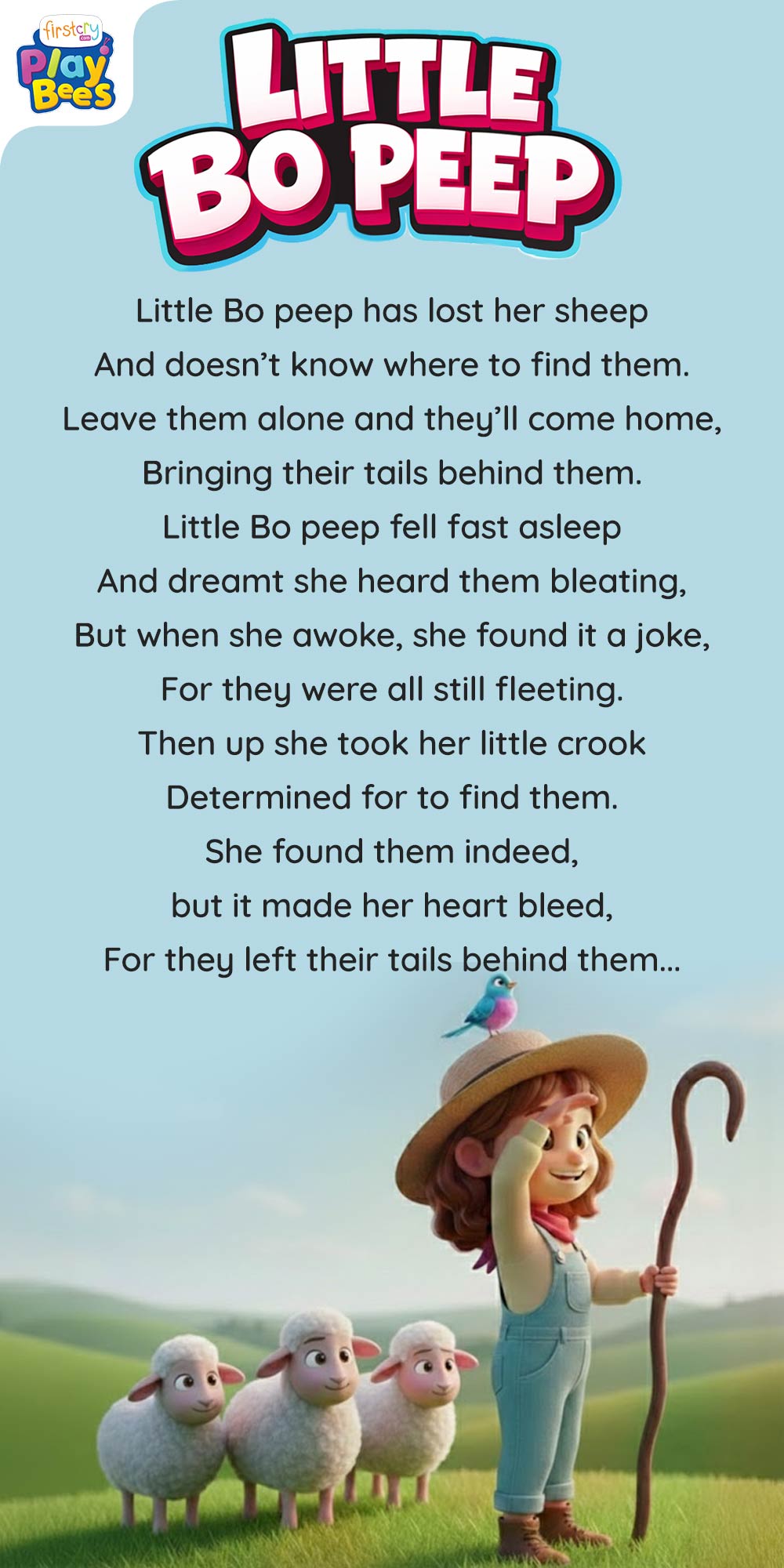
Little Bo peep has lost her sheep
And doesn’t know where to find them.
Leave them alone and they’ll come home,
Bringing their tails behind them.
Little Bo peep fell fast asleep
And dreamt she heard them bleating,
But when she awoke, she found it a joke,
For they were all still fleeting.
Then up she took her little crook
Determined for to find them.
She found them indeed, but it made her heart bleed,
For they left their tails behind them.
It happened one day, as Bo peep did stray
Into a meadow hard by,
There she espied their tails side by side
All hung on a tree to dry.
She heaved a sigh, and wiped her eye,
And over the hillocks went rambling,
And tried what she could,
As a shepherdess should.
Other Versions of Little Bo Peep Song
Over time, “Little Bo Peep” has been shared in shorter and slightly adapted forms to suit younger children and classroom settings.
Short First-Verse Version (Most Common for Toddlers):
Little Bo-Peep has lost her sheep,
And doesn’t know where to find them;
Leave them alone, and they’ll come home,
Wagging their tails behind them.
Gentle Classroom Version (Without the Tail Verse):
Little Bo-Peep has lost her sheep,
And doesn’t know where to find them;
She went to look with her little crook,
And soon she was right behind them.
Little Bo-Peep found all her sheep,
Grazing in the meadow kindly;
She brought them back along the track,
Walking home so calmly.
Repetitive Sing-Along Version (For Preschool Groups):
Little Bo-Peep has lost her sheep,
Lost her sheep, lost her sheep,
Little Bo-Peep has lost her sheep,
Where can they be hiding?
Leave them alone, they’ll come back home,
Come back home, come back home,
Leave them alone, they’ll come back home,
Wagging tails behind them.
Gestures – How to Teach Little Bo Peep to Kids
Using simple actions while singing makes the rhyme more engaging and easier for children to remember. Gentle movements and expressions can help bring the story to life during learning time.
- Pretend to search by placing one hand above your eyes as if you are looking far away to show “lost her sheep.”
- Show sleeping by resting your cheek on your hands and tilting your head to act out “fell fast asleep.”
- Act like listening by cupping your hand behind your ear to show you hear the sheep “bleating.”
- Walk in place to represent Bo Peep going out to look for her sheep.
- Raise your arms like branches to show the tree where the tails were hung.
- Use small careful hand movements to pretend you are fixing the tails back onto the sheep.
History & Quick Facts
“Little Bo Peep” is a traditional English nursery rhyme that dates back to the early 19th century. It was first published in 1805 in a collection called Songs for the Nursery. The author is unknown, as many nursery rhymes were passed down through oral storytelling before being written down. Over time, the rhyme became popular in Britain and later in other English-speaking countries through books and classroom teaching. Its simple story and rhythmic pattern helped it remain a favorite for generations.
Interesting Facts
- The character of Little Bo Peep is usually shown as a young shepherdess carrying a crook, a curved stick used to guide sheep.
- The original rhyme was longer than the version most children learn today.
- The rhyme has been translated into different languages around the world.
- The melody commonly sung today was added later, as the rhyme began as a poem.
- Little Bo Peep has appeared in various children’s storybooks and performances.
- The rhyme has been part of early childhood education for many generations.
Suitable Age & Learnings
“Little Bo Peep” is ideal for children aged 2 to 6 years. Its gentle rhythm and clear storyline make it perfect for toddlers and preschoolers.
- Children learn new vocabulary words such as sheep, crook, bleating, and meadow through repetition.
- The rhyme supports listening and attention skills as children follow along with the story.
- Repeating the verses helps strengthen memory and recall abilities.
- The story introduces simple lessons about patience and responsibility.
- Adding actions encourages coordination and motor skill development.
- The rhyme teaches basic story structure with a beginning, middle, and end.
FAQs
1. What is the rhyming scheme of Little Bo Peep?
The rhyme generally follows an AABB pattern, where the first two lines rhyme and the next two lines rhyme.
2. Is Little Bo Peep based on a true story?
No, Little Bo Peep is a fictional character from a traditional English nursery rhyme.
3. Why do teachers still use Little Bo Peep in classrooms?
Teachers use it because it supports early language skills, memory development, and group singing activities.
“Little Bo Peep” remains one of the most loved nursery rhymes for young children. Its gentle rhythm and simple storyline make it easy to understand and enjoyable to sing. The rhyme supports early learning in a natural and playful way. Parents and teachers appreciate how it builds vocabulary and listening skills. With simple gestures and repetition, it becomes even more engaging for little learners. This timeless rhyme continues to create warm and meaningful learning moments for families and classrooms alike.
Explore Other Rhymes for Kids:
Baa, Baa, Black Sheep Nursery Rhyme With Lyrics
The Farmer in the Dell Nursery Rhyme With Lyrics
Mary Had a Little Lamb Nursery Rhyme With Lyrics